Wondering which Annecy places to visit, and how to see them in one, two or three days? I have lived in Annecy since 2018, and these questions land in my DMs all the time. So I put everything in one article: three itineraries, from one to three days, each with a car-free version and a rainy-day plan B. You will also find my walks with Rhéa, my dog, who comes with me almost everywhere.
Annecy draws a lot of visitors with its setting and its quality of life. I settled here after falling in love with the area, so I completely understand the appeal. In return for the tips I share here, I have one request: respect our beautiful region and behave responsibly in nature when you get around. Litter and uncivil behaviour are still a real issue in some very touristy spots near us, and I come back to this further down.
Visit Annecy in short: what to do depending on your time and the weather
To choose quickly, I suggest three formats. Each card links to the detailed itinerary further down.
1 day: the centre
In the sun: old town, the Visitation and the castle, the Pâquier, the Pont des Amours, the Impérial park.
If it rains: the Museum-Castle, the Palais de l’Île, the Cité internationale du cinéma d’animation, a brunch.
Without a car: everything is done on foot.
2 days: + the lake
In the sun: day 1, then a bike ride around the lake, paddleboarding or a swim.
If it rains: the rainy version of day 1, a walk along the lake, indoor climbing, a spa.
Without a car: bike hire, the Impérial and Marquisats beaches, the bus to Talloires.
3 days: + the heights
In the sun: days 1 and 2, then Mont Veyrier and the col de la Forclaz.
If it rains: the rainy versions of days 1 and 2, then a walk on the Semnoz.
Without a car: Mont Veyrier on foot from town.
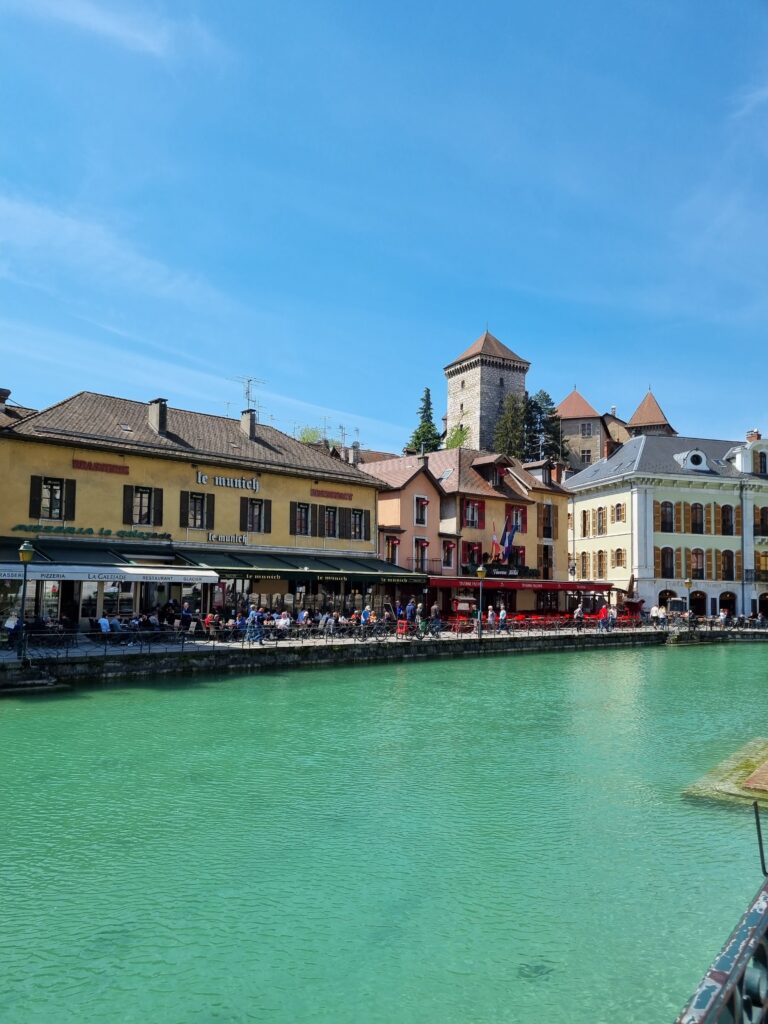
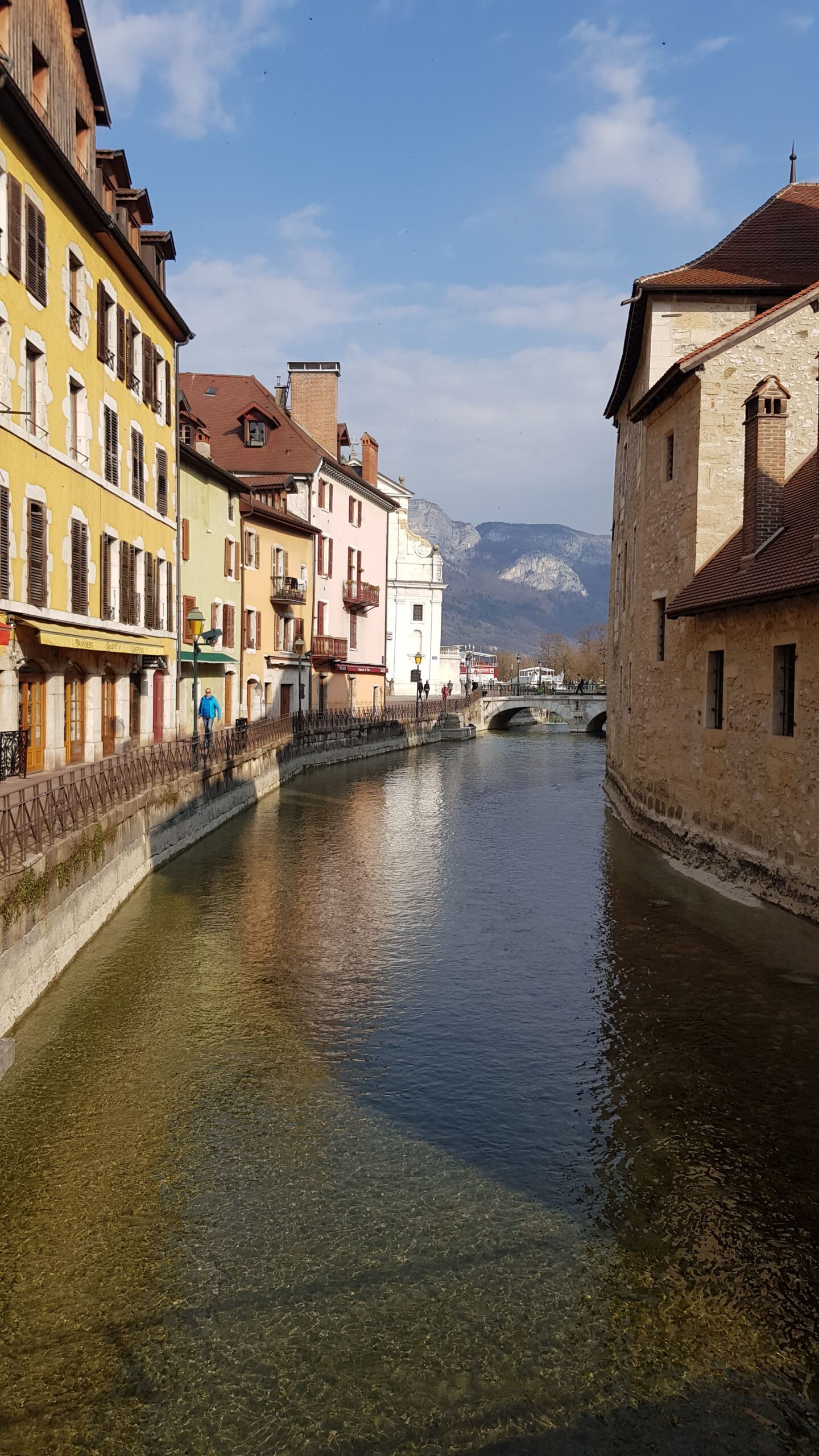
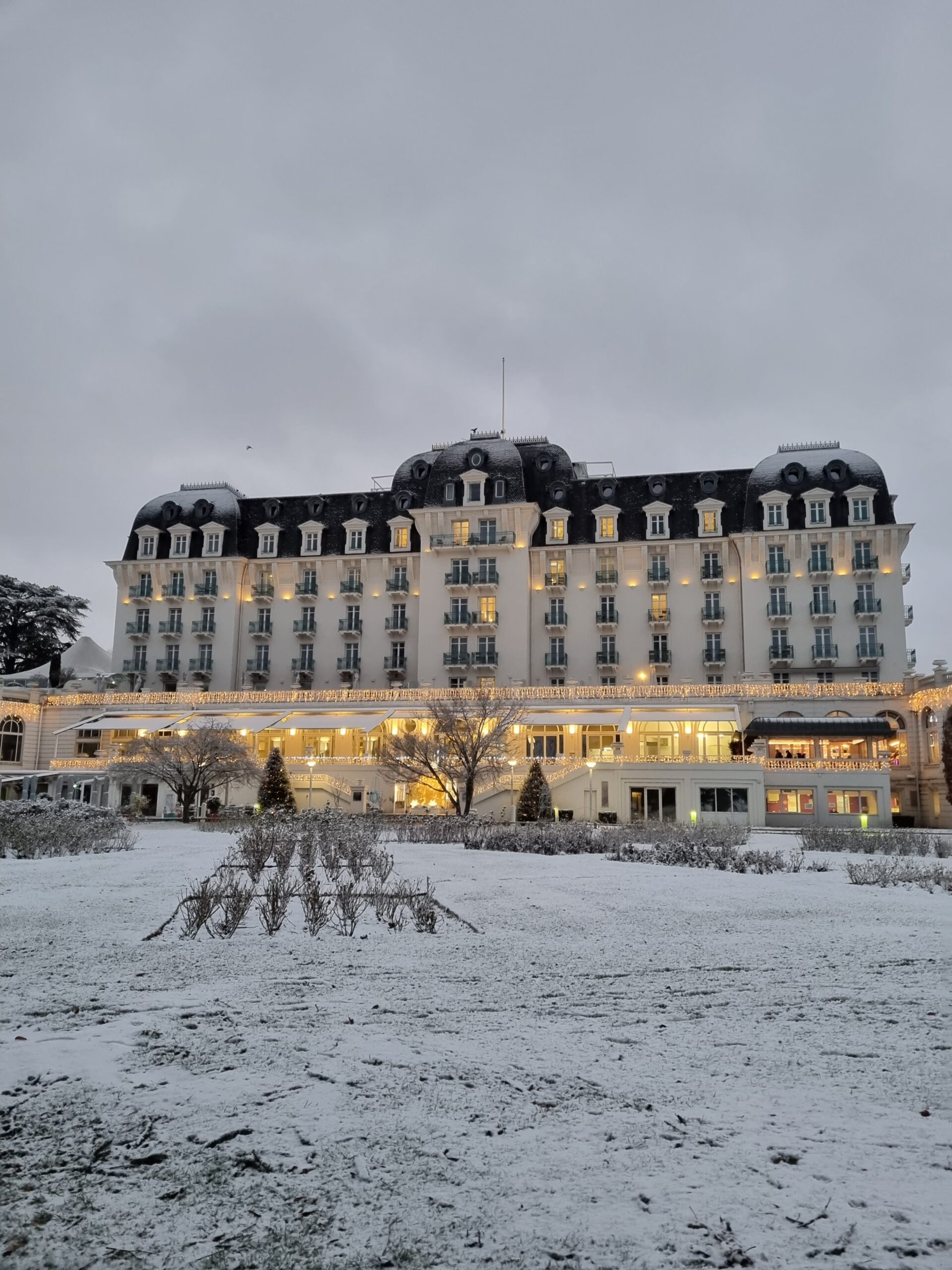
Annecy places to visit in 1 day
If you only have one day to visit Annecy, I have a plan that fits it nicely. You can enjoy the old town (which is fairly small, all things considered) and still make the most of Lake Annecy, the real highlight of the area. The trick is to stay central and to plan well. This is the order I follow when someone asks me where to take them: old town first, then the heights on the Visitation or castle side for a good view, then the lake. You can do it all on foot.
Step 1: visit Annecy’s old town, its shops and an ice cream
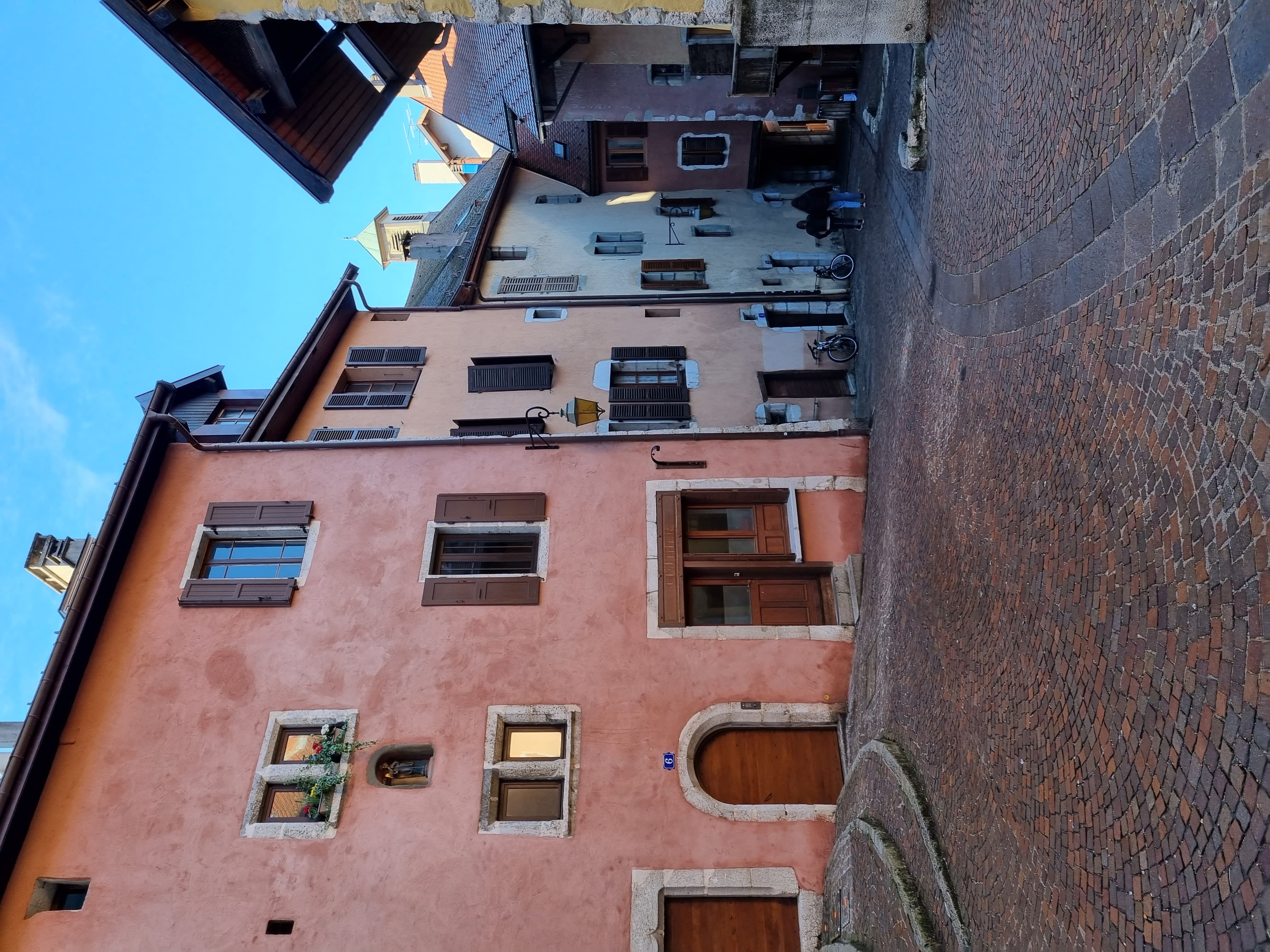
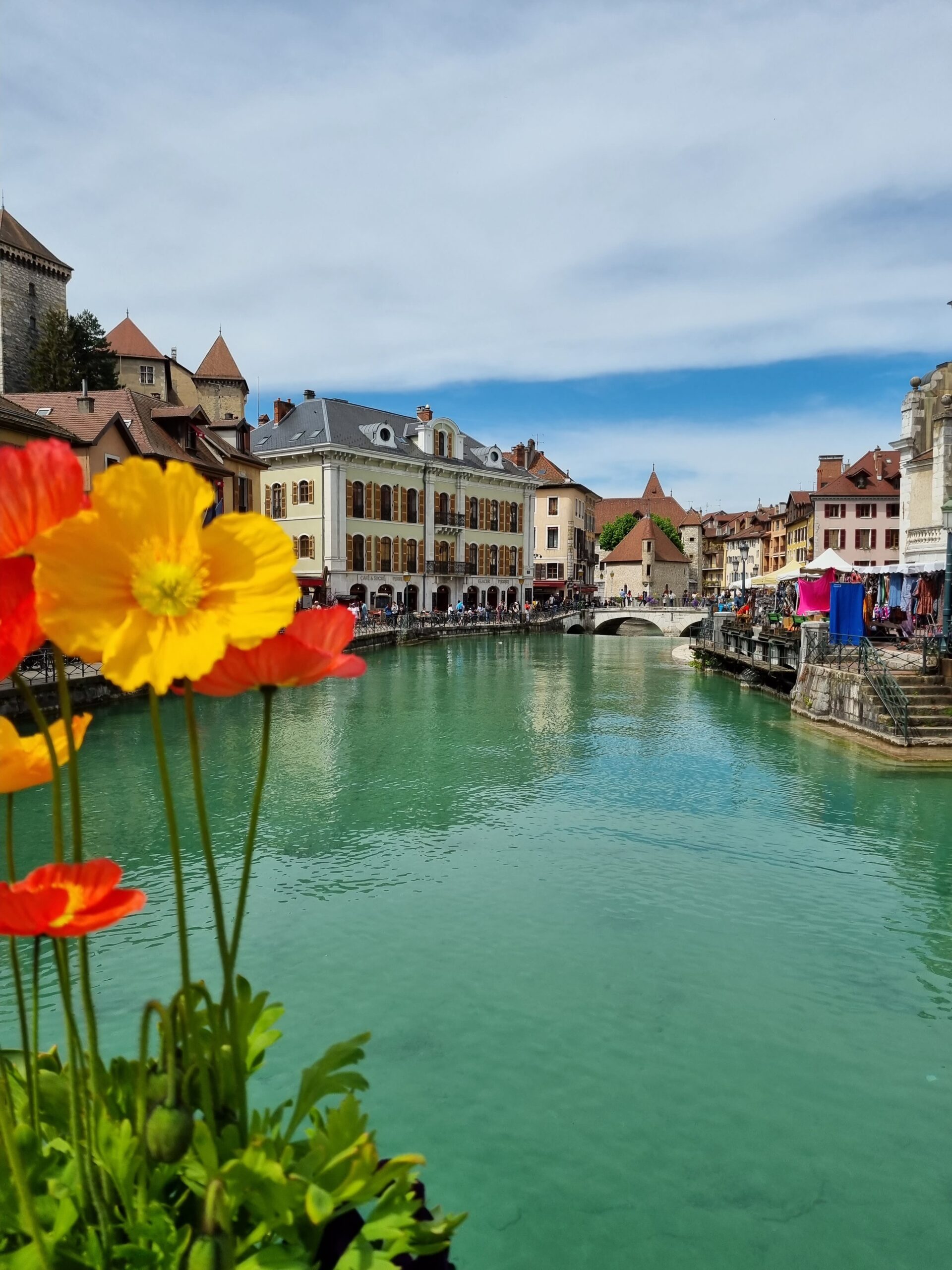
We start with the old town of Annecy. Depending on the season, I recommend setting an alarm and going early. That way you enjoy the canals, the Thiou quays and the rue Sainte-Claire with its arcades before the crowds arrive. It is very easy to find your way, so you can wander at your own pace, and the centre is genuinely lovely (it is completely pedestrianised). In the middle of the Thiou, the Palais de l’Île is a former prison, and its oldest parts date from the 12th century. If you come on a Tuesday, Friday or Sunday, the market sets up along the canals in the morning, with Savoie cheeses and seasonal produce.
This is also a good place for a bit of shopping, as the pedestrian zone mixes independent shops and big chains. It is the spot for a good ice cream while you walk, or for a meal near the Thiou or on rue Sainte-Claire. There are plenty of nice ice cream shops around. The Glacier des Alpes is excellent, but the queue is often long, so we switch regularly, and most of the ice cream shops on the street are very good.
If you have planned a brunch or a meal in the centre, now is the time. My addresses are in my articles on restaurants in Annecy and brunches in Annecy.
Step 2: the Visitation and the heights of the castle
Next we climb to the Basilica of the Visitation. Allow 10 to 15 minutes on foot from the old town, up a properly steep slope. Some people drive and park at the top, but it is so close that you may as well walk. The view over Annecy and the lake is worth the effort, and the basilica is beautiful.
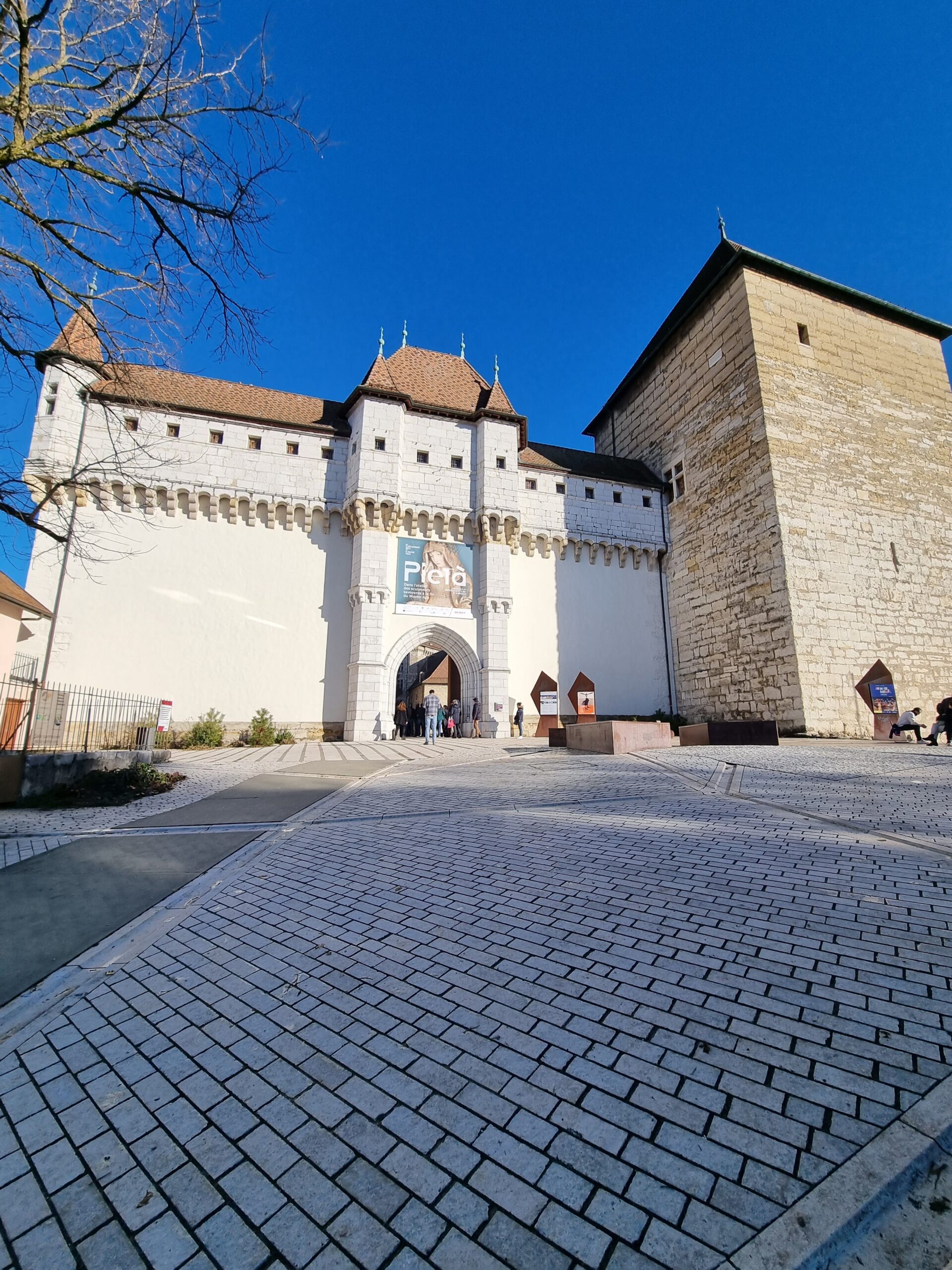
On the other side of the old town, Annecy castle towers over the rooftops. You reach it by the castle ramp, from rue Sainte-Claire, and the view there is really nice too. The Museum-Castle was the home of the counts of Geneva, then of the dukes of Genevois-Nemours. In 2026, the full price is €6.50 from September to December (City of Annecy rates). Entry is free on the first Sunday of the month, from October to May, at the castle and at the Palais de l’Île (official page). Animals are not allowed. To plan your visit, I wrote a full article on Annecy castle.
Step 3: the Pâquier, the Jardins de l’Europe and the Pont des Amours
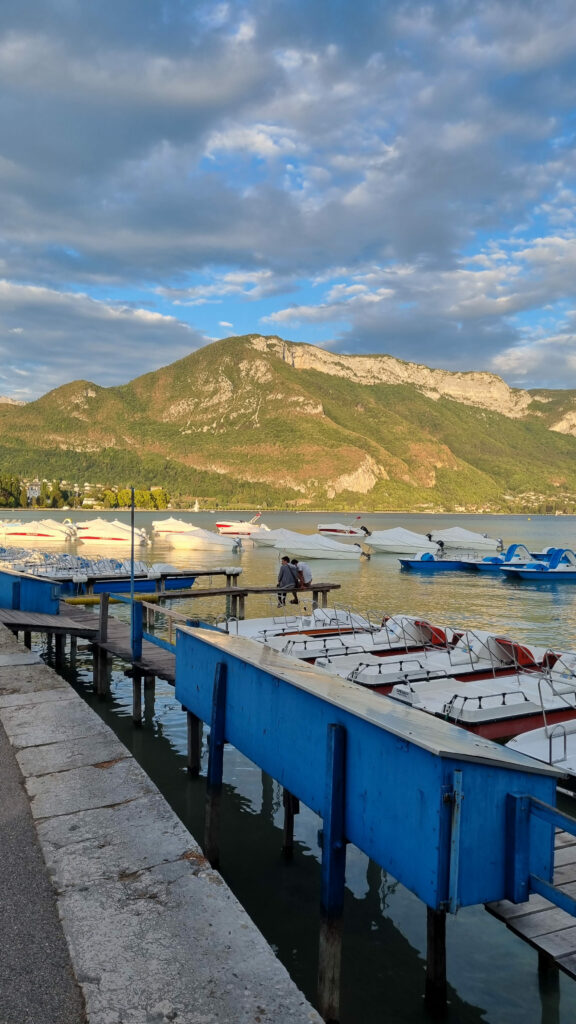
We head back down to Lake Annecy and stroll across the Pâquier, a few minutes’ walk from the town centre. It is the big lawn facing the water, in front of Bonlieu (where you will find the Burger King and the Tourist Office). The Pâquier is THE spot where locals jog, walk their dogs and have a picnic. It is also where you can hire a pedalo, with hire stands all along the promenade. Then head to the Jardins de l’Europe via the Pont des Amours. The bridge is stormed during the day. If you want the photo without the crowd, go early in the morning, even if that means swapping the order of the day and starting there.
Step 4: the walk to the Impérial park
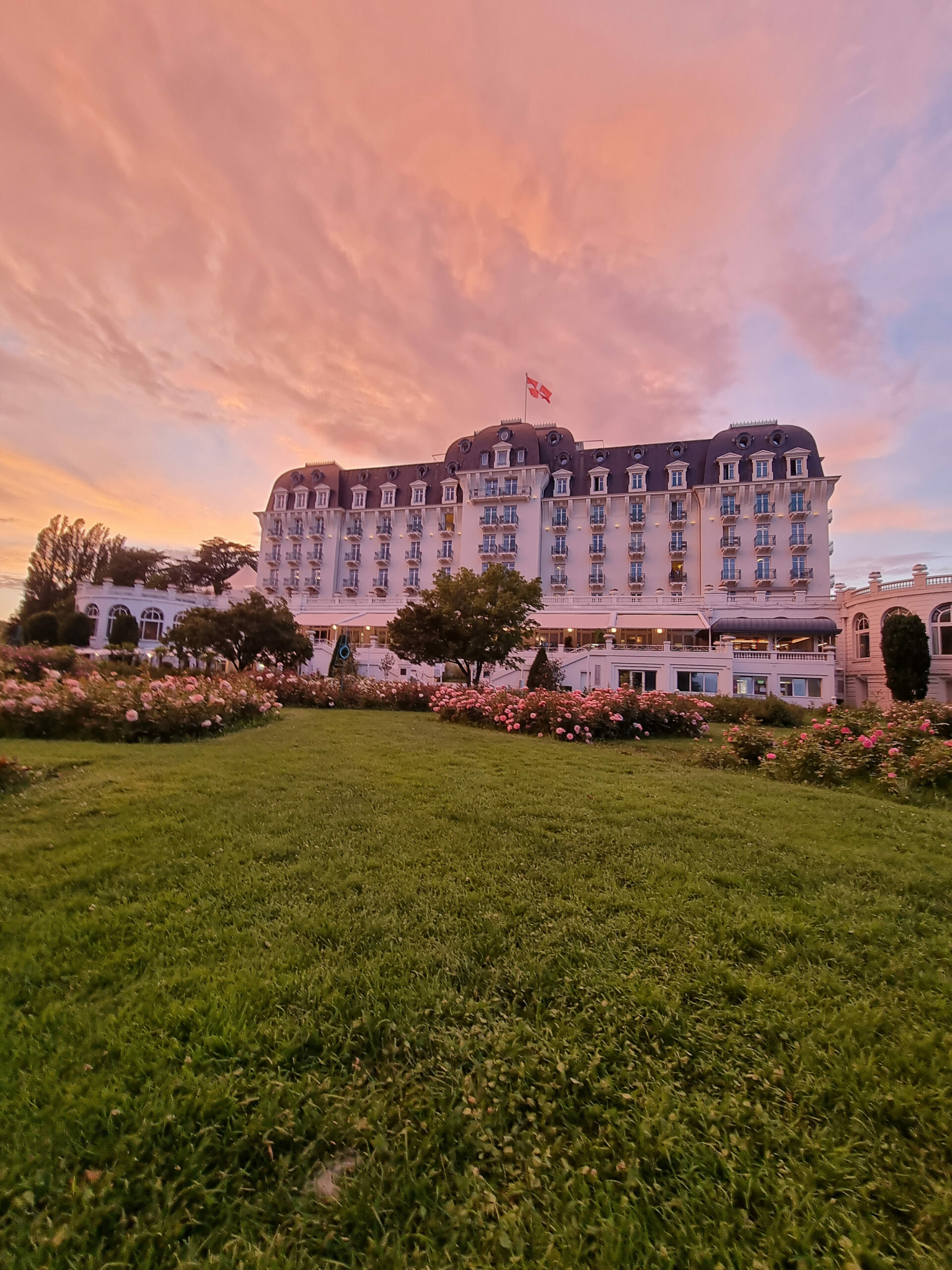
We finish by walking along the lake to the big white building you can see from the Pâquier: the Impérial hotel (and casino). The promenade along the lake is very pleasant, and the Impérial park is free and a good place to sit down (dogs are welcome). It is next to Albigny beach. You can even keep walking to the little port, which brings you to the foot of the famous Mont Veyrier.
Day 1 variations
Without a car: everything is done on foot from the station or from your accommodation.
By car: you can park in a central car park and do everything on foot. The Parc des Sports park and ride is free and open 24 hours a day, with a bus stop (official page).
If it rains: keep the old town, the Museum-Castle and the Palais de l’Île. Then add the Cité internationale du cinéma d’animation, open since 19 June 2026 at the Haras, 19 rue Guillaume-Fichet (CNC). A brunch or a Savoyard meal will warm you up, and honestly, still pop over to the Pâquier to admire the lake!
Visiting Annecy with a dog: we go to the Pâquier, the Jardins de l’Europe and the Impérial park. We go to the beaches off season. The Museum-Castle does not accept animals, so plan ahead if you come with your dog.
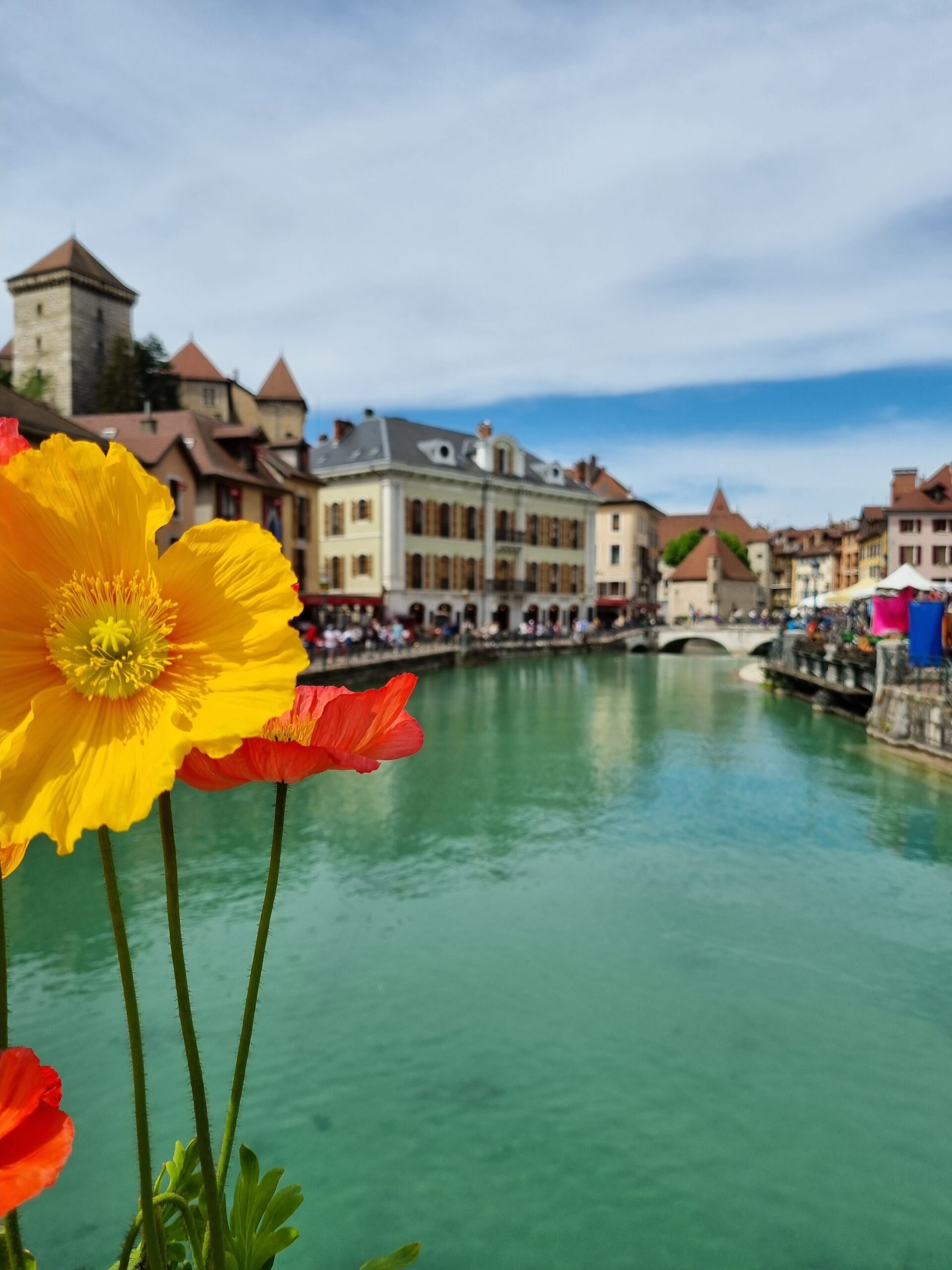
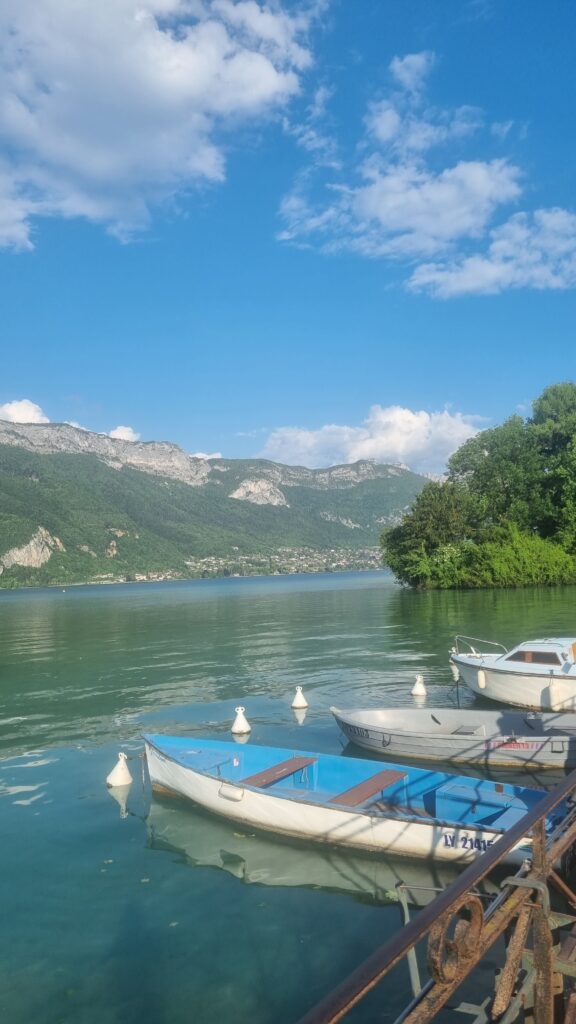
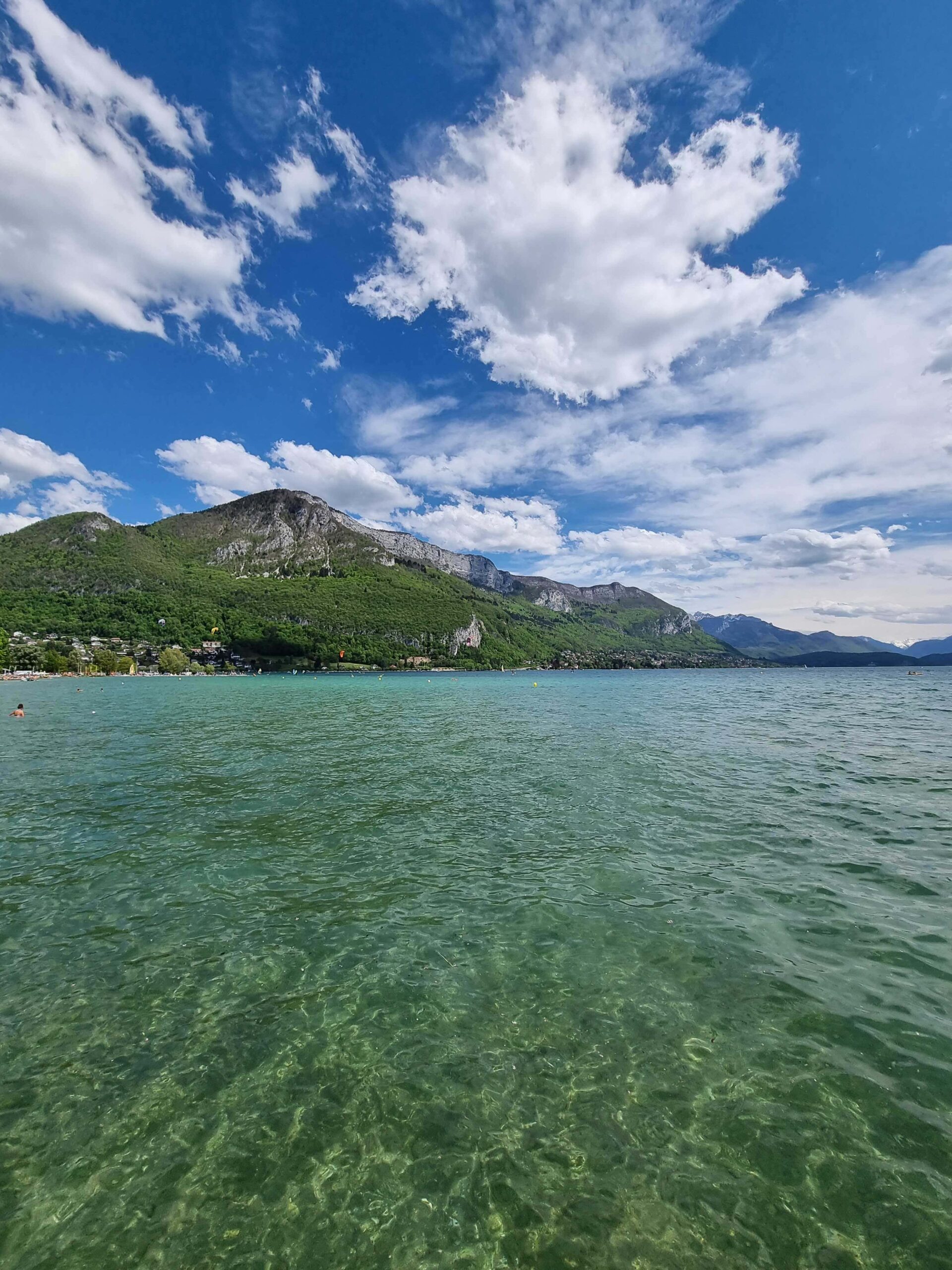
Visit Annecy: a little history to understand the town
Annecy makes more sense once you know where it comes from. The first traces of settlement are lakeside villages. From the Neolithic period, around 3000 BC, people settled on the shores of the lake, and the remains of their foundations were preserved by the rising water. The Romans then created Boutae, a small Gallo-Roman town that prospered at the start of our era before declining from the 3rd century. After that, the population gathered on the hill of today’s Annecy-le-Vieux.
The town you visit today was born between the 11th and 12th centuries, on the banks of the Thiou and at the foot of a fortification. Craftsmen took advantage of the power of the river, and the town took the name Annecy-le-Neuf, as opposed to Annecy-le-Vieux. In 1219, the counts of Geneva, in permanent conflict with the bishops of their city, settled in Annecy, which became their capital. We owe the castle to them.
Several fires almost entirely destroyed the town over the centuries (in 1340, 1403 and 1412 for the biggest ones), which pushed the town council to regulate how houses were built. The Genevois then came under the authority of the dukes of Savoy, and in the 16th century the castle became the residence of the dukes of Genevois-Nemours.
From the Reformation to 1860
In the 16th century, the Reformation changed everything. Geneva became Protestant, and the Catholic bishops took refuge in Annecy, where the Franciscans’ church became their cathedral. Annecy was then the last Catholic stronghold facing Geneva, which explains the number of churches and religious institutions in such a small centre. The 17th century is marked by Saint Francis de Sales, bishop of Geneva based in Annecy, and by the founding of the Order of the Visitation with Jane de Chantal, on 6 June 1610. The Sardinian period (from 1815 to 1860) was then a time of prosperity and embellishment for the town. Then Savoy was annexed to France in 1860, which also marked the start of tourism in Annecy.
Visit the old town of Annecy, place by place
The one-day itinerary gives you the thread. Here, for each place, is what to know before you stop: why go, what to look at, the practical details and what you can do right next door. Pick according to your time.
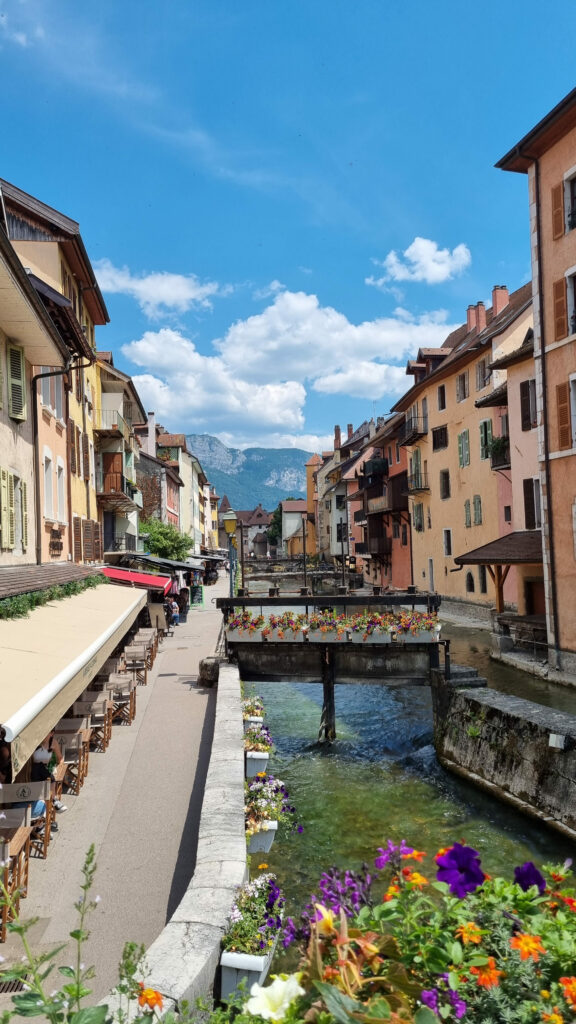
The Palais de l’Île
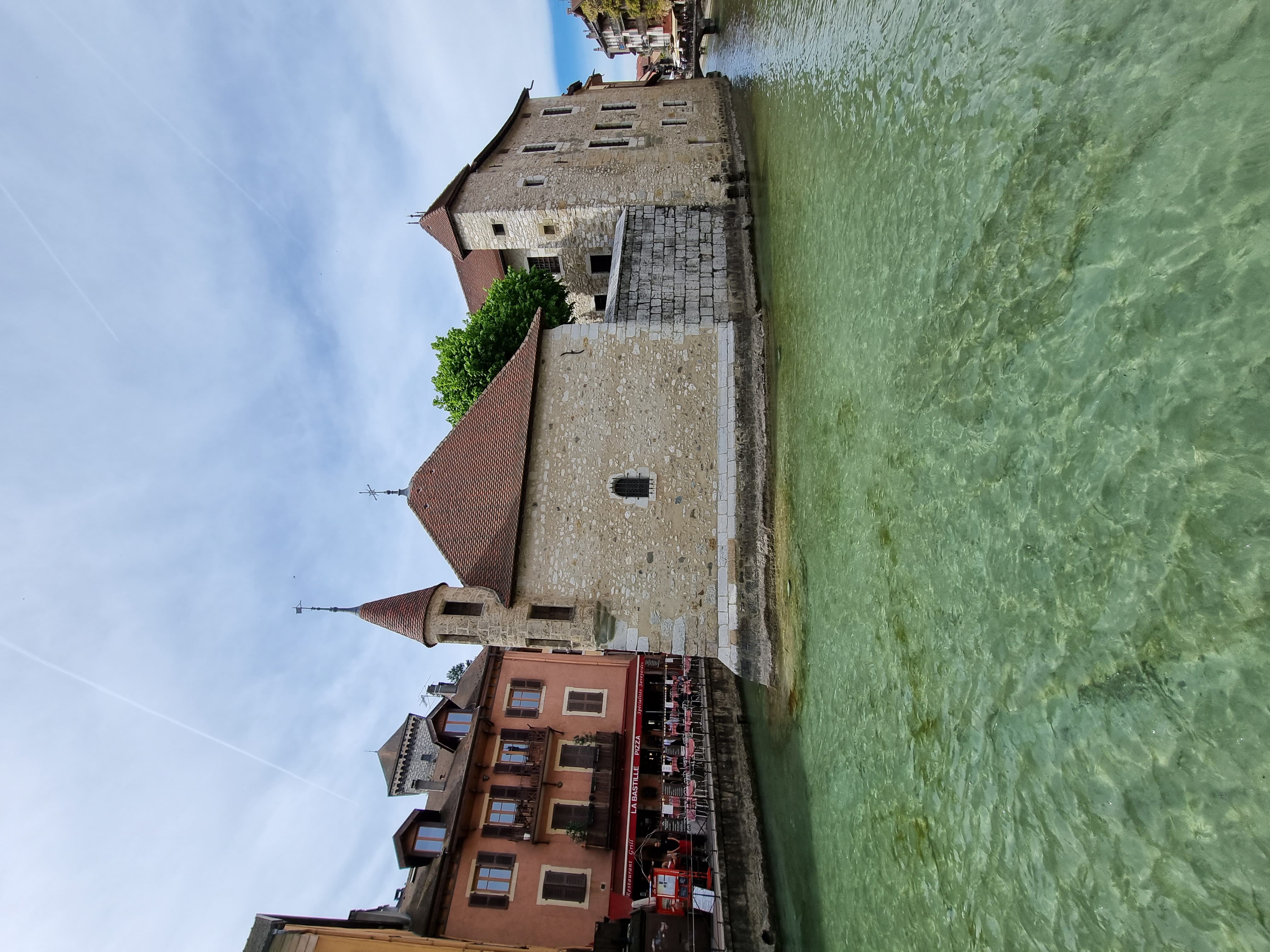
Why go. It is the most photographed monument in Annecy. Set on a rocky islet in the middle of the Thiou, it looks like a stone ship moored in the river, which earned it the nickname “the galley-shaped house”. It started out as a 12th-century fortified house.
It served as a prison from 1325 (that year, the count of Geneva paid the lord of the Isle to feed two prisoners). From 1355 it became a mint, when Emperor Charles IV gave the count the right to strike coins. At the end of the 16th century it housed the court and took the name Palais de justice de l’Île. It remained a prison until 1864 and became a home for the elderly from 1865 to 1880. It then escaped demolition by a whisker: the town council wanted to raze it to build baths, but the novelist André Theuriet and the historic monuments inspector Charles Suisse opposed it. The Palais de l’Île was listed as a historic monument on 16 February 1900.
Inside the Palais de l’Île
What to see. On the place de l’Île side, the façade is dominated by a tower containing a 15th-century spiral staircase. Inside, the tour passes through the former courtroom, where judges questioned the accused, then through the ground-floor cells (in the 18th century, about forty prisoners a year on average, and more than a hundred in 1794, in the middle of the Revolution). A scale model shows Annecy around 1730, when the town had about 5,000 inhabitants. The former chapel has hosted contemporary art exhibitions since 2018.
Practical information.
- Address: 3 passage de l’Île, in the heart of the old town.
- The Palais is run by the Musées d’Annecy, like the castle. Opening hours and prices change with the season, so it is best to check their website before you go.
- The castle and the Palais de l’Île are free on the first Sunday of the month, from October to May.
Nearby. A few steps away: the quai de l’Île and its façades plunging into the water, rue Sainte-Claire and its arcades, and the climb up to the castle.
The Pont des Amours and the Vassé canal
Why go. It is the ideal viewpoint between the lake and the town. On one side you have the lake and the mountains, and on the other the Vassé canal, lined with plane trees, where boats wait quietly.
Its official name is “passerelle du Jardin public”, but the people of Annecy renamed it the Pont des Amours (the Lovers’ Bridge) a long time ago. Legend has it that a kiss exchanged here unites lovers for eternity (it is up to you to test it). The current bridge dates from 1907 and illustrates early 20th-century iron architecture. Before it, there was a wooden footbridge in 1845, built for the visit of King Charles Albert of Sardinia. Then came an iron structure with three arches in 1859, taken down because boats struggled to get through.
What to see. The Vassé canal itself: it was dug by hand and partly follows the line of the old town fortifications. The canals of Annecy do not flow into the lake. It is the other way round: they start from the lake, whose overflow they carry away.
Practical information. Free access at any time. I suggest going early in the morning, when it is calmer.
Nearby. On the other side of the bridge, the Jardins de l’Europe. On the Pâquier side, pedalos and rowing boats and, following the canal, a merry-go-round dating from 1906.
The Jardins de l’Europe
Why go. It is the park of the people of Annecy, a stone’s throw from the old town and on the shore of Lake Annecy. It is an English-style park laid out in the 19th century, with centuries-old trees and a wide variety of species.
Its history is older than you might think. In the Middle Ages, there were “health huts” here, built on marshy islets, where the sick were isolated during epidemics. The land was then acquired by Lombard bankers in the 14th century, then by the Nemours family in the 17th century, who made it a first promenade. It finally went to the Order of the Visitation, whose nuns turned it into an enclosed garden linked to their convent by a covered bridge. It became national property during the Revolution. In the 19th century, the town launched a design competition and gave it the English style you know today.
What to see. Small plaques help you identify the trees. In 1864 there were already 650 of them, and more than 1,000 shrubs. You will also come across the statue of Claude-Louis Berthollet (1748 to 1822), a chemist born in Talloires who invented bleach, and the gnomon, a sundial designed in 1874 by a Capuchin friar, Father Arsène. From the quay, you can see the Île des Cygnes. There are also play areas for children.
Practical information. Free access, every day, all year round, quai Napoléon III.
Nearby. The Pâquier, the town hall, the landing stage for the lake boats, and the Pont des Amours right next door.
The Pâquier
Why go. In Savoyard dialect, the word “pâquier” means a pasture belonging to the town, where residents could graze their cattle for free. This big lawn used to lie outside the ramparts, at the gates of the town. Today it is the living room of the people of Annecy. It hosts the Fête du Lac and the International Animation Film Festival, and people simply come to sit, play or have a picnic. A viewpoint indicator helps you spot the peaks around the lake.
What to see. From the Pâquier, you see the spire of the Visitation and the castle towers at the foot of the Semnoz. The town hall, very close, was built in the middle of the 19th century on a site that was then outside the ramparts. It was chosen partly for its symbolism, as the beginning of a new era.
Practical information. Free access. At the water’s edge, you will see rowing boats and pedalos.
Nearby. On foot, allow about 20 minutes to the Impérial Palace, opened in 1913, by following the Pâquier and then the avenue d’Albigny. It is the walk from step 4 of the one-day itinerary.
Annecy castle and its museum
Why go. The castle sums up the history of the town, which it watches over as it did in the Middle Ages. It was created by the counts of Geneva, who stayed there from 1219.
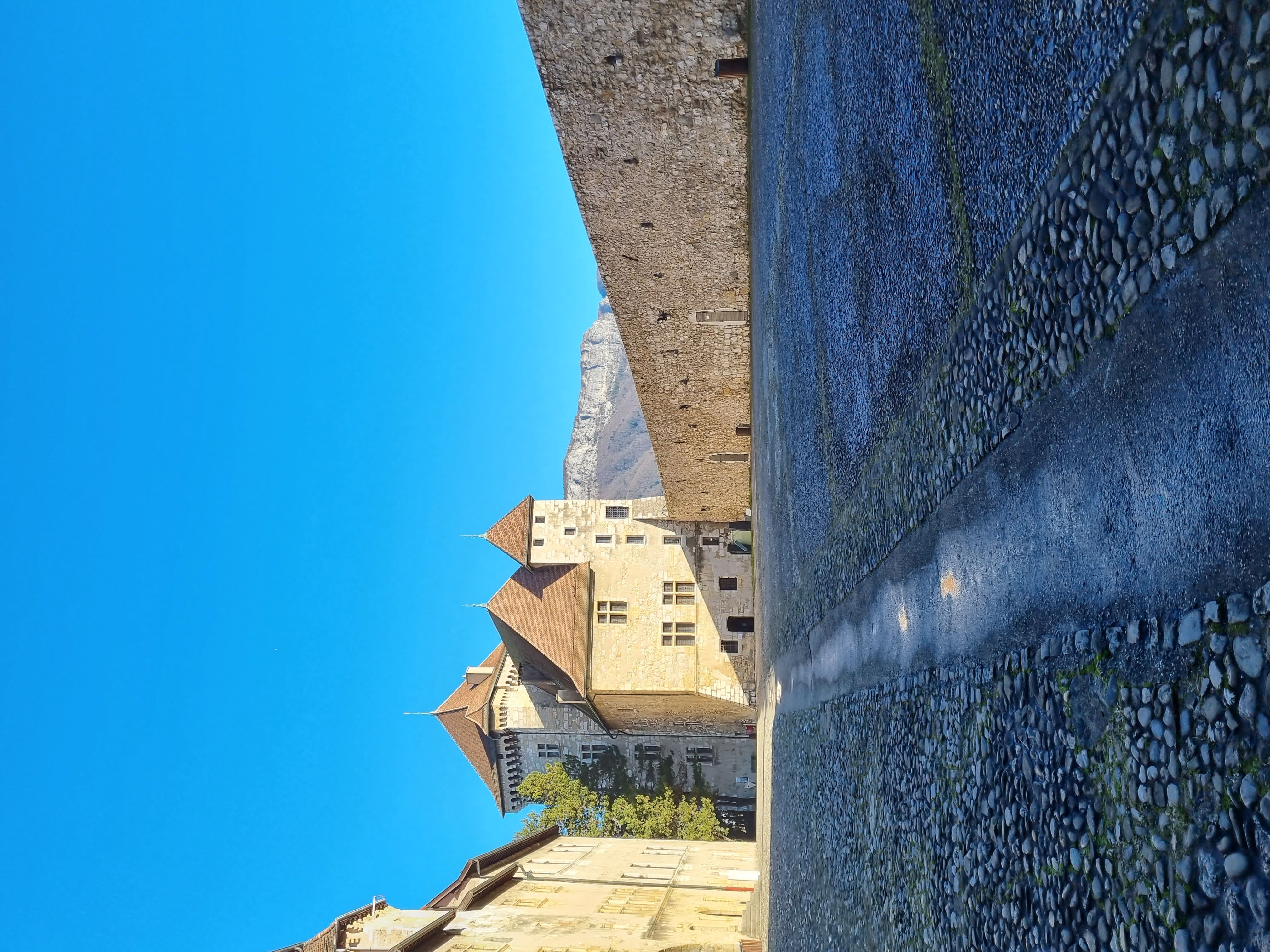
As you enter the courtyard (80 m long), you can spot several building periods. There is the Queen’s Tower, the oldest (13th century, more than 30 m high, with walls up to 3.30 m thick), the old lodging, the Perrière tower and lodging from the 15th century, and then the Nemours lodging, which introduced the Renaissance style around 1535. The new lodging was built between 1562 and 1571 by Jacques de Genevois-Nemours, who served as the model for the “handsome Nemours” in La Princesse de Clèves. Abandoned as a residence in the 17th century, the castle served as barracks until 1947. The town bought it in 1953 to turn it into a museum.
Inside the castle
What to see. In the courtyard, there is a well about forty metres deep, dug into the rock and mentioned as early as 1371. In the rooms, the collections range from lake archaeology to medieval sculpture, and from Alpine landscape paintings of the 18th to 20th centuries to contemporary art. Your ticket also gives access to the regional observatory of Alpine lakes (ORLA), with 700 m² of exhibition space in the tower and the Perrière lodging. The terrace offers a lovely view over the old town.
Practical information. Place du Château. Opening hours vary with the season, and everything is on the Musées d’Annecy website. The last tickets are issued 45 minutes before closing. To climb up from the old town, the côte Nemours follows the old rampart and is very steep.
Nearby. Rue Sainte-Claire below, the Palais de l’Île, and the lanes of the old town running down to the Thiou.
The Basilica of the Visitation
Why go. Perched on the hill, it overlooks the town of Annecy, with a view of the lake and the mountains. Annecy is considered the capital of devotion to Saint Francis de Sales and Saint Jane de Chantal. They founded the Order of the Visitation here on 6 June 1610, and their relics rest here. The basilica was built between 1922 and 1930, with a 72 m bell tower in reinforced concrete under its stone facing. The architect, Alfred-Henri Recoura, chose a fairly free Romanesque Revival style.
What to see. The outside is plain, but the inside is far less so. The columns of the nave are in blue Savoie marble, the mosaic of the apse is made of Venetian and Briare enamels, and the stained glass tells the story of the founders of the order.
Practical information. The climb from the old town is steep, so allow 10 to 15 minutes on foot. If you prefer, you can park at the top. It is a place of pilgrimage and quiet reflection, so a discreet outfit and attitude are expected.
Nearby. The neighbouring monastery, and the panorama over the lake from around the basilica.
Saint-Pierre cathedral and the churches of the old town
Why go. The old town has five bell towers: the Visitation, Notre-Dame-de-Liesse, Saint-Maurice, Saint-François and Saint-Pierre cathedral. The cathedral was built between 1535 and 1538 as the chapel of the Cordeliers convent, following a vow of piety made by Pierre Lambert. It almost immediately became the temporary cathedral of the bishops of Geneva who had taken refuge in Annecy after the Reformation. It was made the cathedral of the diocese of Annecy in 1822.
Churches, and a detour via Rousseau
What to see. The style is a severe Gothic, but the façade, finished last, shows the influence of the Italian Renaissance, with pilasters and a triangular pediment. It still keeps two pointed-arch windows and a Gothic rose window inspired by the one at Geneva cathedral. The choir was redesigned at the end of the 18th century by the Piedmontese architect Piacenza.
Nearby, the church of Saint-François (1 place Saint-François-de-Sales), the former chapel of the first Visitation monastery, was rebuilt in 1642 to house the tombs of Francis de Sales and Jane de Chantal. Its façade is inspired by that of the Gesù in Rome. Notre-Dame-de-Liesse is a place of pilgrimage recorded since the end of the 11th century. An inscription on its façade recalls that the future mother of Francis de Sales came to pray there in 1566 to have a son.
A detour via Rousseau. Just behind the cathedral, at 10 rue Jean-Jacques Rousseau, a small fountain called the Balustre d’or marks the spot where the young Jean-Jacques Rousseau, then 16, met Madame de Warens, 28, on 21 March 1728. The house where they lived was destroyed at the end of the 18th century to build the episcopal palace, now a music and dance conservatoire. Opposite the cathedral, a statue of Saint Peter decorates the Maîtrise house, where Rousseau learned music.
Practical information. Free entry to the churches outside services. Remember to dress appropriately.
The canals and the Thiou
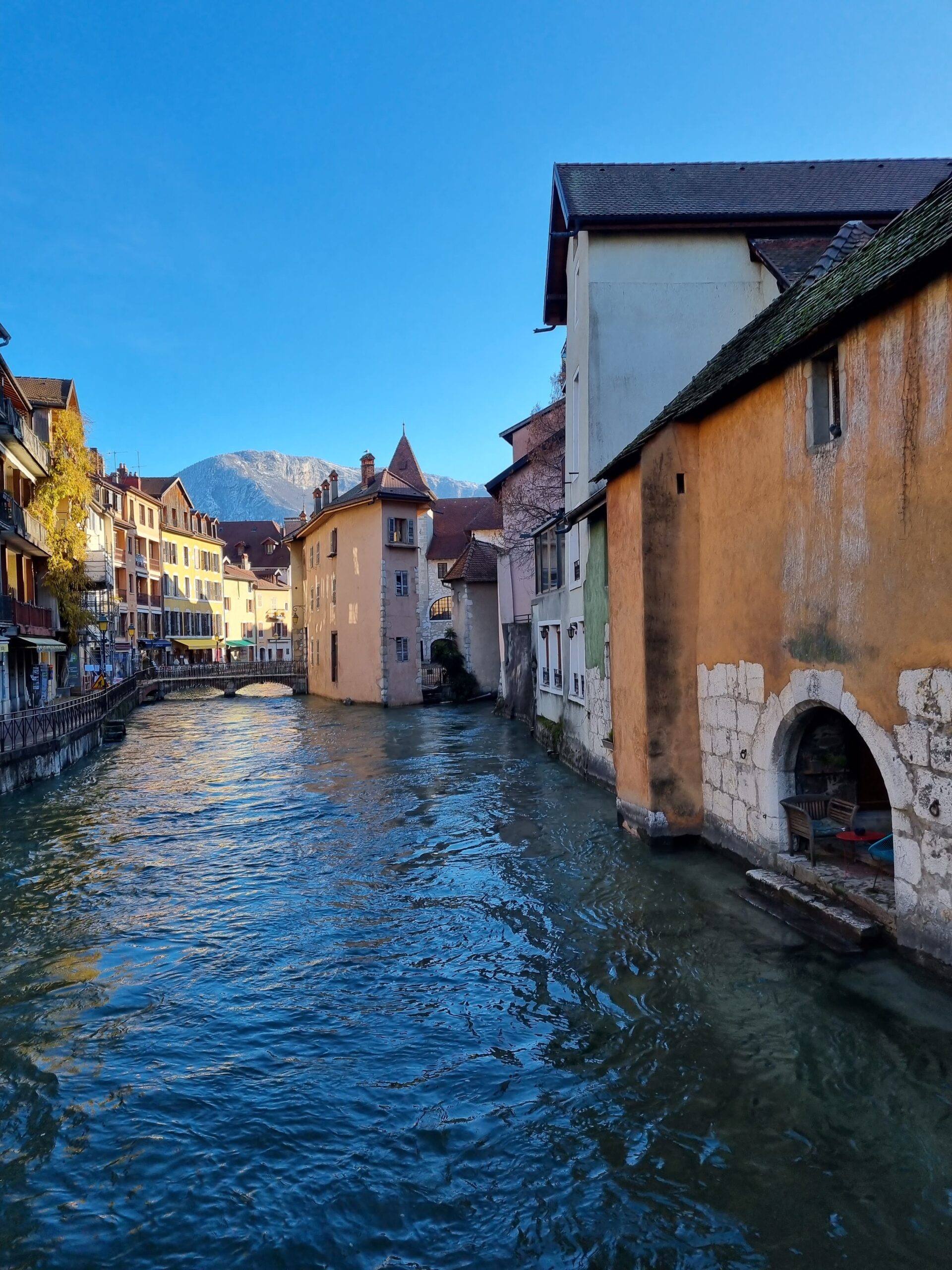
Why go. They are what gave Annecy its nickname, the “Venice of the Alps”. The Thiou, only 3.5 km long, is one of the shortest rivers in France. It is the natural outlet of the lake and flows into the Fier, a tributary of the Rhône. From the Middle Ages, craftsmen settled on its banks to use its power, and it fed industries from the 19th century. It also caused fear, as it flooded often when the snow melted, until sluice gates were installed to regulate its flow. The Vassé canal, the Saint-Dominique canal and the Notre-Dame canal complete the network.
What to see. The quai de l’Île dates from the middle of the 19th century, but the opposite bank has not changed. The houses plunge straight into the water and open onto the Thiou through water doors. At the Charmoisy manor, the door has kept the rings used to moor boats. On place Sainte-Claire, the Quiberet fountain (1635), at the foot of an arcade buttress, bears the trout, the emblem of the town. The pont Morens is the oldest stone bridge in Annecy, and the pont de la République offers a nice view over the Thiou and the old town.
Practical information. Everything is done on foot, freely. The streets are narrow and very busy in summer, so for photos, arrive early, before 10 am.
Nearby. The Palais de l’Île, rue Sainte-Claire and its arcades, and the castle a few minutes away.
Annecy places to visit in 2 days
On the first day, follow my guide to visit Annecy in 1 day and discover the centre. On the second day, if the weather is good of course, I suggest enjoying Lake Annecy a little more and stretching your legs. Depending on the weather, the season and how you feel, you choose one of the three options below, and you can very well combine two of them.
Option 1: cycle round Lake Annecy
Cycling round Lake Annecy is a must, and in high season it is positively stormed. It is about 38 km, almost flat, on a well-built greenway. I detail the route, the climb at Talloires and which direction to take in the section on cycling round Lake Annecy. If you would rather walk and take on a real challenge, have a look at the walk around Lake Annecy (currently in French only).
Option 2: paddleboarding
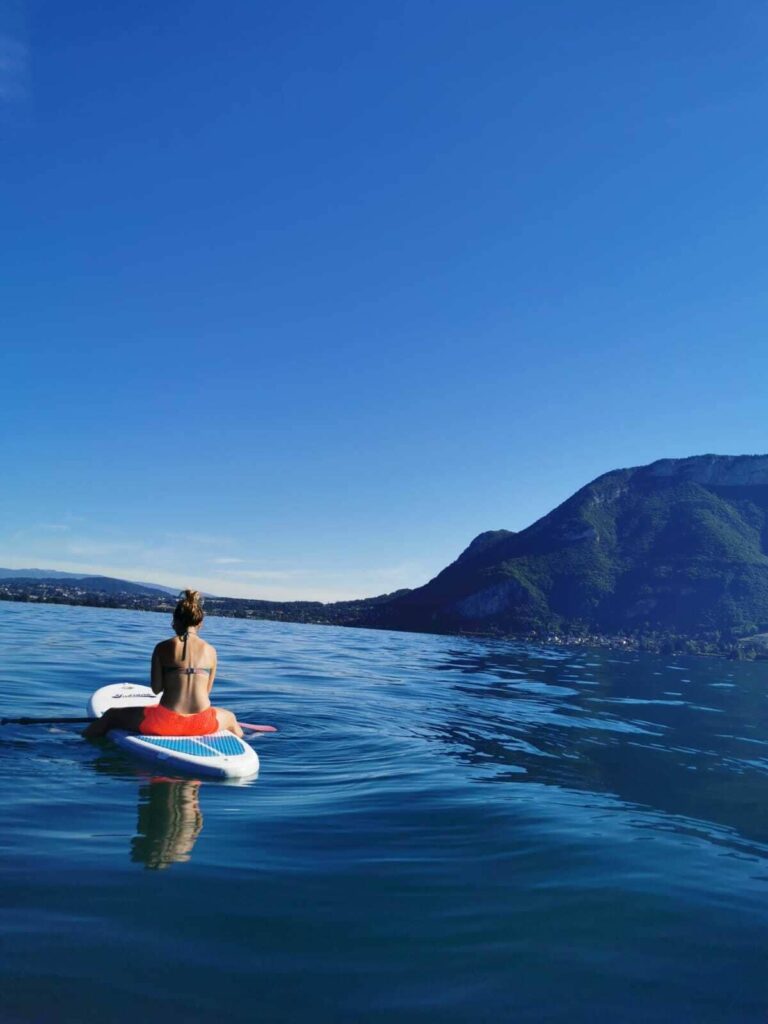
Lake Annecy is really great for paddleboarding (or kayaking), with plenty of beaches where getting into the water is simple, and many hire companies. The lake is calm most of the time, so it is easy even if you have never tried paddleboarding.
I listed my favourite places in my article on the paddleboarding spots in Annecy.
Option 3: swimming
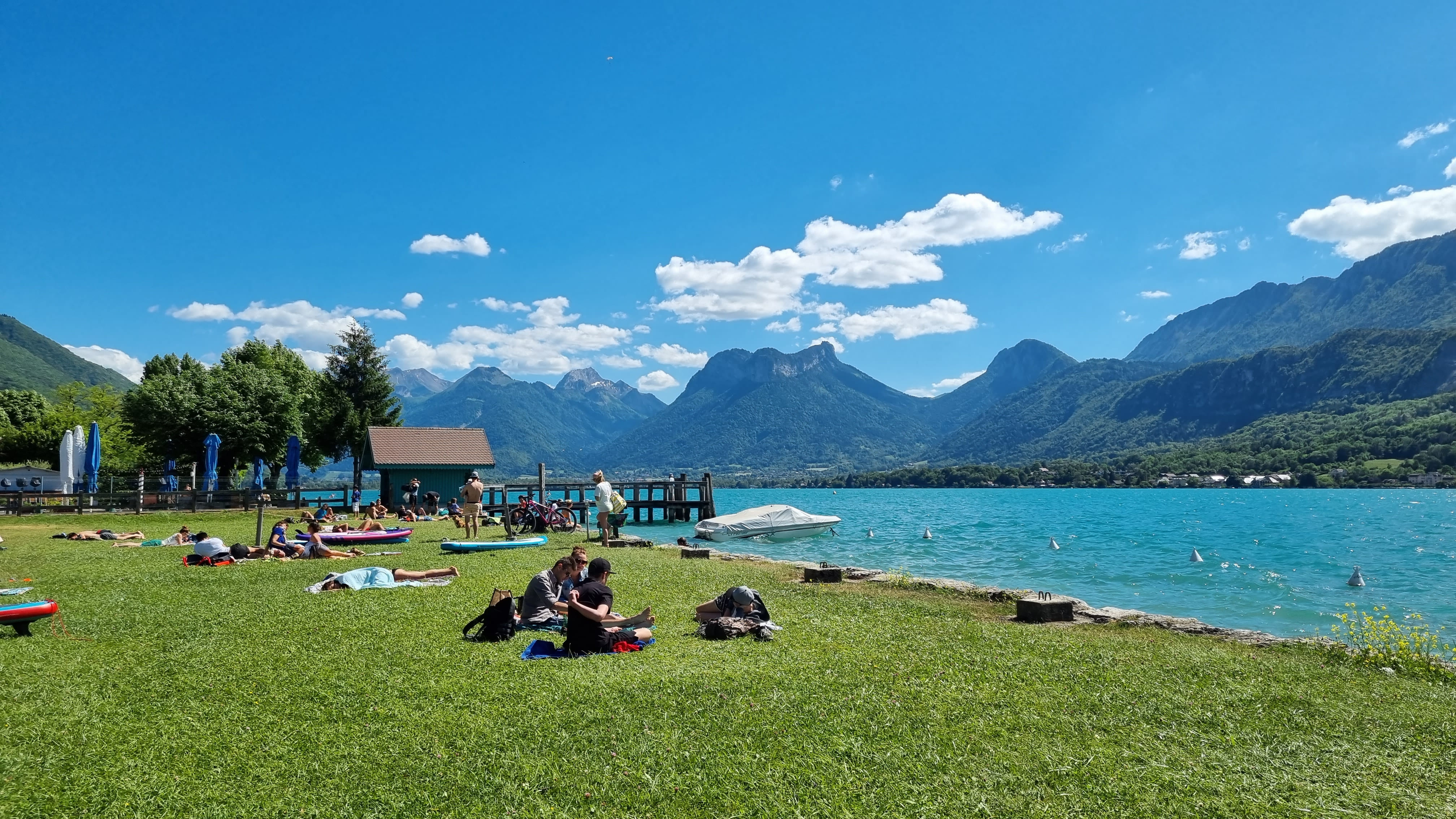
The Marquisats and Albigny beaches are easy to reach from the centre of Annecy, on foot or by bike. Swimming with a dog in high season is more complicated. Near the little port, at the Impérial where the landing stage is, at place d’Angon… Check the rules of each beach locally, especially if you come with a dog. For the full picture, with what is free, paid or open to dogs, see my guide to the Annecy beaches.
Day 2 variations
Without a car: hire a bike in town and reach the beaches on foot or by bike. For Talloires, the Sibra bus line 20 leaves from Annecy.
If it rains: switch to an indoor climbing gym (Cortigrimpe, Space Bloc), a spa or a brunch. My ideas are further down, in the rain section.
With a dog: Angon, around the Impérial and, off season, the beaches.


Annecy places to visit in 3 days
With three days to visit Annecy, you can treat yourself to a proper day at altitude, which I recommend to understand why we love living here so much. The first two days stay as described above, and the third heads up to the viewpoints.
Day 3: gain some height
For a lovely view over the town of Annecy, the Mont Veyrier hike starts on foot from town, without a car. It is easier to reach than the big mountain outings, but it is still committing: sporty and fairly technical in places. If you have a car, the col de la Forclaz also gives a very beautiful sunset. For the most motivated, the La Tournette hike or the Parmelan hike ask for more effort. You will find more ideas in my article on hiking in Annecy.
If you prefer a castle to a hike, look towards Menthon-Saint-Bernard (further down in the article).
Day 3 variations
Without a car: Mont Veyrier can be reached on foot from town.
If it rains: avoid the Veyrier, which is slippery in wet weather, and go to the Semnoz instead, where the routes are less technical at the top.
With a dog: the hike is part of our regular outings. The Veyrier is committing, so choose an outing that suits your dog.
Visit Annecy in 4 and 5 days
With four or five days, you can leave the centre to go round and visit the villages around Lake Annecy, then see what lies a few kilometres from Annecy. The first three days stay as described above. For day 5, you can either drive or find options by bus and by bike.
Day 4: Talloires, Menthon-Saint-Bernard and the shore of Lake Annecy
If I had to keep only one village around the lake, it would be Talloires. It is small and parking is a nightmare, but it is so beautiful! The bay is magnificent, you feel on holiday straight away, and the view of the Roc de Chère is unbeatable. You will find the Benedictine abbey, the priory, the church of Saint-Germain and the Angon waterfall, with three supervised beaches for swimming. I also really like Menthon-Saint-Bernard, with its magnificent palace and the walk along the lake. Between Menthon-Saint-Bernard and Talloires, the Roc de Chère nature reserve offers walks and viewpoints over the lake. I talk about it in my article on the Roc de Chère.
For the day, you can walk along the lake, have lunch on the spot, then go for a swim. The village-by-village details are in the section on the villages around the lake.
Day 5: the Gorges du Fier and Montrottier castle
On the last day, head to Lovagny, a few kilometres from Annecy. The Gorges du Fier and Montrottier castle are neighbours, so they are easy to combine. I wrote a full article on the Gorges du Fier, with the details of the visit, and the castle has its own section further down in this article. If the weather allows, finish the day on the Semnoz for the sunset, my favourite viewpoint (see the section on sunsets).
Day 4 and 5 variations
Without a car: for Talloires, the tourist office lists the Sibra bus line 20 from Annecy (page). Boats also serve the lake ports, including Talloires and Saint-Jorioz. For the Gorges du Fier, I did not find a bus service in the official sources, so ask the tourist office.
If it rains: Montrottier castle is a good option, and so is Menthon-Saint-Bernard castle.
With Rhéa: the official page for Montrottier castle says that animals are accepted (page). For the Gorges du Fier, check the rules on the official website before you come.
Respecting nature and preparing your outing
It is always important to say it when you come to visit Annecy (or anywhere else). The region attracts more and more people, in every season, and every gesture counts and has a direct effect on the trails and the beaches.
- Litter: take all your rubbish with you, even the small bits.
- Trails: stay on the marked trails and do not cut the bends.
- Getting around: choose the bike, walking or shuttles when you can.
- Lake path: keep to the right and do not stop suddenly without looking behind you.
- Mountains: check the weather before you leave. In winter, ask the tourist office, because a route that is easy in summer can become dangerous with snow.
Visit Annecy without a car
My first piece of advice to make the most of Annecy in summer: favour car-free travel, so you do not end up in endless traffic jams. It is hell, and we are the first to get stuck sometimes when we do not plan well. Believe me, it can be very long. The urban area has provided car parks slightly outside the towns, as well as shuttles. The bad news is that the car parks in the centre of Annecy are paid (and expensive). Several means of transport help you get around without a car: bike hire, shuttles for the climbs, and walking, since the centre is compact.
Where to park in Annecy and how to visit Annecy by motorhome
In season, the simplest thing is still to leave the car on the outskirts and do the centre on foot. The Parc des Sports park and ride, for example, is free and open 24 hours a day, with a bus stop (official page). For the Fête du Lac, the Haute-Savoie tourist office lists shuttles, buses and park and rides.
Motorhome areas around Annecy
In Annecy-le-Vieux, the service area at 48 rue Centrale is 200 metres from Albigny beach (page). On avenue des Marquisats, in Annecy, a reception and service area with 10 pitches is open all year in 2026, near a public transport stop (page, in Italian). At the end of the lake, in Doussard, the area on the route d’Annecy is close to the beach and the cycle path, and lets you reach Annecy by bus or by bike (page). I did not find parking prices on these pages, so ask before you come.
Visit Annecy-le-Vieux
It is very confusing, and it took me a while to understand the not-at-all-logical difference when I arrived here. The old town of Annecy is the one with the canals, whereas Annecy-le-Vieux is the neighbouring municipality just next door, a bit further along if you keep going towards the Veyrier (it is now part of the municipality of Annecy).
Albigny beach is a grass beach, open all year and free to access. It is supervised by lifeguards from the end of June to August, from 11 am to 7 pm, with free floating chairs for people with reduced mobility, showers, toilets and restaurants nearby. Just after, the Petit Port is lined with a promenade for pedestrians and cyclists, with a lovely view of the mountains around the lake.
The Mont Veyrier hike also starts on this side. If you come by motorhome, the service area on rue Centrale is a short walk from the beach.
Visit Annecy with family, children or a baby
In town
The guided tours of old Annecy, leaving from the tourist office, cost €6.50 at a flat rate and are free for under-12s (Ville d’art et d’histoire). The Cité internationale du cinéma d’animation, open since June 2026, is a good idea on rainy days. For a trip on the water, the tourist office lists commented cruises of about an hour.
At the beach
At Albigny, there are play areas for children and a restaurant with a terrace. Angon beach, in Talloires, is described as having a gently sloping entry into the water and family-friendly facilities, about 1 km from the village centre.
Days out
At Montrottier castle, a treasure hunt at no extra cost is offered from age 5, and an escape game from age 8 at €15 per visit including the castle. At Menthon-Saint-Bernard castle, entry is €6 for under-15s (castle website). For the Gorges du Fier, pushchairs are not allowed. Bring a baby carrier, and note that children cannot be carried in arms or on shoulders for safety reasons.
What to do in Annecy in summer
Annecy is a more and more popular town, and it is positively stormed as soon as the good weather arrives. Its success comes from the beauty of Lake Annecy, worthy of a postcard, and from the many activities you can do in summer. That success cuts both ways. As in many tourist destinations, the infrastructure quickly gets saturated and, let’s be honest, we end up treading on each other’s toes a bit in summer. There is a huge choice of things to do. I talk here about sporty activities that let you discover the surroundings and enjoy ever more beautiful views of the lake, but also about more laid-back leisure for those who want to relax.
Summer classics in Annecy
Cycle round the lake
The bike ride round Lake Annecy is the summer must. It lets you get a little away from the crowd in the centre, reach the beaches, cross the villages around the lake and admire the mountains that frame it. The tour of Lake Annecy is about 38 km, very well laid out with a greenway for most of it, from Annecy to Doussard via Sévrier and Duingt. Only a short section on the D909 to reach Talloires is still being developed and calls for more care. The route is generally flat, apart from the famous climb at Talloires, which is short but has a few hairpin bends and a good amount of climbing.
For the gentlest and most gradual version, take the lake on the left, that is, setting off towards Veyrier-du-Lac. If you prefer to do it on foot, have a look at my article on the walk around Lake Annecy (currently in French only).
There are many bike hire companies around the lake. An electric bike can be a plus depending on your fitness, but it is really not essential, even for people who do not ride often.
Be careful, the cycle path is very busy in summer with all sorts of users: runners, roller skaters, bikes, cargo bikes, Segways and more. For everyone’s safety, keep well to the right, do not stray into the left lane and do not stop suddenly without looking behind you.
Gain some height and admire the view
Lake Annecy is superb at its own level, and just as superb seen from the surrounding mountains. For a lovely viewpoint over Lake Annecy without taking the car or the bus, put on your shoes and do the Mont Veyrier hike. It is fairly technical in places, very sporty, and offers one of the finest views of the lake.
A little further on, the col de la Forclaz, reachable by car or by bike for the bravest, is also a great spot to admire the lake, and why not enjoy a beautiful sunset!
Swim in Lake Annecy
Depending on the time of year and the water temperature, it would be a shame not to go for a dip in the lake. It is one of the most beautiful natural swimming pools in the region, and cold-water swimming fans venture in all year round.
There are many beaches around the lake, some free and some paid. The two beaches easily reached on foot from Annecy are:
- the Albigny beach, just after the Impérial hotel. It is pleasant, with quite a lot of shade, but stormed in summer. Access is free, and there are plenty of car parks and nice little restaurants around.
- the Marquisats beach, a bit further from town, on the west shore. It is smaller than Albigny, and free as well.
Sporty things to do in Annecy in summer
Around the lake, there are many outings possible as soon as the good weather arrives: water, land or air activities. It would be hard to be exhaustive, so I focus on the most popular activities and invite you to look at my other articles for more routes and spots.
Mountain activities around Annecy
Hiking in Annecy
You will find my selection of hikes in Annecy, such as La Tournette, the Veyrier or the Parmelan. If you come to hike in Annecy, you will find very beautiful viewpoints, plenty of climbing, ibex and also quite a lot of people!
Road cycling
The tour of the lake is the flattest and most touristy option, which lets you bring the whole family for a relaxed outing. If you want to challenge yourself and take on the passes of the region, get ready to suffer. The two best-known passes near Annecy are:
- Col de la Forclaz, at 1,150 m, whose ascent is fairly short but bites (a 12% slope at the end)
- Semnoz, at 1,670 m, which offers several routes for the climb
Via ferrata around Annecy
There is no via ferrata in Annecy itself, but a few minutes by car will take you to several. The Thônes via ferrata is one of the closest but also one of the most demanding, better for a seasoned and sporty crowd. You start at the entrance of the village of Thônes. At La Clusaz, the Yves Pollet-Villard via ferrata is superb and promises incredible views over the Aravis. Le Grand-Bornand also has a via ferrata with an amazing view.
Water activities on Lake Annecy
In summer, it would be a shame not to enjoy the lake and its many water activities. Annecy is a great place for paddleboarding, as there are many beaches where you can get onto the water. Find more in my article on the beaches for paddleboarding around Lake Annecy. There are lots of paddleboard hire companies in Annecy and around the lake, and you may also meet locals who might agree to lend you their gear.
The lake is fairly calm in normal conditions, but when it is windy or very busy (especially with wake boats), you sometimes have to hang on a bit. The water temperature is about 20 °C in summer, or even more, but it can drop quickly if the weather turns. To get started, also see my paddleboarding tips and spots.
Paragliding, canyoning and the tour of Lake Annecy: practical information
Three activities come up again and again when you plan a stay in Annecy. Here is what to know before you book or set off.
Paragliding over Lake Annecy
Why go. The col de la Forclaz is often quoted as one of the most beautiful free-flight sites in Europe. Most flights take off from there and land at Doussard, at the southern end of the lake. In tandem, you do not need to know how to do anything, as a qualified instructor pilots. You simply walk a few steps to inflate the wing, then run about twenty metres to pick up speed at take-off. The view takes in the lake, the town of Annecy, the Aravis range and, in good weather, Mont Blanc.
Practical information.
- The meeting point is most often the landing area at Doussard or at the operator’s base, then a shuttle goes up to the col de la Forclaz (about thirty minutes from Annecy).
- Duration: 10 to 15 minutes for a discovery flight in the morning, and 40 to 50 minutes for a “prestige” flight that takes advantage of rising air. Longer flights tend to happen in the afternoon, when the thermals are active.
- Price: from about €130 for a flight of around thirty minutes, with differences depending on the school.
- Some schools also offer a child flight of about fifteen minutes.
Nearby. At Doussard, you can follow up with a swim, the nature reserve at the end of the lake and its interpretation trail, or the greenway.
My paragliding flight in Annecy (currently in French only)
Canyoning in the Angon canyon
Why go. The Angon canyon, above Talloires, is the best known around the lake. Its big waterfall, which you abseil down, is the highlight. The water is cool (about 10 °C), the season runs from May to the end of September, and everything is done with a guide.
Practical information.
- The discovery or family option includes slides, jumps and abseils of up to 15 or 18 m, for 1.5 to 2.5 hours in the canyon depending on the route, from age 8.
- Sportier options, with the big abseils in the waterfall, require you to be able to swim, not to be afraid of heights and, for the most committing ones, to have abseiled before. The minimum age is 14 to 16 depending on the route.
- The full route, reserved for experts, lasts about 3 hours with eight abseils.
- Equipment is provided: a 5 mm wetsuit, harness, helmet and canyoning shoes. Bring swimwear, a towel, closed sports shoes (no smooth soles) and a hair tie for long hair.
- Price: from €55 for the family option to €110 for the full route.
- Access: about 25 to 30 minutes from Annecy, at the village of Angon, one kilometre after Talloires. Allow a 15 to 40 minute approach walk depending on the route.
Nearby. Angon beach is very close for a swim after the effort, and Talloires is a few minutes away.
The bike ride round Lake Annecy: distances and stages
To plan ahead, here are the distances from Annecy on the west shore, the one with the greenway: Sévrier at 5 km, Saint-Jorioz at 9 km, Duingt at 12 km and Doussard at 18 km. This greenway follows the line of a former railway, which explains its very flat profile. At the exit of Duingt, the path goes through a former railway tunnel, pleasant on hot days, and you come out at one of the most beautiful viewpoints of the lake.
At Doussard, the former Bredannaz station is worth a stop. There is a steam locomotive from 1911, toilets, a fountain and a picnic area. At Sévrier, you can visit the Paccard museum, linked to the bell foundry of the same name. Between Doussard and Annecy, five beaches line the route: Doussard, Duingt, Saint-Jorioz, Sévrier and the Marquisats. In July and August, traffic exceeds 10,000 people a day on some sections, so setting off early in the morning makes the ride much more pleasant.
What to do in Annecy in winter
In winter, the lake is a little more neglected in favour of the surrounding resorts. Yet there is plenty to discover in Annecy in winter! A visit to the centre of Annecy is always worth it, as is a short walk around the lake and the climb up the Veyrier if the weather is fine and there has not been too much snow (check beforehand with the tourist office, for example). It is often too cold for a bike ride, of course, and only the most motivated cold-water enthusiasts put a toe in the lake.
Most hikes are no longer accessible, or only on touring skis or snowshoes. Some, like the Roc de Chère and the Taillefer, are still doable in winter. If you come in December, I also wrote about the Annecy Christmas market (currently in French only).
For those who still want to hike around the lake in winter, these are the routes I recommend:
- Mont Veyrier: you can climb at least as far as the col des Sauts, but you need to be very well equipped, because the ground is slippery and, if it has snowed, it can become dangerous
- the Roc de Chère hike, a small safe bet!
- for other ideas on snow, my article on snowshoeing in Annecy (currently in French only)
There are many ski resorts near Annecy, reachable by car or by bus depending on the case.
Semnoz: cross-country skiing, downhill skiing and snowshoeing
The resort closest to town, considered “the Annecy resort”, is only 30 minutes away by car: the Semnoz, the haunt of the people of Annecy. It has a few downhill runs, rather ideal for families or beginners, but they may quickly disappoint more experienced skiers. There is also a cross-country ski area at the Semnoz, with very pretty trails, a 360° panorama and routes through the woods. A few snowshoe routes (see my snowshoe routes at the Semnoz, currently in French only), sledging runs and food options complete the picture. It makes a good meeting point for those who want to do several mountain activities in the day.
Ski resorts near Annecy, in the Aravis
La Clusaz
The La Clusaz downhill ski resort is one of the best known in Haute-Savoie. The ski area is huge, and the village is very pretty and pleasant for a stay. La Clusaz is about 45 minutes by car from Annecy, and during school holidays or on fine weekends you unfortunately have to expect some traffic. You can get there by bus.
There is also a great cross-country ski area at La Clusaz, where you can do skating or classic cross-country skiing. It is a little higher than the village: the La Clusaz cross-country ski area. In the same area, there are great snowshoe hiking routes.
Le Grand-Bornand
The Le Grand-Bornand downhill ski resort is also one of the famous resorts of the region. A little more family-oriented (the runs are generally less technical), it has a very beautiful ski area.
Les Glières
The Glières Nordic area is one of the best known in the region.
What to do in Annecy when it rains
Yes, sometimes it rains in Annecy! A layer of grey cloud spreads over the lake and the rain pours down on our pretty lake. It is hard when you have come a long way to visit Annecy and you end up with a postcard streaked with rain. Don’t panic, there are plenty of cultural, foodie and even sporty alternatives. You can, for example, use this weather to try the good addresses in town. My article on my favourite restaurants in Annecy and the one on brunches in Annecy are waiting for you.
But it would be a shame to grumble all day while digesting your portion of raclette. Annecy still offers activities when it rains.
Sporty things to do in Annecy in the rain
Are you itching to get moving and happy to soak your Gore-Tex? I get it!
Hiking in Annecy when it rains
If it is raining but you still want to hike, avoid setting off on the Mont Veyrier hike, the mountain on the left of the lake when you stand by the old town. The Veyrier is a superb spot with beautiful views over the lake, but the path up is fairly technical towards the end and can be really slippery in the rain. Add a view blocked by cloud, and it is a pity to take risks for nothing. Go to the Semnoz instead, where the routes are more pleasant and less technical at the top. Or take the chance to stroll around the lake and watch the rain drumming on the water.
If you would rather stay indoors while still moving a bit, there are climbing gyms in Annecy and nearby, such as Cortigrimpe and Space Bloc.
Leisure in Annecy
Go shopping in Annecy
Not a big fan of cultural visits? Annecy has more and more places and services for young and old. There is the Pathé cinema in Annecy, near the station, and the Courrier shopping centre right next to it, with the pedestrian Sainte-Claire streets, which have many shops. Courrier, at the end of rue Sainte-Claire, mostly brings together big brands (Nature et Découvertes, Fnac, Zara and so on). The pedestrian zone of the old town makes for a nice stroll and lets you spot a few independent shops. Further out, the Epagny area, a few kilometres from Annecy, is also good for shopping. It is a more industrial area, with big stores, and it can be busy depending on the day.
Wellness in Annecy
What is better than a good bit of drizzle to take refuge in a spa? I have not tried all the spa, massage and wellness addresses in town, but I can recommend the Institut des Lys, not far from the station. The Deep Nature spa in La Clusaz is really great too, and I have heard good things about the Pure Breath centre in Meythet.
Unusual and fun activities in Annecy
There are plenty of escape games in Annecy. I have not tried any so far (at home, on rainy days, we tend to spend the day cleaning or doing other not-so-fun jobs), but the Atelier des Énigmes and the Mystères du Lac are often recommended. The bowling alley Le Bowl is quite well known too, but I have not tried it!
Cultural activities in Annecy
Historic sites
Of course, you do not have to wait for rain to take an interest in the cultural side of Annecy and its surroundings. But when people come here, it is often to enjoy the landscapes and outdoor activities. There is a castle in the old town: Annecy castle. And there are two other superb castles on either side of the lake: the Menthon-Saint-Bernard castle, high above the village of the same name, and the Duingt castle, on the lake shore.
Annecy castle sits in the heart of the old town, so you cannot miss it. Just take the steep lanes that climb up to it.
The Menthon-Saint-Bernard castle is a few kilometres from Annecy, above the village of Menthon-Saint-Bernard. It dates from the 13th century and still belongs to the Menthon family. It is not open all year, so check the opening times on the castle website before you go.
Religious buildings in Annecy
Annecy has many religious buildings, in the historic centre or on the outskirts.
The Basilica of the Visitation
The Basilica of the Visitation is the monument you often see from very far away. It overlooks Annecy and marks one of the entrances to the Semnoz. The building is very beautiful and offers an unbeatable view of Annecy and the lake. You can get there by car (there is a big car park) or on foot, by climbing a little from the centre of the old town.
Saint-Pierre cathedral
Saint-Pierre cathedral is in the old town, near the Thiou.
The church of Notre-Dame-de-Liesse
The church of Notre-Dame-de-Liesse is a few steps from Saint-Pierre cathedral. It is dedicated to the Virgin Mary.
The church of Saint-François-de-Sales
The church of Saint-François-de-Sales is named after the patron saint of journalists and writers.
Unusual sites in Annecy
The Jardins Secrets, in Vaulx, are an unusual place, somewhere between nature and very colourful architecture.
What to do around Annecy
Many things to see are a few kilometres from the centre. The two castles mentioned above, Menthon-Saint-Bernard and Duingt, are on the lake. The Semnoz, 30 minutes by car, can be enjoyed in summer and in winter. For hiking, I refer you to my articles on the Parmelan, the Lac de Lessy and the Pointe de Talamarche (currently in French only). For thrill seekers, there are also canyoning near Annecy (currently in French only) and the Gorges du Fier. If you are staying longer, have a look at my idea for a weekend in Annecy.


Villages around Lake Annecy to visit
Going round the lake also means crossing its villages, each with its own beach and its own little speciality. I start with my favourites.
Talloires
My favourite village on the lake: very pretty and very pleasant. The tourist office nicknames it “the pearl of the lake” and mentions its Benedictine abbey, its priory, the church of Saint-Germain and the Angon waterfall (page). There are three supervised beaches, an 18-hole golf course and paragliding from the col de la Forclaz. The tourist office also suggests a loop of about 2 hours 30 from the village to the church of Saint-Germain, with views over the lake (tourist office article). To get there without a car, take the Sibra bus line 20 from Annecy.
Menthon-Saint-Bernard
I really like this village, and above all the walk along the lake. The Menthon-Saint-Bernard castle overlooks the village. Full price is €12 from age 15, €6 for under-15s, and €3 for the gardens and terraces only. The castle website lists opening every day from 10 am to 7 pm in summer, theatrical night visits on Wednesdays by reservation, and a “Santa’s Castle” from 13 November to 2 January (castle website). This is the 2026 information, so check again before you come. Between Menthon-Saint-Bernard and Talloires, the Roc de Chère is a nature reserve with walks and viewpoints over the lake (my article).
Veyrier-du-Lac
The village is the best-known starting point for Mont Veyrier. The Haute-Savoie tourist office mentions two beaches, the plage de la Brune and the plage du Plan (page).
Sévrier
Sévrier has a municipal beach (the Haute-Savoie tourist office lists it alongside the beaches of Annecy) and is home to the lake ecomuseum and the Paccard museum, devoted to the bell foundry. Remember to check opening times and prices for both before you go.
Saint-Jorioz, Duingt and Doussard
At Saint-Jorioz, the landing stage is on esplanade de l’Espérance and the beach is municipal. Duingt has its old village, and the Haute-Savoie tourist office highlights its three castles. Doussard is at the end of the lake, near the beach and the cycle path, and its motorhome area lets you reach Annecy by bus or by bike.
Castles to visit around Annecy
Annecy has its own castle, above the old town. Around the lake, two others are well worth a visit.
Montrottier castle, in Lovagny
Built between the 13th and 15th centuries, it overlooks the Fier valley, right next to the Gorges du Fier. In 2026, it is open from 1 April to 31 October, at €10 for adults, €6 from age 6 to 15 and free for under-6s (Haute-Savoie tourist office). The official page says that animals are accepted and that the castle is not wheelchair accessible (page). From 14 July to 20 August, guided tours are offered in the morning.
Menthon-Saint-Bernard castle
Prices and opening times are in the section on the village of Menthon-Saint-Bernard, further up. The castle also offers theatrical night visits on Wednesdays, by reservation.
What to do around Annecy: three outings by car
The Gorges du Fier
You will find the Gorges du Fier in Lovagny, about fifteen kilometres from Annecy, with a big free car park at the entrance. The Haute-Savoie tourist office recommends about 1 hour for the gorges and non-slip shoes, and notes that the gorges often close at the beginning of October (Haute-Savoie tourist office). For the visit in detail, read my article on the Gorges du Fier visit.
The Seythenex cave and waterfall
In Faverges, the Seythenex waterfall drops 45 metres in a site labelled as a geosite. The cave is the only underground gallery open to the public in Haute-Savoie, with a guided visit of about 35 minutes. In 2026, the site was open from 18 April to 20 September, from 10 am to 5 pm in April, May, June and September, and from 9 am to 6 pm in July and August. The price of the walk to the waterfall is €6 for an adult, and two big 150 m zip lines run above the waterfall (official page). Dates change every year, so check before you go.
The Glières plateau
The Glières plateau is at 1,450 m altitude. It sheltered nearly 500 Resistance fighters from January to March 1944 (official page). There you will find the National Monument to the Resistance, inaugurated in 1973 and open every day with free access. There is also a loop of about 1 hour with 12 reading tables and 2 viewpoint indicators, between the Mémoire du maquis building and the monument (page). Free booklets for adults and children are available on site. Find out about the current access conditions, as the road can be closed at certain times.
Annual events in Annecy
Four events come back every year. The dates below are the ones I found on the official websites, so check them for each new edition.
Venetian Carnival: the parade of masks takes place on the second weekend after Shrove Tuesday, in the old town and by the lake. The next edition is announced for 19 to 21 February 2027 (tourist office).
International Animation Film Festival: the next edition is announced for 13 to 19 June 2027 (official website).
Fête du Lac: the fireworks over the lake took place on Saturday 1 August in 2026, in the baie d’Albigny, with the show “L’Âme du Monde”. The Haute-Savoie tourist office lists the Pâquier, Albigny, Veyrier-du-Lac, the col de la Forclaz, the Semnoz or a boat on the lake as viewpoints (Haute-Savoie tourist office).
Fête du retour des alpages (the festival of the return from the mountain pastures): in 2026, it was held on Saturday 10 October, with a big parade in the old town (Haute-Savoie tourist office). In winter, I also wrote about the Annecy Christmas market (currently in French only).
Where to see the sunset around Annecy
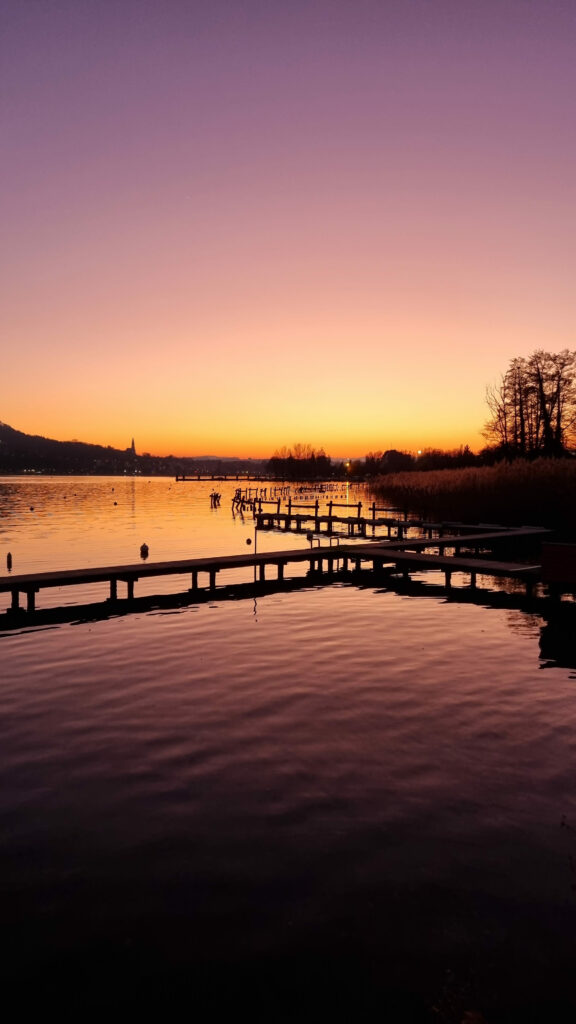
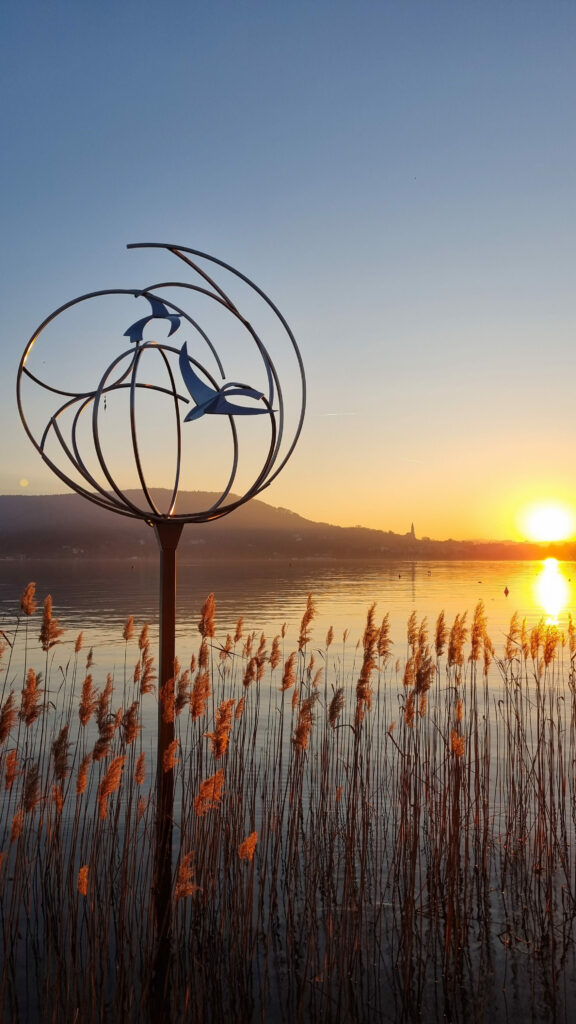
The Semnoz, my favourite viewpoint
My favourite for the sunset is the Semnoz. The summit, the Crêt de Châtillon, peaks at around 1,700 m, and two viewpoint indicators give a 360° view (Visorando). In summer, you can park near the Crêt de Châtillon and walk about ten minutes to the viewpoint (randos-montblanc.com).
The col de la Forclaz
At 1,147 m, the pass offers a view over the whole lake. By walking 15 minutes to the paragliders’ take-off, you get the finest view of the lake, according to the tourist office (panoramas). The restaurant Le Balcon du Lac is at the pass.
The Saint-Germain hermitage
Above Talloires, at 720 m, the hermitage and its church from 1780 overlook the bay of Talloires and the lake (tourist office).
Mont Veyrier and the Petit Port
I talk about Mont Veyrier in its own article. The Petit Port promenade, in Annecy-le-Vieux, offers a lovely view of the mountains around the lake. For all the viewpoints at altitude, bring a head torch for the way down.
Frequently asked questions about visiting Annecy
Is Annecy worth visiting?
I think so, but I am biased, as I settled here after falling in love with the area. If you are wondering whether Annecy, France is worth a trip, here is what the place offers. The centre is compact and completely pedestrian. One day is enough for the old town, the castle and the lake, and a longer stay opens up bike rides, paddleboarding, swimming and hikes with views over the lake. The catch is the crowds in summer, so go early in the morning and favour car-free options.
What is the best time to visit Annecy?
It depends on what you want to do. In summer, you can swim, cycle round the lake and paddleboard, but the town is stormed and the infrastructure saturates quickly, so you tread on each other’s toes a bit. In winter, the lake is a little more neglected in favour of the surrounding resorts. The old town, a walk around the lake and the Christmas market are still worth it, and the Semnoz and the Aravis resorts are close for snow. The section on annual events gives the dates of the main yearly festivals.
Is Annecy expensive to visit?
Quite a few things are free: wandering the old town, the Pâquier, the Jardins de l’Europe, the Impérial park and the Albigny and Marquisats beaches. The Museum-Castle costs €6.50 in 2026 (September to December), with free entry on the first Sunday of the month from October to May. Car parks in the centre are paid and expensive, but the Parc des Sports park and ride is free. Activities cost more, for example paragliding from about €130 and canyoning from €55. I do not cover accommodation or restaurant prices in this article.
How long do you need to visit Annecy?
One day is enough for the centre (old town, Visitation, castle, lake). With two days, you add the lake by bike, by paddleboard or with a swim. With three days, you climb to the heights, to Mont Veyrier for example. For a longer stay, have a look at my article on a weekend in Annecy.
What can you do in Annecy without a car?
Almost everything. The old town, the Visitation, the castle, the Pâquier and the Impérial park are all done on foot. The tour of the lake is done by bike, and Mont Veyrier can be reached on foot from town. For Talloires, the tourist office lists the Sibra bus line 20 from Annecy.
Where can you park in Annecy?
For the day, the tourist office advises parking in a car park in the centre and doing everything on foot. The Parc des Sports park and ride is free, open 24 hours a day, and serves a bus stop (official page).
What can you do in Annecy when it rains?
The Museum-Castle and the Palais de l’Île, the Cité internationale du cinéma d’animation (open since June 2026), shopping in the old town, a brunch, a climbing gym like Cortigrimpe or Space Bloc, or some wellness time. Avoid Mont Veyrier, which is slippery in the rain. More details in the rain section of the article.
Can you visit Annecy with a dog?
Yes for the Pâquier, the Jardins de l’Europe, the Impérial park, walks along the lake and hiking. The Museum-Castle and the Palais de l’Île do not accept animals. For swimming, people swim where it is possible, at Angon or near the Impérial for example. Ask locally, and favour the beaches off season.
Can you swim in Lake Annecy?
Yes. You can swim at the Albigny and Marquisats beaches, both listed by the tourist office. The Impérial beach is open all year and supervised in season, with a ban on using the neighbouring diving boards and slide (tourist office).
What can you do in Annecy in winter?
The Semnoz offers cross-country skiing, downhill skiing and snowshoeing, and the Aravis resorts (La Clusaz, Le Grand-Bornand, Les Glières) are close. You can read my article on snowshoeing in Annecy and the one on the Christmas market (both currently in French only).
Do you have to pay to visit Annecy castle?
Yes, but entry is free on the first Sunday of the month from October to May, at the castle and at the Palais de l’Île. The details are in my article on Annecy castle.
Can you visit Annecy by motorhome?
Yes, with areas around the lake: in Annecy-le-Vieux (48 rue Centrale, 200 m from Albigny beach), on avenue des Marquisats in Annecy (10 pitches, open all year in 2026) and in Doussard. For the centre, leave the motorhome on an area and reach town on foot, by bike or by bus. Check prices locally.
What can you do in Annecy-le-Vieux?
Albigny beach, free and supervised from the end of June to August, the Petit Port promenade with its view of the mountains, and the start of the Mont Veyrier hike. More details in the dedicated section of the article.
What can you do in Annecy with family or a baby?
Guided tours of old Annecy that are free for under-12s, Albigny beach with play areas, and a treasure hunt from age 5 at Montrottier castle. At the Gorges du Fier, pushchairs are not allowed, so bring a baby carrier.
Where can you see the sunset around Annecy?
My favourite viewpoint is the Semnoz (Crêt de Châtillon, about 1,700 m, 360° viewpoint indicator). You can also go to the col de la Forclaz (1,147 m) or to the Saint-Germain hermitage, above Talloires. Bring a head torch for the way down.
Can you see Annecy in one day?
Yes. My one-day plan starts with the old town, its canals and an ice cream. You then climb to the Visitation and the castle for the views, walk down to the Pâquier, the Jardins de l’Europe and the Pont des Amours, and finish with the promenade to the Impérial park. Everything is done on foot, and the plan has a rainy-day version if the weather turns.
Is Annecy good for hiking?
Yes, there is a lot of choice. Mont Veyrier can be reached on foot from town, without a car. It is sporty and fairly technical in places, with one of the finest views of the lake. La Tournette and the Parmelan ask for more effort, and the Roc de Chère nature reserve offers walks and viewpoints over the lake. Expect very beautiful views, plenty of climbing, ibex and quite a lot of people.