When we set out to cross Réunion on the GR R2, I knew the adventure would show me incredible landscapes. But nothing had prepared me for the isolation and raw beauty of the Cirque de Mafate. This place can only be reached on foot or by helicopter. And it feels like a natural sanctuary in the heart of Réunion. After hours of walking through the cirque, I felt a real connection with nature. And a sense of isolation that is hard to find elsewhere. The Cirque de Mafate is part of the Réunion National Park, a UNESCO World Heritage site, which makes it especially protected and respected by hikers. Modern life has no place here, and only the trails link the different îlets (the small hamlets of the cirque).
For hiking fans, Mafate is a dream destination and an essential stop when you plan your holiday in Réunion. Every step takes you through striking landscapes, from dizzying ridges to rivers winding along the valley floors and dense, green forests. It is not only a physical challenge. It is also a way into the local culture of the people of Mafate, who live in isolated îlets and keep simple traditions alive. In this guide, I share my time in the Cirque de Mafate, with practical tips to organise your trip and details about the îlets that give the place its charm.
Sommaire
Cirque de Mafate in short
In short: the Cirque de Mafate has no road access, so you walk in or fly in. Most hikers enter by the Col des Bœufs or the Col du Taïbit. A day hike to La Nouvelle takes 4 to 5 hours return. For a real immersion, plan one night at Marla, or three days to cross the cirque. The dry season, from May to October, is the best time to go. Below, I explain each route, each îlet and where to sleep.
Where is the Cirque de Mafate?
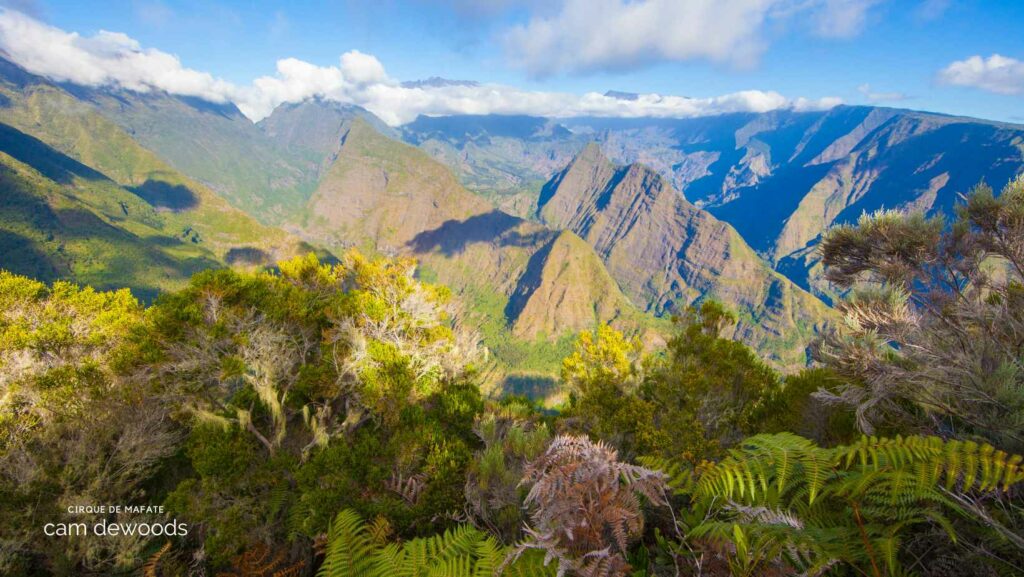
The Cirque de Mafate sits in the centre of Réunion, surrounded by imposing mountains that are hard to reach. It is one of three cirques formed by the collapse of volcanic calderas. Mafate stands out for its complete isolation: unlike the cirques of Cilaos and Salazie, no road leads in. That is what makes Mafate so special and so fascinating. You have to earn your way into this world apart. The cirque covers about 95 km² and is framed by the high walls of the Piton des Neiges, the island’s highest summit.
Historically, Mafate takes its name from a Malagasy word meaning “the one who kills”. The name recalls the time when the first inhabitants, escaped slaves known as “marrons”, took refuge in this remote place to flee their oppressors. Today, their descendants still live in some of the îlets and keep a simple way of life in harmony with their surroundings. The rugged geography and the lack of modern infrastructure make the cirque as fascinating as it is authentic, a haven for nature and adventure lovers.
How to visit the Cirque de Mafate
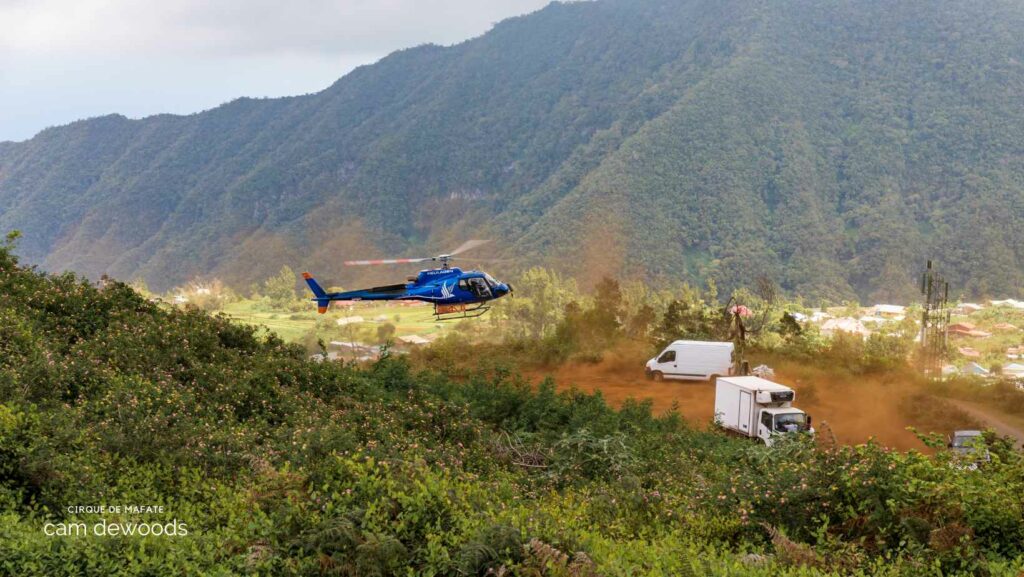
There are two main ways to discover the Cirque de Mafate: on foot, along hiking trails, or by helicopter. This enclosed, preserved cirque attracts visitors looking for authenticity and adventure. Each option has its own character, so it is worth choosing the one that matches the experience you want.
Reaching Mafate on foot: immersion and authentic discovery
Walking remains the most immersive way to visit Mafate. And the one that lets you sink into the atmosphere of the place. On the hiking trails, you will see varied landscapes and move through an exceptional natural setting. Be aware that the paths are not always easy. The climb can be significant, and the trails are sometimes steep and rocky. Even so, you meet every kind of walker here, from experienced hikers to families with children and less sporty people. The most accessible îlets, such as Marla or La Nouvelle, are fairly easy to reach, which makes Mafate open to a wide audience despite the physical effort.
One of the main advantages of going on foot is the total immersion. You walk for several hours, sometimes under a fierce sun, cross rivers and climb steep slopes. Little by little, you let go of the modern world and appreciate the raw beauty of Mafate. Arriving on foot, you understand why this place has stayed so preserved and isolated: you get there on the strength of your legs. And every step brings you closer to this untamed nature. Walking also gives you time to notice details, feel the mood of the place and meet the residents, who have lived here for generations and travel on foot from one îlet to the next. It is a real return to basics, and a way to reconnect with a slower rhythm of life, close to nature.

The helicopter option: quick but controversial
If you want to save time or get a spectacular view from above, a helicopter is another option. This transport is common in Réunion, where helicopter tourism is well developed. Flights let you fly over the cirque and reach remote areas quickly, with a wide view of the steep ridges, the waterfalls and the deep valleys. As a nature lover, though, I am a little reluctant. Helicopters create real noise and environmental pollution in this protected area. They disturb both the precious silence of the place and the local wildlife. Frequent helicopter transport of goods and people into the cirque also has an impact that, in my view, could be avoided with less invasive alternatives.
Of course, it can be tempting to take the helicopter to save time, especially if you have only a few days to explore the cirque. If you can, though, I recommend hiking instead. It respects the environment, and it lets you live Mafate fully, without skipping a stage, feeling the effort and the reward of every step.
The main entry points: Col des Bœufs and Col du Taïbit
If you hike in, the main entry points to the Cirque de Mafate are the Col des Bœufs and the Col du Taïbit. Both lead easily to the first îlets, and both give stunning panoramas from the very start.
The Col des Bœufs is probably the most used access. It is close to the cirque de Salazie, and it leads quickly to the îlets of La Nouvelle or Marla, which are among the largest and best equipped in the cirque. The trail here is fairly well maintained, and the climb stays manageable for hikers of all levels. It is one of the entry points most used by families and occasional walkers who want to discover Mafate without tackling very technical trails. The hike from the Col des Bœufs plunges you straight into the mood of Mafate, with striking views of the surrounding ridges and a gradual immersion in the lush vegetation of the cirque.
The Col du Taïbit, for its part, is easier to reach from Cilaos and also leads to the îlet of Marla. This trail is a little more technical and can take more effort, especially if you are not used to mountain hiking. However, it offers a superb view of the surrounding landscapes. And arriving in Mafate by this path brings a particular sense of achievement. It is also popular with hikers who want to discover Mafate as part of a longer circuit, for example by joining the GR R2, which lets you explore the cirque in more depth.
Hiking in the Cirque de Mafate: routes not to miss
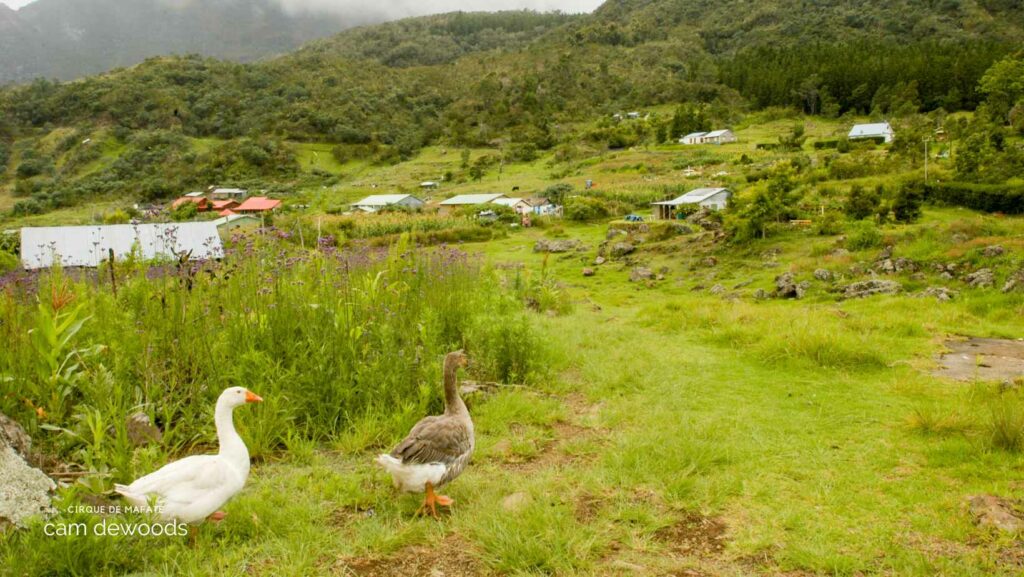
The Cirque de Mafate offers many routes for all levels and all lengths of stay. Whether you are a beginner or an experienced hiker, alone, as a couple or with family, Mafate has routes that suit you. To soak up the atmosphere of the cirque fully, spending at least two nights there is ideal, especially if, like us, you cross Mafate as part of a longer trek such as the GR R2. Here is an overview of the different types of routes, with their strong points, average distances and a few practical tips.
1. Day hike: a quick look at La Nouvelle
Route: Col des Bœufs – La Nouvelle – Col des Bœufs
- Distance: About 8 km return
- Elevation: 600 m
- Time: 4 to 5 hours return
- Best for: Families and occasional hikers
- Why go: This accessible route gives a first look at Mafate by linking the Col des Bœufs to La Nouvelle, the busiest îlet. With its small shops and gîtes, La Nouvelle is a charming and welcoming place, ideal for a lunch break. You can do this circuit in a day, so hikers can enjoy the scenery without too much physical effort.
2. Two-day route with one night in Mafate: immersion in the cirque
Route: Col des Bœufs – Marla – Roche Plate – Col des Bœufs
- Day 1: Col des Bœufs – Marla (about 6 km, 3 to 4 hours, 400 m of climb)
- Night: Gîte in Marla (booking recommended)
- Day 2: Marla – Roche Plate – Col des Bœufs (12 km, 5 to 6 hours, 700 m of climb)
- Best for: Intermediate hikers
- Why go: This route lets you spend a night in Marla, an isolated îlet surrounded by mountains. After a quiet evening in a gîte, you continue to Roche Plate the next day. It is ideal if you want to take time to explore several îlets and enjoy the special atmosphere of the cirque.
3. Three-day immersion: a full crossing of Mafate
Route: Col des Bœufs – La Nouvelle – Roche Plate – Marla – Col du Taïbit
- Day 1: Col des Bœufs – La Nouvelle (4 km, 2 hours, 600 m of climb)
- Day 2: La Nouvelle – Roche Plate (8 km, 4 hours, 500 m of climb)
- Day 3: Roche Plate – Marla – Col du Taïbit (12 km, 6 hours, 700 m of climb)
- Best for: Experienced hikers who want to explore the heart of Mafate
- Why go: This three-day circuit crosses several important îlets and gives a full picture of Mafate. Each stage brings its own landscapes and moods. Along the way, you may meet residents and other hikers sharing their stories. It is the ideal route for total immersion in Mafate.
Other popular hiking routes in the Cirque de Mafate
- Col des Bœufs – Aurère – Grand Place
This route reaches Aurère, a preserved îlet with an authentic atmosphere, then continues to Grand Place, which is more remote and peaceful. It is an alternative for those who want quieter trails. - Dos d’Âne – Îlet à Bourse – Aurère
Starting from Dos d’Âne, this route reaches Îlet à Bourse and then Aurère. It is recommended for experienced hikers, because the trail is steep and more technical. The views are incredible, but you need a good level of fitness.
Cirque de Mafate map: finding your way in this preserved area
The Cirque de Mafate is very well waymarked, and the paths are clearly signed at every junction. In general, you will not necessarily need a detailed map or a GPS track to find your way, especially on the busiest routes. Still, a map helps you picture the routes, plan the climbs and spot points of interest.
Why use a map in the Cirque de Mafate?
Even with good waymarking, a map can be reassuring, especially for less experienced hikers or for anyone planning secondary routes. The cirque is large and the terrain complex, so a map helps you understand distances and altitudes between îlets. It is also useful to see water points, gîtes and the different routes between the entry points and the îlets.
Where to get a map of the Cirque de Mafate
For a paper map, you can buy the IGN maps of Réunion, available in hiking shops on the island or online. These maps are very detailed and show the main trails as well as secondary paths. You can find them in the tourist offices of Réunion, or in bookshops specialised in hiking.
Apps and online maps for Mafate
As a complement, mapping apps can be handy, especially to follow your progress in real time:
- IGN Rando: The official app of the Institut National de l’Information Géographique et Forestière (IGN) lets you download the maps of Mafate and navigate offline, a real asset in this area without mobile signal.
- Maps.me: This free app offers offline maps with the main trails of Mafate. So it is a good extra for finding your way easily.
Gîte in Mafate: where to sleep in the heart of the cirque?
Sleeping in the Cirque de Mafate is a memorable experience. And the gîtes offer surprising comfort for such an isolated place, reachable only on foot or by helicopter. These lodgings, often run by local residents, let you live the cirque fully while enjoying the warm welcome of the Mafatais. In the evening, the typical meals served in the gîtes are a social moment, where hikers swap stories of their day over a dish of rice and beans, often with a starter and a dessert.
How the gîtes are organised in Mafate
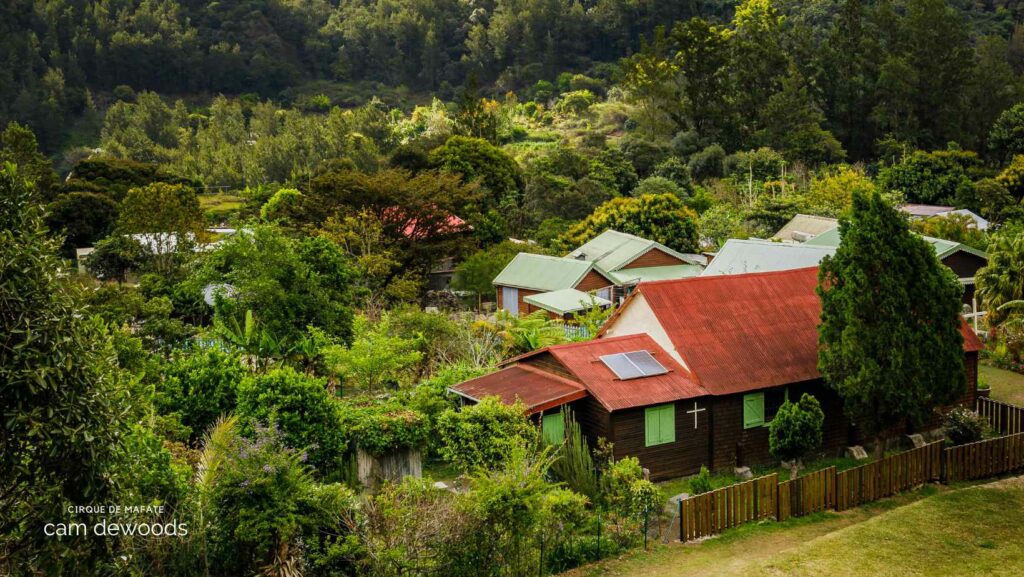
The gîtes in Mafate are well organised to welcome hikers of all levels. And you can rest in several main îlets such as La Nouvelle, Marla, Roche Plate, Aurère or Îlet à Bourse. Each îlet has at least one gîte, and some even have grocery shops where you can stock up on basics. I was pleasantly surprised to find that there are almost always shops in the most accessible îlets, which lets you travel light and carry only the essentials.
Comfort and facilities in the gîtes
The gîtes offer a basic but welcome level of comfort. Most have solar panels to provide a minimum of electricity. But do not expect luxuries such as reliable hot water or unlimited power. Some gîtes offer hot showers, but water can be limited depending on reserves. The lodgings are supplied by helicopter, so every resource is precious. And waste has to be managed carefully to respect this protected environment.
My own experience
During our crossing of the GR R2, we passed through several of these îlets and enjoyed the warm welcome of the residents. What struck me most was how well everything is organised despite the isolation. The evening meals, often generous and delicious, are a real treat after a long day of walking. Of course, you need to appreciate simplicity: the gîtes are often heated in a basic way, electricity is limited. And every resource, such as water, is precious. In such a remote setting, this simplicity reminds us how important it is to respect and preserve these special places.
Spending one or two nights in a gîte in Mafate lets you soak up the atmosphere of the cirque and discover the hospitality of the Mafatais. It is also a chance to see the daily challenges these residents face, living with impressive self-reliance while welcoming thousands of hikers each year.
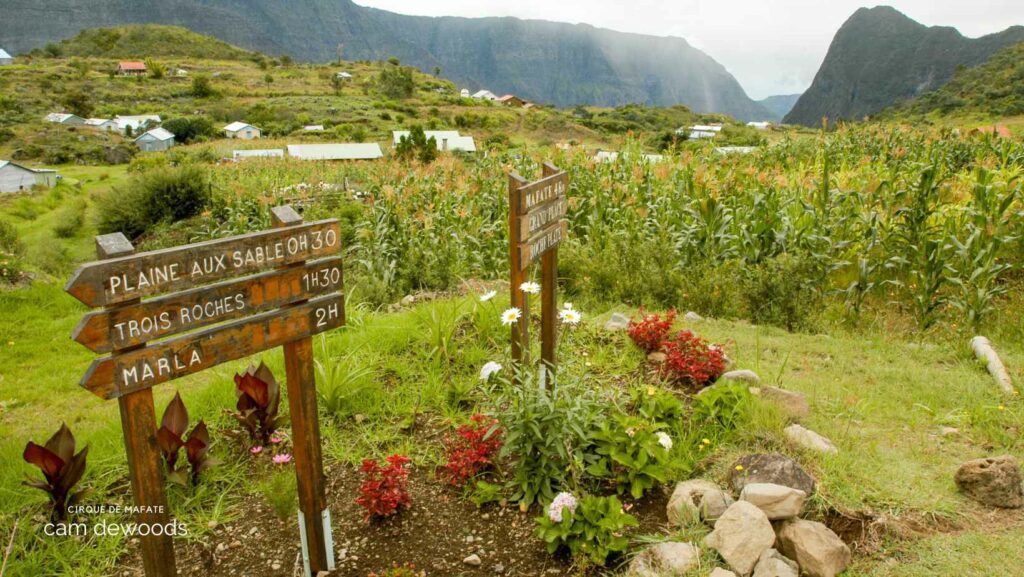
The main îlets of the Cirque de Mafate
1. La Nouvelle
- Location: Near the centre of Mafate, it is often the first stop for those entering by the Col des Bœufs.
- Access: From the Col des Bœufs, you reach La Nouvelle in about 2 hours of walking on a trail suitable for almost all levels.
- What stands out: It is the liveliest îlet in Mafate, with its shops, several gîtes and even a school! You find everything you need to recover after a long walk.
- Atmosphere: There is real village life here, with a pleasant buzz, while it stays authentic to Mafate.
2. Marla
- Location: In the south of the cirque, close to the Col du Taïbit, Marla is ringed by mountains.
- Access: You can get there from the Col du Taïbit (about 1h30 of walking) or by continuing on the GR R2.
- What stands out: The setting is stunning, with a very mountain feel. I found this îlet particularly peaceful, perfect for a real moment of calm.
- Atmosphere: More isolated, with a serene mood that invites rest.
3. Roche Plate
- Location: In the west of Mafate, overlooking the Rivière des Galets.
- Access: By a trail from the Maïdo, or from Marla for the most experienced. The climbs are quite steep.
- What stands out: This place has incredible views over the cirque. But it takes extra effort to reach, rewarded by the setting.
- Atmosphere: Very wild, and you really feel cut off from the world. You mostly meet hikers looking for peace.
4. Aurère
- Location: In the north-east part of the cirque, not far from Aurère.
- Access: By the Col des Bœufs, or from Deux Bras for a more physical approach.
- What stands out: A quiet îlet, with superb views and a few welcoming gîtes.
- Atmosphere: Calm and typical, a perfect place to stop without too many people around.
5. Îlet à Bourse
- Location: Between Aurère and Roche Plate, in the heart of Mafate.
- Access: By a trail from Aurère or Roche Plate.
- What stands out: Surrounded by cliffs, this îlet makes a fine stop in the middle of the cirque.
- Atmosphere: Very peaceful, with a feeling of being far from everything.
6. Grand Place
- Location: In the north, towards Deux Bras.
- Access: From Deux Bras, with a fairly physical approach that is still doable.
- What stands out: It is one of the “liveliest” îlets, with several hamlets and a small school.
- Atmosphere: There is real local life here, which gives a glimpse of daily life in Mafate.
7. Îlet des Orangers
- Location: In the west, towards Roche Plate.
- Access: By the Rivière des Galets trail.
- What stands out: Isolated, it is a perfect îlet for hikers looking for calm.
- Atmosphere: Restful, with few visitors, ideal for a total disconnection.
Practical tips for an adventure in the Cirque de Mafate
To make the most of your stay in the Cirque de Mafate, here are a few tips from my own experience and from the feedback of many hikers.
- Best time to go: The dry season, from May to October, is ideal for exploring Mafate. Temperatures are milder and the risk of rain is lower, which makes the trails easier to walk. Avoid the rainy season (November to April) to avoid storms and strong heat.
- What to plan for:
- Food and water: Although most îlets have small shops, it is wise to bring a few snacks and a good supply of water. The water is often drinkable in the gîtes, but check before each stage.
- Specific equipment: Comfortable hiking shoes are essential, because the trails are sometimes steep and rocky. Also take a poncho or a waterproof jacket (the weather is unpredictable) and a head torch if you plan to walk early in the morning or late in the day.
- Sleeping bag: Some gîtes provide blankets, but a light sleeping bag can help on cool nights.
- Respect for the environment: Mafate is a fragile and isolated place. It is essential to leave no trace of your visit: take all your rubbish with you, respect the plants. And be considerate of the residents and the local wildlife. The gîtes and shops often depend on helicopter supplies, so every gesture counts to preserve this setting.
Conclusion
The Cirque de Mafate is much more than a hiking site. It is a total immersion in untouched nature, a space of freedom where time seems to stand still. For hikers, it is a memorable experience, a physical challenge and a complete break from routine. My time in Mafate, following the GR R2, let me discover the raw beauty of these landscapes and the warmth of its people.
If you want to know more about the GR R2 and set off on a full trek in Réunion, have a look at our dedicated guide. Get ready for an extraordinary adventure, where every step in Mafate is an invitation to rediscover the simplicity and grandeur of nature.
Which Cirque de Mafate route should you choose?
If you have one day, walk from the Col des Bœufs to La Nouvelle and back. It is the easiest introduction, and it suits families and occasional hikers. If you have two days, sleep at Marla and come back by Roche Plate. This route suits intermediate hikers. If you have three days and some experience, cross the cirque from the Col des Bœufs to the Col du Taïbit, via La Nouvelle, Roche Plate and Marla. Whatever you choose, booking your gîte in advance is recommended, and the weather can change fast, so keep some margin.
Cirque de Mafate: frequently asked questions
Can you drive to the Cirque de Mafate?
No. No road leads into the cirque. You can only reach it on foot or by helicopter, which is also why the gîtes are supplied by helicopter.
How many days do you need in Mafate?
One day is enough for a first look at La Nouvelle. Two days let you sleep at Marla and visit Roche Plate. Three days give you a full crossing. If you are on a longer trek such as the GR R2, at least two nights in the cirque is ideal.
When is the best time to hike in the Cirque de Mafate?
The dry season, from May to October. Temperatures are milder and the risk of rain is lower. Avoid November to April, when storms and strong heat are more likely.
Do you need to carry food and water?
Most îlets have small shops, but bring a few snacks and a good supply of water. Water is often drinkable in the gîtes, so ask before each stage.
Do you need a map or GPS in the cirque?
The paths are well waymarked and signed at every junction, so you often do not need one. A paper IGN map or the offline IGN Rando app still helps you plan the climbs, spot water points and feel more at ease.
Is the Cirque de Mafate suitable for families?
Yes, on the easier routes. The trail from the Col des Bœufs to La Nouvelle is one of the entry points most used by families and occasional walkers. Marla is also fairly easy to reach.