If you’ve followed me for a while, you know I did my Caminos independently, backpack on, working out my stages day by day. But it’s a question I get asked all the time: can you walk the Camino de Santiago without carrying your pack? The answer is yes, and thank goodness. Between luggage transfer from one stage to the next and all-inclusive packages where an agency looks after everything, there are plenty of ways to ease the load on your back today without giving up the experience. I’ll take you through all of it, with the eye of a pilgrim who has worn out a few pairs of shoes.
Why walk the Camino without carrying your pack?
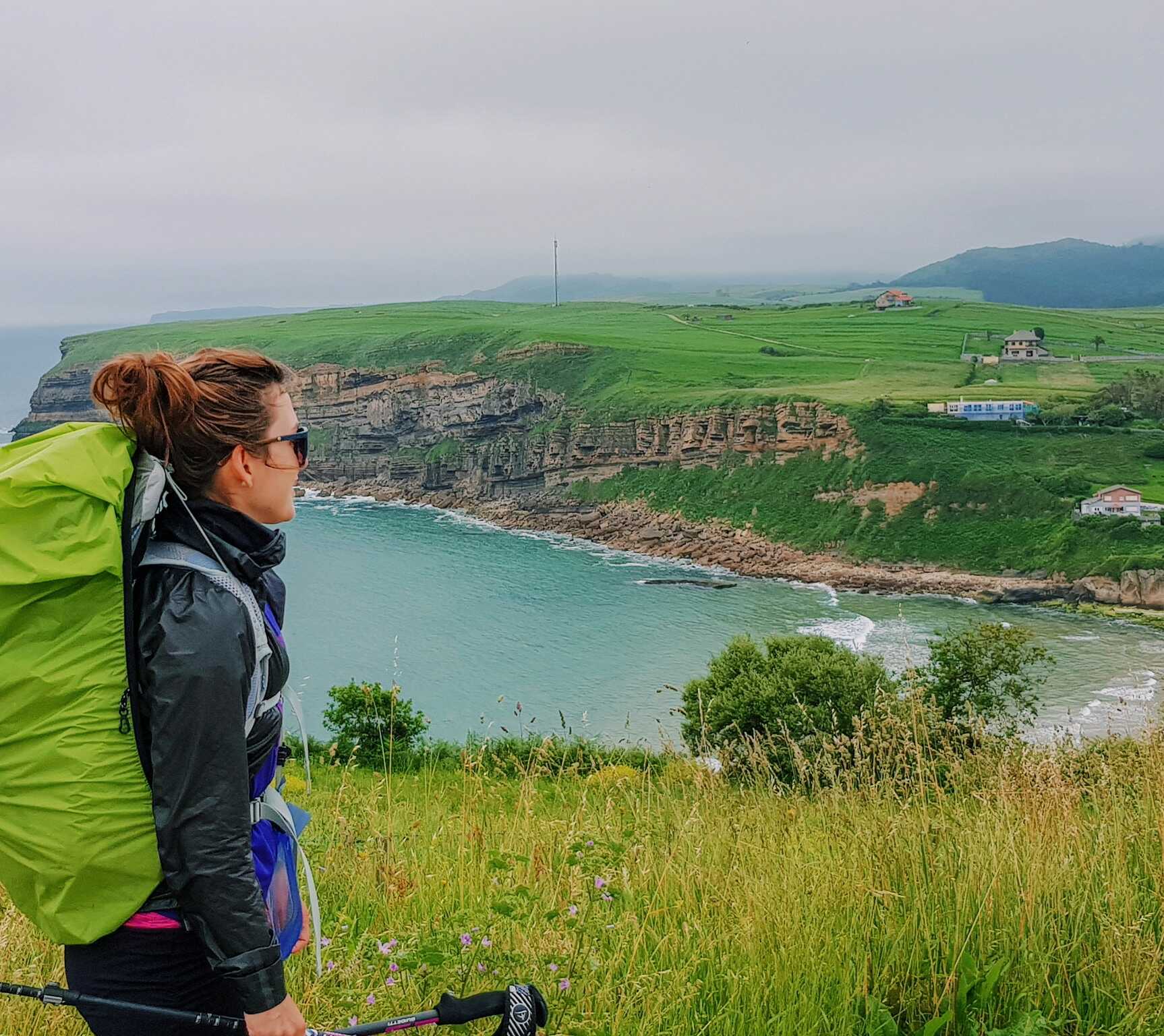
We often idealise the image of the pilgrim with a big pack, and it’s true that carrying your things is part of the myth. But in the reality of the Camino, weight is the first thing that can turn a beautiful adventure into an ordeal. Choosing to have your bag carried isn’t cheating: it’s adapting to your body, your wishes and your goals.
The weight of the pack, pilgrims’ first obstacle
A hiking backpack for the Camino easily weighs 8 to 12 kg once it’s full. Over a week or more, at 20 to 25 km (12 to 15 miles) a day, that weight makes itself known quickly, especially on the descents. I’ve written a whole article on how to pack well without weighing yourself down, but let’s be honest: even optimised down to the gram, a pack is still a pack. Having it transported means walking with a simple daypack of a few kilos, and the difference in how much you enjoy the walk is huge.
Bad back, fragile knees, age: when lightening the load becomes necessary
For many walkers, having their bag carried isn’t a comfort but a necessity. A sensitive back, knees that twinge on the descents, a recent operation or simply a few more years on the clock: all good reasons to hand over the carrying. I met a great many people over sixty on the Camino, in great shape, who were walking precisely because they’d entrusted their bag to a transport service. Without it, they’d never have set off.
Walking light to enjoy the scenery more
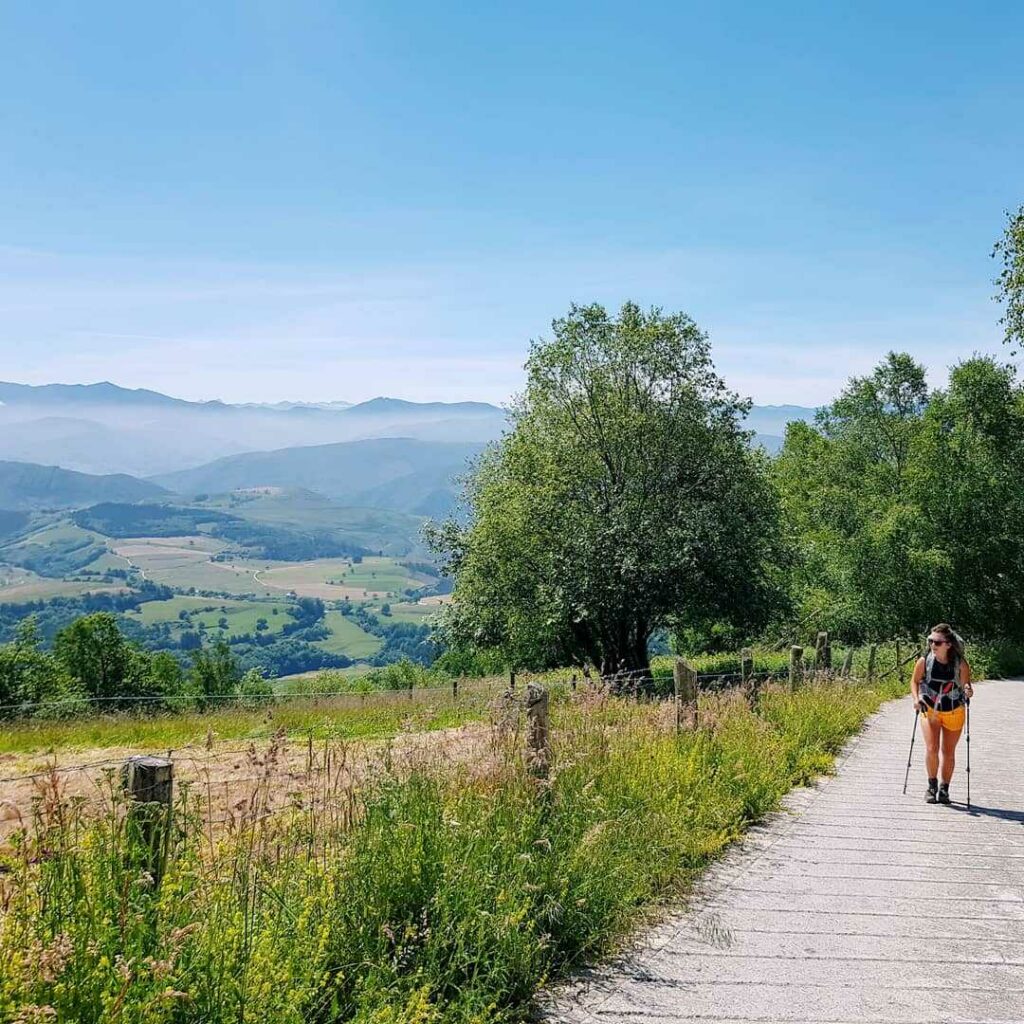
And then there are those who make this choice purely for pleasure. Walking with a small pack means lifting your head, watching the Aubrac open up in front of you, stopping to take a photo without sore shoulders. It also means finishing your stages fresher, enjoying the villages in the evening instead of collapsing. The Camino stays demanding, but you experience it differently. None of this takes anything away from the inner dimension of the walk, which happens in your head and legs, not in the weight of your pack.
Luggage transfer on the Camino: how does it work?
It’s the most widespread and the simplest system. The principle is clear, and once you’ve tried it you understand why so many walkers never go back.
The principle: drop your bag in the morning, find it at the next stage
In the morning, before you set off walking, you leave your big bag at a collection point at your accommodation (often the reception of the gîte or hotel), generally before 8 am. A carrier collects it during the morning and drops it at your accommodation for the next stage, where you find it at the end of the day. You walk with your daypack: water, snacks, a rain jacket, camera and whatever you need for the day. That’s it.
How much does luggage transfer cost per stage?
Luggage transfer generally costs between 8 and 15 € per stage and per bag, depending on the region and the carrier. On the Le Puy route, expect the higher end of that range, and a little less on some Spanish sections. Over a week’s walking, budget around 60 to 100 € for the carrying alone. It’s a real expense to plan for, but many walkers consider it one of the best comfort-for-money deals of the whole trip.
Luggage transfer services: La Malle Postale, Transport Claudine…
Several carriers specialise in luggage transfer on the Camino routes. La Malle Postale is one of the best known on the Le Puy route and covers a large part of the GR65. Transport Claudine is also a name many pilgrims mention. In Spain, services like Caminofácil handle bag transfers on the Camino Francés and the other routes. Most of them work on reservation, with a system of envelopes or labels that you fill in each evening for the next day’s stage.
Is luggage transfer possible everywhere, from Le Puy to Spain?
On the busiest stretches, yes, no problem. The section from Le Puy-en-Velay to Conques, then on to Cahors, then to Saint-Jean-Pied-de-Port, is very well covered. On the Spanish side, the Camino Francés is also well served. It’s on the quieter routes (Camino Primitivo, some isolated variants) that the offer thins out and you need to check ahead. If you’re walking a classic section, you’ll always find a solution.
All-inclusive packages: walking the Camino without organising anything
Luggage transfer solves the problem of the pack, but there’s still everything else to organise: booking each night’s accommodation, working out your stages, arranging transfers at the start and the end. For anyone who really wants to set off with a free mind, there’s an even more complete solution.
Luggage transfer only or an organised trip: what’s the difference?
With luggage transfer alone, you stay in charge of your organisation: you book your nights, you choose your stages, and you only hand over the transport of your bag. It’s more flexible, but it takes preparation time, especially in high season when the gîtes fill up fast. The organised option takes everything on: it’s the zero-hassle choice, ideal when you don’t feel like spending your evenings booking the next part of the route. Specialist Camino agencies then take care of all the logistics.
What a turnkey package includes
An all-inclusive package generally covers accommodation booked at every stage, luggage transfer from one point to the next, a detailed route book with maps and itineraries, and sometimes transfers from the station or airport. All you have to do is walk, following the guide, with the logistics handled from start to finish. Some specialist agencies offer all-inclusive Camino trips, independent or guided, with different comfort levels depending on your budget and what you want. It’s the ideal option if it’s your first time, if you’re walking as a couple or a family, or if you simply want to enjoy the scenery without thinking about logistics.
Independent or guided: each at their own pace
The independent option lets you walk at your own pace, alone or as a pair, with the whole route waymarked and booked in advance. The guided option is done in a small group with a guide: you benefit from the explanations, the encounters and the safety of being looked after, without managing anything. Both options include luggage transfer. The choice depends mostly on your personality: if you like your independence as I do, independent will suit you; if you prefer the company and the reassuring framework of a group, guided is made for you.
Who is walking without a pack really for?
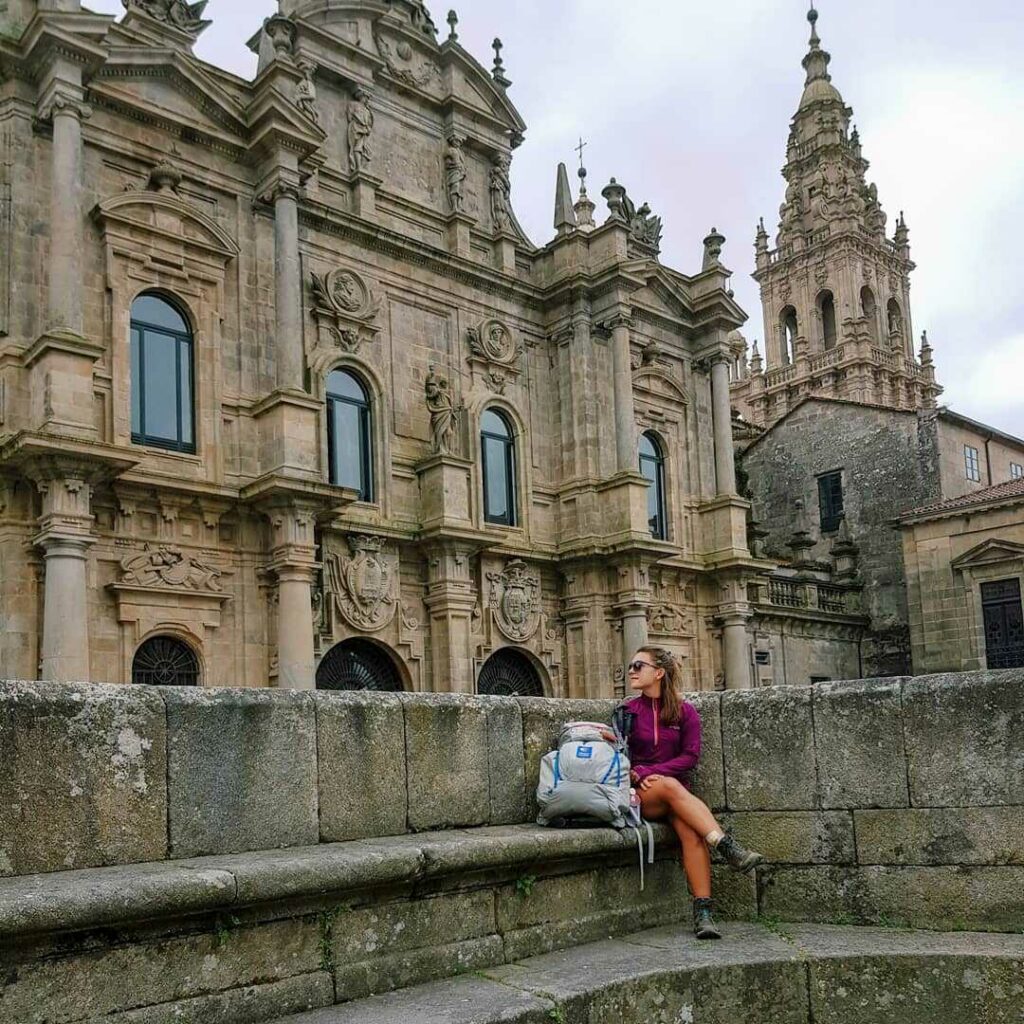
Let’s be clear: having your bag carried takes nothing away from your Camino. Here are the profiles for whom this option changes everything.
- First time on the Camino: you’re already discovering so much that taking away the mental load of organising, and the weight of the pack, lets you focus on the essential and live your first Camino calmly.
- Couples, families or friends: walking together at different paces becomes much easier when nobody is bent double under their pack, and when the nights are booked in advance for everyone.
- Seniors and walkers looking for comfort: age or a fragile physical condition are no longer an obstacle. You walk at your own pace, light, and you get the full enjoyment.
- Walkers short on time: with the organisation already sorted, you make the most of every walking day without losing time on logistics.
Does having your bag carried “denature” the Camino? My opinion
It’s the debate that always comes back, and I’ll give you my honest pilgrim’s opinion. No, having your bag carried doesn’t denature the Camino de Santiago. The heart of the experience is the kilometres swallowed on foot, the encounters, the silence, the long stretches of time, what walking changes in you. You live all of that in exactly the same way with or without your big pack on your back. I chose independence because I like managing my own thing, but I’ve never looked down on those who had their belongings transported. The most beautiful Camino is the one that lets you reach the end. If lightening your pack is what gets you to set off, then it’s the best decision you can make.
Camino without carrying your pack: frequently asked questions
How do you have your luggage transported on the Camino?
You book a luggage transfer service (La Malle Postale, Transport Claudine, Caminofácil in Spain…) or you go for an organised package that includes it, offered by a specialist agency. Every morning, you drop your bag at your accommodation before 8 am, and you find it that evening at the next stage. You only walk with a daypack.
How much does luggage transfer cost per stage?
Count between 8 and 15 € per stage and per bag, so roughly 60 to 100 € for a week’s walking. The price varies depending on the region, the distance between stages and the carrier you choose.
Can you walk the Camino without booking your accommodation in advance?
On a classic independent Camino, yes, but it’s risky in high season (May to September), when the gîtes often show full. If you have your bag transported, booking becomes almost essential, because the carrier needs to know where to deliver. All-inclusive packages settle that by booking everything for you.
Which daypack should you keep when your big bag is transported?
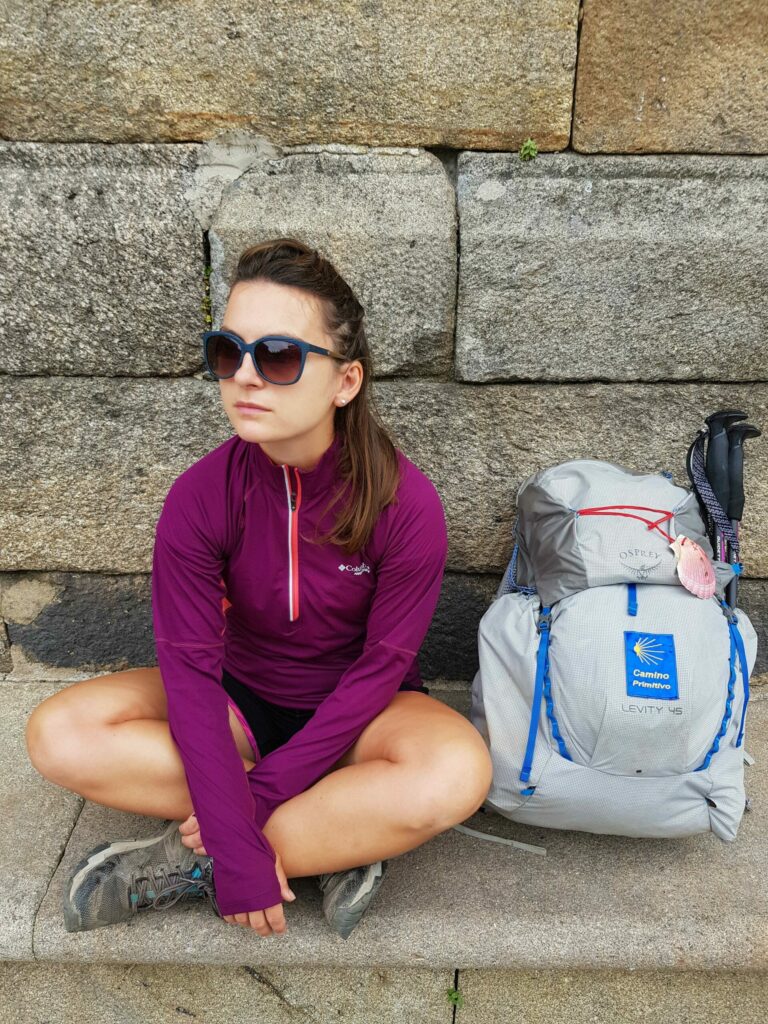
A small backpack of 15 to 25 litres is more than enough. In it you put your water, snacks, rain jacket, first aid kit, papers, phone and camera. Everything else goes in the big bag that gets transported.
How do you choose a specialist agency for an organised Camino?
Several French agencies specialise in organised trips on the Camino, with independent and guided options and luggage transfer included. The right criteria for choosing: check that the agency knows the stretch you want to walk well, that it books good-quality accommodation, and that it offers the comfort level that suits you.
Does luggage transfer exist along the whole Via Podiensis?
Yes, the Via Podiensis (the GR65, starting from Le Puy-en-Velay) is one of the best-served routes for luggage transfer, from Le Puy all the way to Saint-Jean-Pied-de-Port. It’s one of the most suitable routes if you want to walk light for your first experience.
So, should you carry your pack or not?
There’s no right or wrong answer, just yours. If you dream of the raw experience, fully independent, set off with your pack and savour every gram of freedom. But if weight, your back, time or the wish to enjoy it fully make you hesitate, know that walking without carrying your pack is now a simple, common and perfectly legitimate option. Whether you choose luggage transfer alone or an all-inclusive package that handles everything from A to Z, the essential stays the same: put one foot in front of the other on the Camino and let the road change you. Buen camino.