Today I’ve decided to address a topic close to my heart: the risks and dangers on the Camino de Santiago. A question I’m asked very often is: is the Camino de Santiago safe, especially for solo walkers and women? I completely understand their concerns because, to give you a little background… when my mother first went on her pilgrimage to Santiago de Compostela , I was quite worried too. Looking back, and after having walked several Camino routes ,when people ask me “is the Camino de Santiago safe?”, my answer is always nuanced:, because there’s no such thing as zero risk. However, with good preparation and a few precautions, it’s generally a safe route, very well marked, and where mutual support among pilgrims is ever-present. There are few risks, and I never felt threatened.
👉 In this article, I will detail the main dangers to be aware of on the Camino de Santiago and share concrete tips for travelling safely.
For other questions, see my articles on the Camino de Santiago:
- Why walk the Camino de Santiago?
- Where do you sleep on the camino de santiago
- The Camino del Norte
- The Camino Camino Primitivo
My experience on the Camino de Santiago
The Camino de Santiago is a famous pilgrimage route that attracts thousands of hikers from all over the world each year. This unique experience allows you to recharge your batteries by walking in the footsteps of medieval pilgrims, through magnificent landscapes and historic towns.
Okay, that’s all well and good, but as I said in the introduction, when my mother set off alone on the Camino de Santiago, I was still a little worried. I imagined her walking all alone, all day long in an environment she didn’t know, and sleeping with complete strangers in dormitories at night… and that didn’t exactly reassure me.
Then, she returned from her trip very happy, and we set off the following year with my aunt, and then again the year after (on the Via Tolosana ). And in 2018, I set off alone on the Camino de Santiago for over a month (on the Camino del Norte and the Camino Primitivo ). In 2023, I set off again on the Way of Le Puy-en-Velay, or Via Podiensis .
This allows me to gather various experiences on paths both well-trodden and less traveled, alone or with others, and thus gave me a certain perspective on daily life on the Camino de Santiago and enough perspective to honestly answer the question: is the Camino de Santiago safe in real life?. But like any long hike, it’s necessary to anticipate certain risks to experience this adventure in the best possible conditions. Therefore, let’s begin on the subject of loneliness for women, which is a question that often comes up and one that I have certainly asked myself.
Is the camino de santiago safe for women?
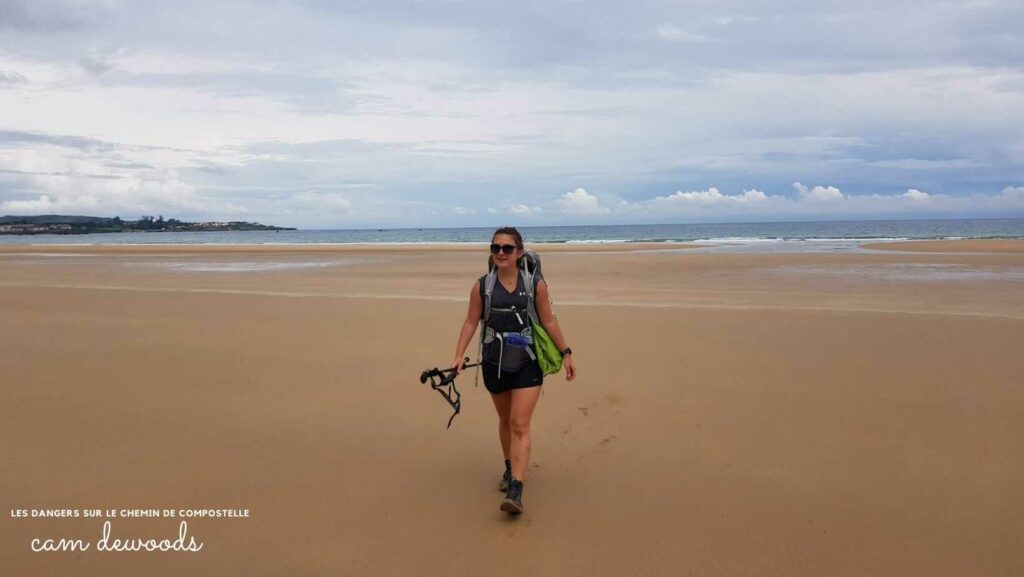
Let’s be honest, when you’re a woman, a recurring topic often comes up: the risk of potential assaults. I’ve spent (counting all my Camino de Santiago pilgrimages) more than 3 months on the various routes and I must say that I never felt unsafe .
The interactions I had with other people, whether pilgrims, hostel owners, or locals met in the villages and towns, were always very positive. I may have been flirted with a few times, but absolutely nothing malicious.
I also haven’t heard of any stories of assault or violence on the Camino de Santiago. Nevertheless, there’s no such thing as zero risk, and just because I’ve never broken a leg falling off a sidewalk doesn’t mean it’s impossible. So yes, as is unfortunately the case everywhere, it’s possible for a woman (or a man) to be the target of assault or sexual violence.
But several things can reassure you:
- It ‘s rare to be truly alone on the Camino when you’re walking. There are often other people setting off at the same time, or a little before or after you. Yes, sometimes you might feel like you’re spending several hours alone, but deep down you always have the feeling that there’s someone not very far to help you if needed. You also often pass through towns or villages, and the people you meet are often very kind and happy to offer assistance.
- It ‘s possible to make friends with people and thus walk together. The sense of solidarity on the Camino is quite strong, and for me, I’ve always felt this very reassuring “big family” feeling. Little by little, we start paying attention to each other, with things like, “Hey, did you see M…? She looked tired this morning” or ” I think she stopped earlier,” and so on. What is called the “Camino radio” is often very effective.
- Most often there is a good GPS signal along the way, which will allow you to quickly contact help if needed.
💡 TIP : Again, the probability of being attacked on the Camino de Santiago is low, but it can’t be completely ruled out, of course. If this is a major concern for you, you can also meet other people to travel with on forums, blogs, or elsewhere. Furthermore, to feel safer, I advise you to choose a well-traveled route like the Camino Francés rather than routes where you encounter few people, such as the Via Tolosana or the Camino Primitivo . You can also keep a charged phone with a location app in case of need .
Dangers on the Camino de Santiago – theft
Once again, I was not a victim of theft and I did not meet anyone who was. However, there are rumors of theft on the Camino de Santiago, often quite minor: theft of walking sticks, for example.
As everywhere, not everyone has good intentions, so it’s advisable to be careful with your belongings. Personally, it is an advice I didn’t necessarily follow, except perhaps on the final stages before arriving in Santiago de Compostela, since there were so many people.
💡 TIP: If you are worried, consider taking a secret pouch and avoid leaving your bag unattended in busy hostels.
Dangers on the Camino de Santiago – stray dogs and encounters with animals
I must admit that even though I’m absolutely not afraid of dogs (in fact, I adore them), I have had some very unpleasant encounters along the way. Like everywhere, not all dogs are friendly and not all owners are intelligent, so it’s best to be careful. While pilgrims advise using walking sticks for self-defense… I think most of the time you don’t need to resort to that! The “brisk walk” or “discreetly skirting” option has always been enough for me.
💡 TIP: If you encounter a stray dog, it is advisable to remain calm, avoid sudden movements, and prevent direct eye contact. Using a walking stick can help maintain a safe distance.
Injuries and physical problems
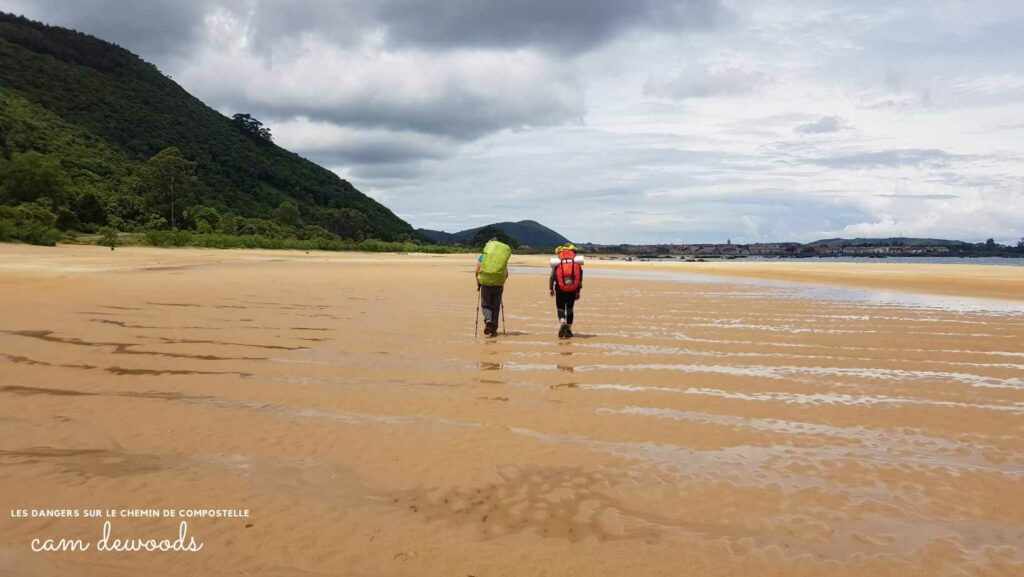
Injuries are the main danger on the Camino de Santiago , far more so than the risks of assault or theft. Some will say that it “isn’t a danger in itself,” but finding yourself stranded in the middle of nowhere, unable to go any further, is a risk.
Fortunately (if I may say so), injuries are often quite minor and develop gradually. There’s little risk of falls since the terrain is mostly not very technical, so it’s more about blisters, tendonitis, sprains, and, of course, the dreaded back pain from an improperly adjusted or overly heavy pack.
The good news is that most of the pharmacies you’ll come across along the way are very experienced! They’ve seen plenty of pilgrims with all sorts of ailments and you often have an aisle dedicated to pilgrims! … The same goes for physiotherapists, osteopaths, and others who are used to receiving emergency calls to come to the aid of walkers.
💡 TIP:
✔ Walk in shoes that are already broken in and take the time to choose them carefully.
✔ Listen to your body and don’t hesitate to shorten a day’s walk if necessary.
✔ Don’t overload your bag: 7 to 10 kg maximum!
Natural and environmental hazards on the Camino de Santiago
The weather: heat, rain and hypothermia
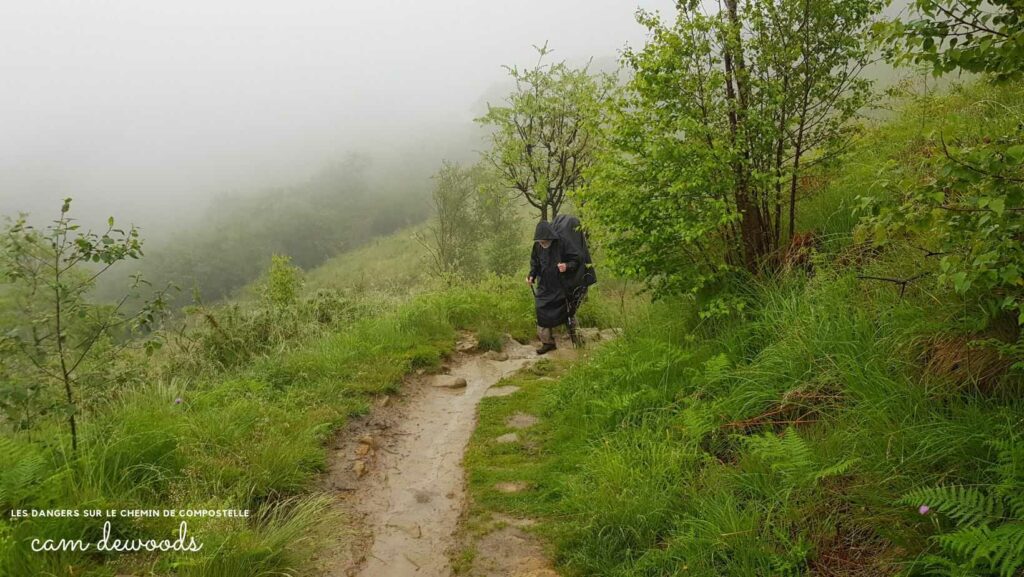
Walking the Camino de Santiago involves covering many kilometers each day through very different landscapes. Risks related to walking, the weight of the pack, and fatigue exist, such as falls or injuries. Weather conditions have also an impact : summers can be extremely hot, increasing the risk of dehydration, heatstroke, and sunburn. On rainy days (I know this all too well), blisters and hypothermia can quickly set in.
However, like any outdoor activity, it is enough to be well organized, to be well equipped and to make relevant decisions when you are on the way (start earlier, shorten a stage, take a break in the shade, bring enough water…).
💡 TIP: It’s important to check the weather forecast before you leave and pack accordingly. A hat, sunscreen, light and breathable clothing for summer, or a waterproof jacket and warm clothing for cooler periods, are essential to cope with unpredictable weather.
Dangerous roads and risky crossings
Some sections of the route involve walking along busy roads or crossing highways. Don’t worry, we’re not talking about walking along a main road for several kilometers or crossing the A7 motorway. And if you start venturing onto a truly dangerous road, you should quickly consider the possibility of being lost.
Road safety: It is essential to remain vigilant when crossing these roads, to walk facing traffic and to wear reflective clothing to be clearly visible to motorists.
So, is the Camino de Santiago safe? Overall, yes.
Preparation is the best way to avoid dangers and fully enjoy your pilgrimage. If you’re asking “is the Camino de Santiago safe?”, the honest answer is yes – as long as you prepare properly, stay attentive, and use common sense, just like anywhere else in the world.
Choose the right route
If this is your first Camino de Santiago and safety is a priority, avoid overly isolated routes like the Via Tolosana . Opt instead for well-traveled paths such as:
✔ The Camino Francés
✔ The Via Podiensis (Chemin du Puy-en-Velay)
✔ The Camino del Norte (but some stages are wilder)
Use technology
✔ Have a phone with a local SIM card or a good data plan.
✔ Download a GPS app to follow the route if you have any doubts .
Pay attention to your equipment
✔ Don’t overload your bag.
✔ Make sure your shoes are comfortable and worn.
✔ Take a first aid kit.
I hope you enjoyed this article. Feel free to leave a comment so I can add more information or ask me any questions. Once again, I want to emphasize that there’s no such thing as zero risk, and it would be completely absurd to tell you that you’ll be totally safe on the Camino . Just like anywhere else.