If you are planning a trip to Puglia, you will quickly see the name Alberobello pop up everywhere. It appears in guides, on Instagram and in every conversation about the best villages to visit in Puglia. It is the symbol of the Itria Valley, with its conical roofs and white lanes.
But behind the postcard image, Alberobello is still a real small town in southern Italy. It has its residents, its seasons, its crowded days and its much calmer moments. That is what I loved during our visit on our road trip in Puglia. I saw the very touristy side, and at times I found something close to a village atmosphere, especially early in the morning or at the end of the day.
In this article, I give you a practical guide to visiting Alberobello. You will find out what the trulli of Alberobello really are and what to do in Alberobello in half a day or a full day. I also explain how to get to Alberobello from Bari or Lecce, and how to choose where to stay (a “classic” hotel in Alberobello or a night in a trullo). The idea is that you can organise your visit easily, without a headache, while making the most of this village that looks like nowhere else in Italy. I wrote it from our own visit, so you will find what worked for us as well as the practical details.
Sommaire
Discovering Alberobello, the village of Puglia!
Alberobello is truly one of the most iconic villages in Puglia. As you approach the centre, you start to see the first trulli scattered through the countryside. Then suddenly everything gets denser. There are hundreds of small white houses with grey roofs, lined up and packed together, almost unreal. Even if you have already seen photos, the effect in person is different. Everything feels more compact and more alive.
In the heart of the Itria Valley, Alberobello is easy to reach from Bari, Monopoli or Locorotondo. That often makes it an essential stop on a road trip. The road there crosses olive groves and dry-stone walls, with a few masserie (traditional farmhouses) scattered around. It is the Puglia atmosphere at its most typical. If you are coming from the UK, you will probably arrive via one of the larger cities in Puglia and continue from there, so the transport section below is worth a read.
Alberobello is a village where people live
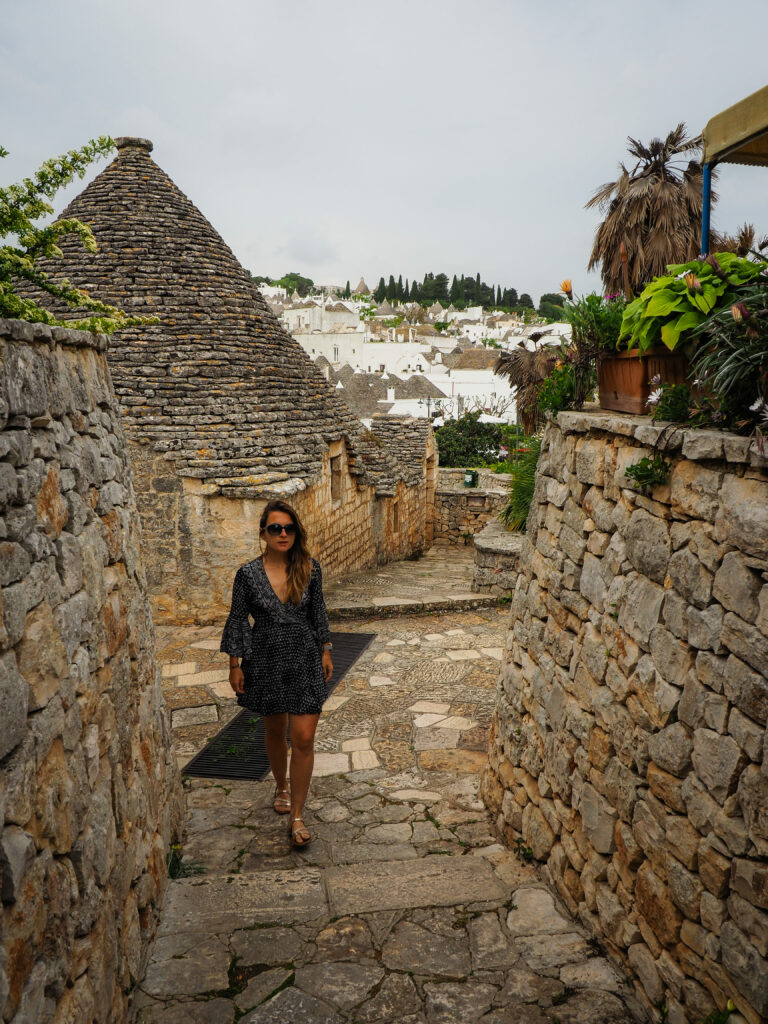
What struck me on arrival is that, despite its fame, Alberobello is still a village where people live. It is not just the little Disneyland of Puglia. You see children coming home from school, residents sitting in front of their doors and craftspeople working in the lanes, especially in the Aia Piccola district. This contrast between a very famous site and real local life gives the visit a particular charm. Alberobello is not very big, but it deserves more than a quick pass through. It is a lovely place to wander. You often stop for no reason, just to look at a lane, a symbol painted on a roof, or an open door that gives a glimpse of the inside of a trullo.
Even if you only come for half a day, the village has such a special atmosphere that you soon slow down… It is not a visit you tick off, it is a place you pass through.

Understanding the trulli: a leap into history
What exactly is a trullo?
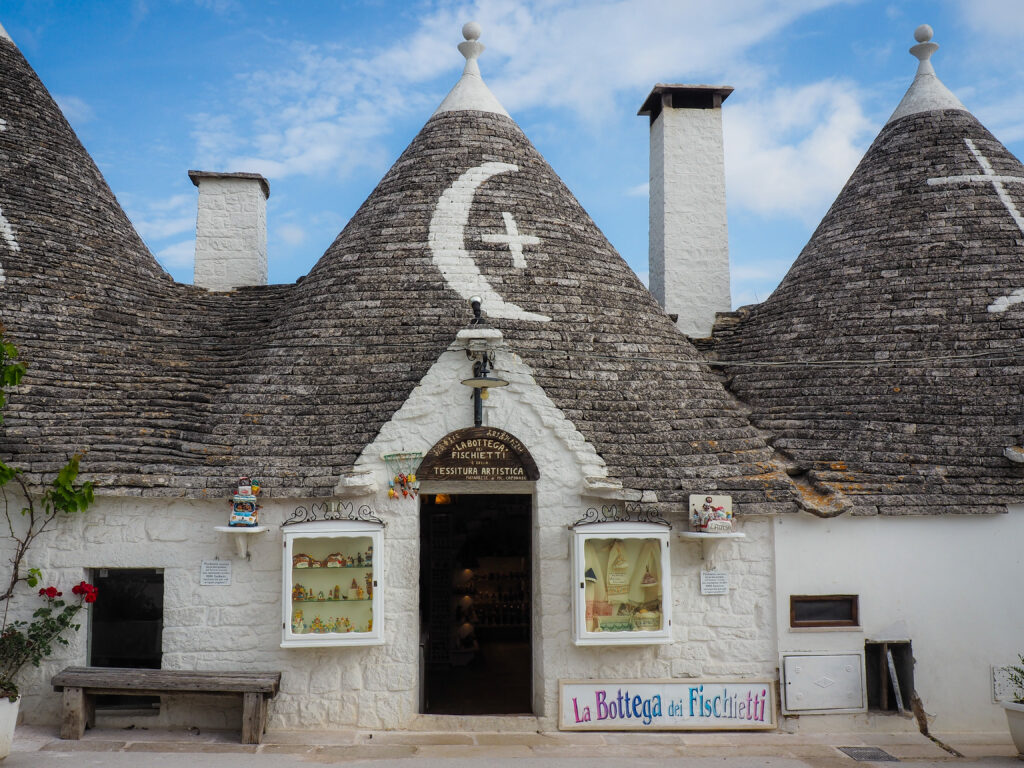
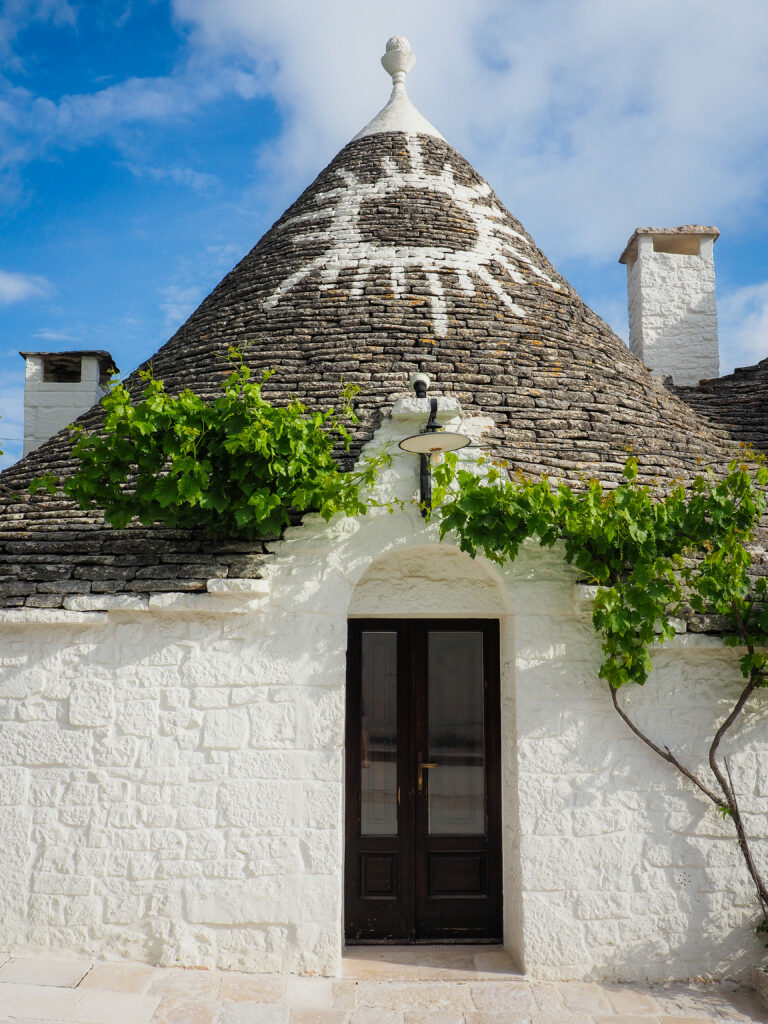
To understand what makes Alberobello so special, you need to spend time on its trulli. These little round dry-stone houses (ridiculously cute) look straight out of a fairy tale or a hobbit film. They are truly what sets Alberobello apart from every other town in Puglia. You only realise how particular they are once you are in the middle of the lanes. Each trullo has a slightly different shape, a symbol painted on its roof, a stone set a little crooked… It is alive, irregular, almost handmade.
The trulli of Alberobello have one particular feature in their architecture. They were built without mortar.
What does a trullo look like inside?
Inside, a trullo in Alberobello is always bigger than it looks. The main room is round, and several alcoves (often added over time) serve as bedrooms or storage. When you visit a trullo that is still lived in, you see straight away how the architecture shapes daily life. It stays cool in summer, it has natural insulation and little direct light, and it has that characteristic smell of stone.
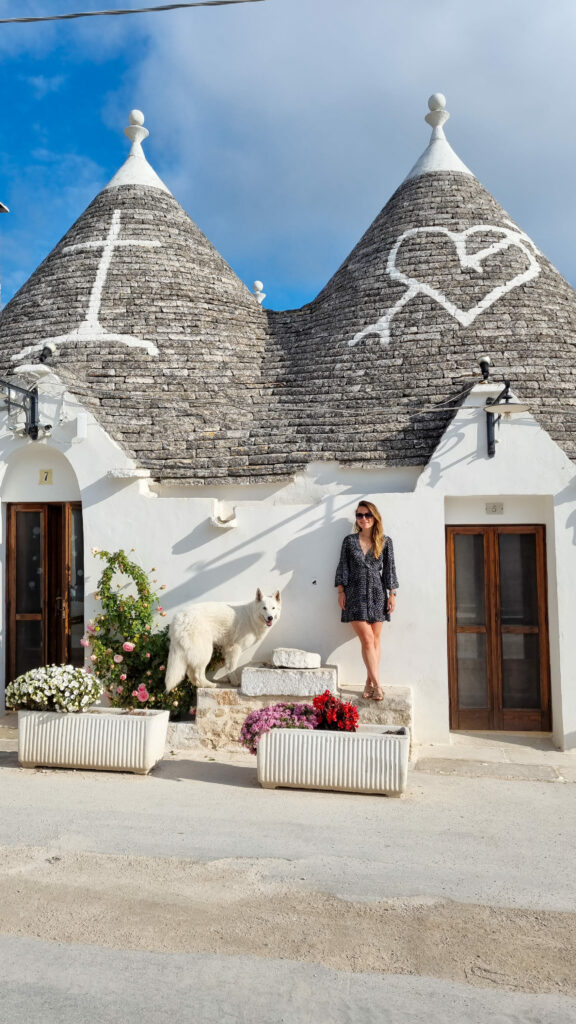
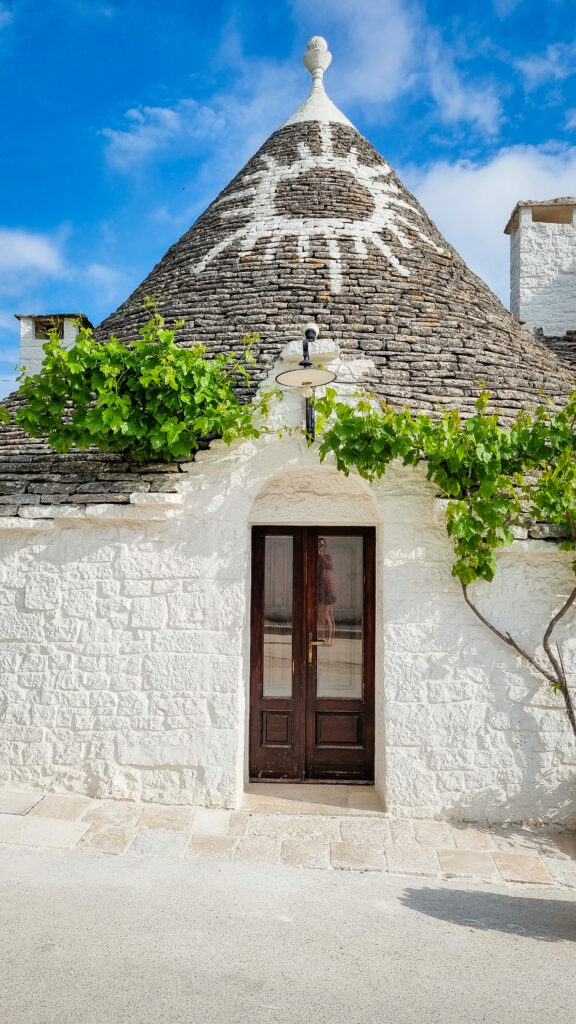
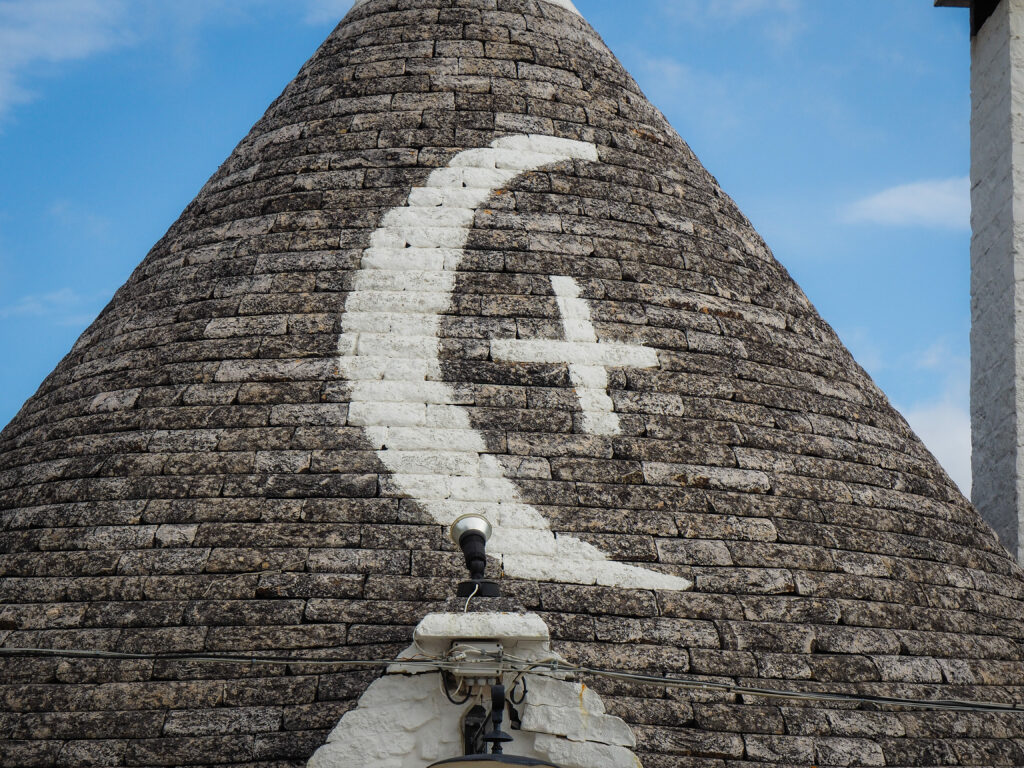
The symbols painted on the roofs (crosses, geometric shapes, zodiac signs) once had a protective or spiritual function. Today they are as much a part of the charm as of the identity of the village.

Monti, Aia Piccola… and the experience of sleeping in a trullo
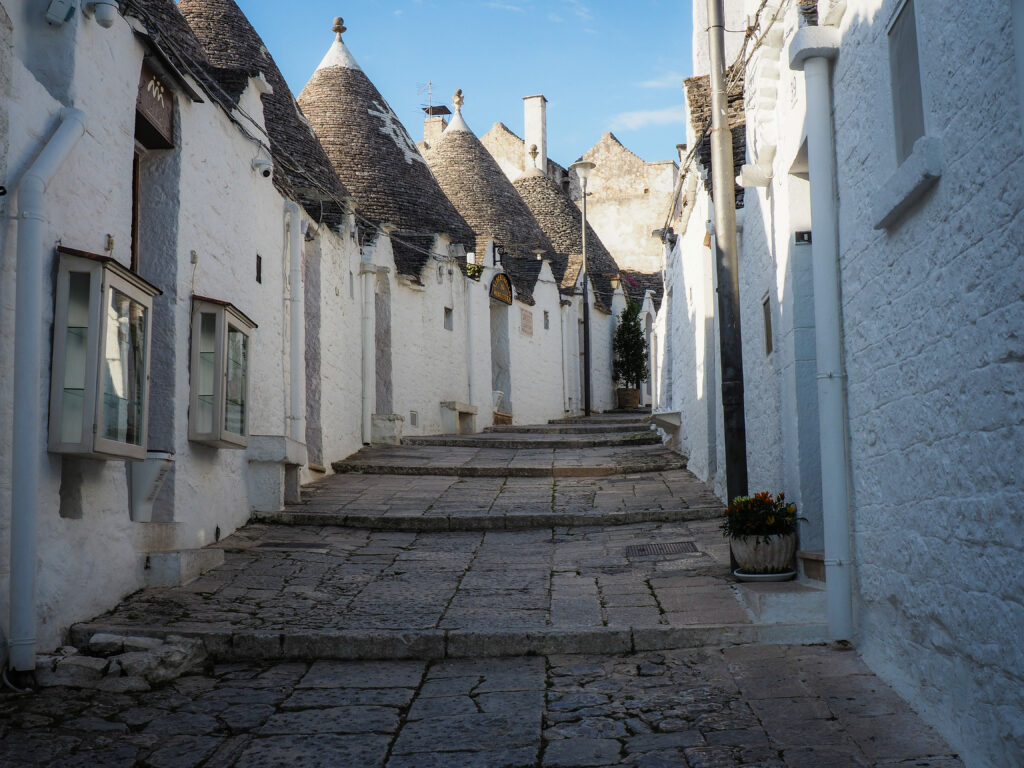
As you walk through the two main districts (Monti and Aia Piccola), you quickly notice that every trullo tells a story. Some are still lived in, and others have become workshops or small craft shops. A number have been restored to welcome travellers who want to sleep in a trullo for a night.
It has become one of the signature experiences in Alberobello, whether in a simple guesthouse or in a trullo in Alberobello renovated as a hotel. Many travellers book only to spend this night in a trullo. You get natural coolness, distinctive architecture and a timeless atmosphere.
It is this mix of traditional architecture, historic heritage and modern life that makes visiting Alberobello so special. You are not just visiting a “group of listed houses”. You are strolling through a village that keeps evolving around a tradition several centuries old.
Things to do in Alberobello
Alberobello is best visited on foot first. Take your time getting lost in the lanes and work out how the town is organised around its trulli. The two main districts, Monti and Aia Piccola, have a completely different atmosphere. It is by moving from one to the other that you realise what makes Alberobello special. Monti is lively, touristy, busy, sometimes even a little theatrical. Aia Piccola is quieter and more intimate, with trulli that are still lived in and a much more local feel. This alternation between bustle and calm defines the visit.
Exploring the two districts: Monti and Aia Piccola
The trulli are spread mainly across two districts: Monti and Aia Piccola. In the Monti district, you follow a maze of narrow lanes where every house seems to have been placed by hand. The trulli are packed close together, lined up like an almost geometric whole. Many of them house workshops, small shops or restaurants. This is where you find the most “famous” views of Alberobello. They show dozens of conical roofs stretching as far as you can see, and limewashed roofs (painted with lime) that reflect the light. If you want photos with nobody in the frame, you need to come early. Before 9 am, Monti still belongs to the residents.
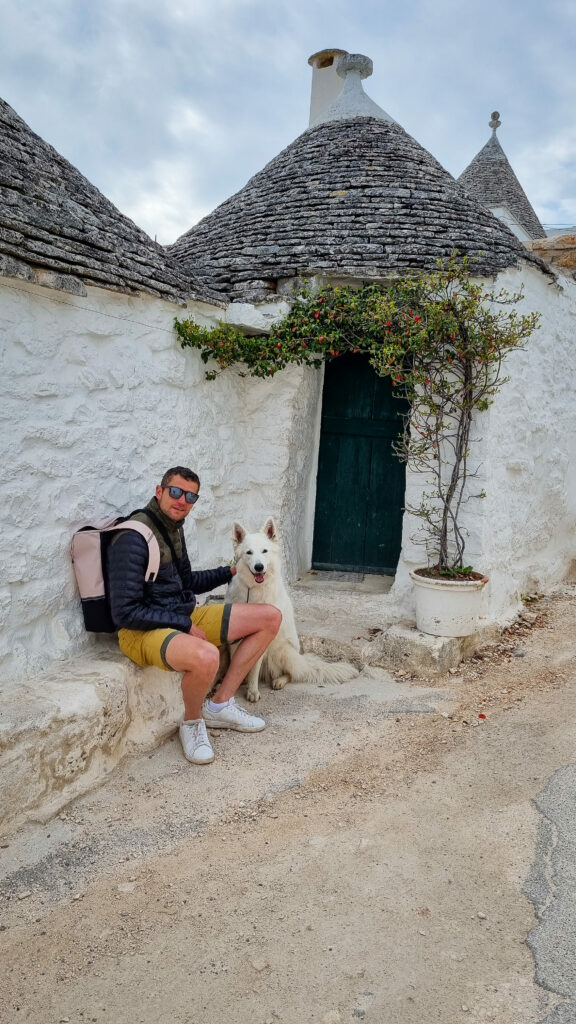
Aia Piccola is something else entirely. The district is listed, lived in and rawer. It is the only place where you can still come across trulli used as real homes. You see chairs in front of the door, pots of basil on the windowsills, or a cat sleeping in full sun. Nothing here has been transformed for tourism. The streets are quiet, the paving stones uneven and daily life is still present. For me, this is the best moment of the visit. It is when you stop looking at the façades and really observe the village.

Climbing to the viewpoints to see Alberobello “from above”
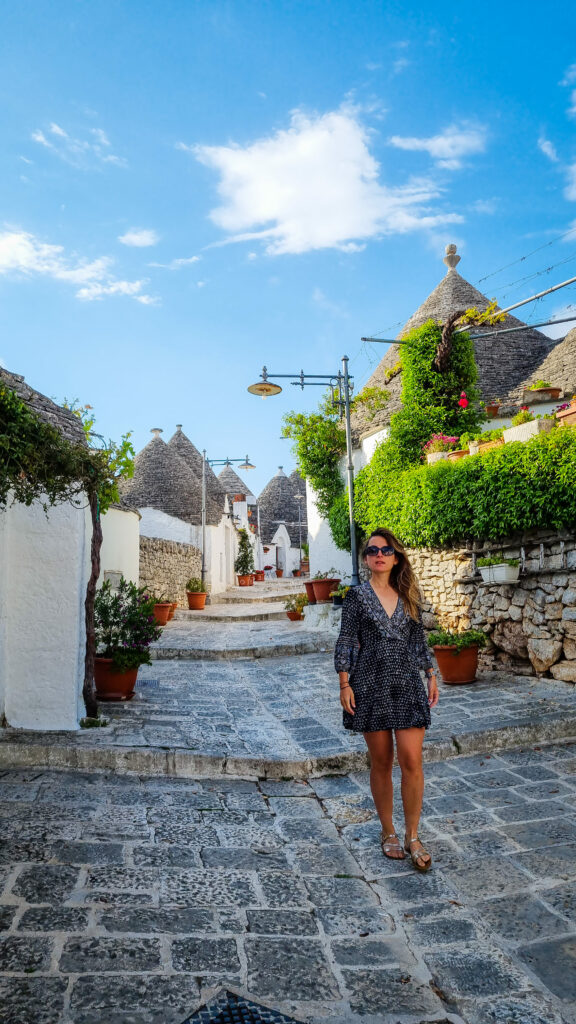
Alberobello has several really interesting viewpoints. They help you understand how the town is structured around its trulli. From the small terrace near the church of Santa Lucia, just above the Monti district, you get a panoramic view of the perfectly aligned conical roofs. It is one of the best viewpoints in the village. It shows you both the density of the Monti district and the perspective over the hills around.
Another viewpoint that many people miss is at the end of Via Monte Nero. It is more discreet and often less busy, but the perspective is superb. You see the lanes crossing and the slope of the village taking shape beneath your feet. It is a perfect spot at the end of the afternoon, when the shadows stretch along the roofs and the light settles on the white stone.
I would also add that moving between the two districts is enough to create your own “viewpoints”. Every junction gives a different perspective. Sometimes there is a row of perfectly aligned trulli, and sometimes a single trullo standing alone under a tree. That is what makes Alberobello so pleasant: you never have to follow a set route.
Visiting a trullo and the Territory Museum
The visit takes on a whole new meaning when you actually step inside a trullo. Some are open to the public, and others serve as workshops or small family shops. Inside, you understand the architectural logic straight away: the coolness, the thick walls, the round central room and the alcoves added over time. You quickly realise that trulli were not just “cute”. They were designed to withstand the climate, store heat, insulate the interior and create a functional living space.
The Territory Museum also shows this. The building is set in a group of 15 trulli linked together. It lets you picture how the families of Alberobello lived: traditional furniture, farm tools, everyday objects, old photos… It is a simple visit, but it gives real context to everything you see afterwards outside. I found it really helped me understand how residents organised themselves in such a small space.
The museum also has architectural interest. You can see the inside of a “period” trullo that has not been turned into a shop or restaurant, which is becoming rare in the Monti district. This rawer, more authentic side gives a concrete idea of life in the Itria Valley before tourism arrived.

How long do you need to visit Alberobello?
The answer really depends on what you want to do. In any case, Alberobello is better visited when you take your time. On paper, the village is small. But between the lanes, the two districts, the viewpoints, the trulli open to the public and the little stops that add up naturally, you quickly stay longer than planned. A little planning goes a long way here.
For a first taste, half a day is enough if you simply want to wander through Monti, take a quick look at Aia Piccola, climb to a viewpoint and see the trulli of Alberobello “in real life”. It works if you are on a road trip and linking several stops in the day.
But if you really want to visit Alberobello, enjoy the lanes before the groups arrive, step into a trullo museum, stop to eat or just wander freely, then plan a full day. This is the format that lets you avoid the crowded hours, especially in summer.
And clearly, the atmosphere changes everything:
Early in the morning, the lanes are calm and residents open their shutters.
In the afternoon, it is busier, sometimes very crowded.
In the evening, the village returns to a much gentler rhythm.
If you can sleep on site, it is even better. Alberobello empty at sunrise, or just after 8 pm, is nothing like the “postcards plus visitors on a conveyor belt” version. That is the moment when you really understand why the trulli of Alberobello are listed by UNESCO.
Hotels in Alberobello, or the experience of sleeping in a trullo
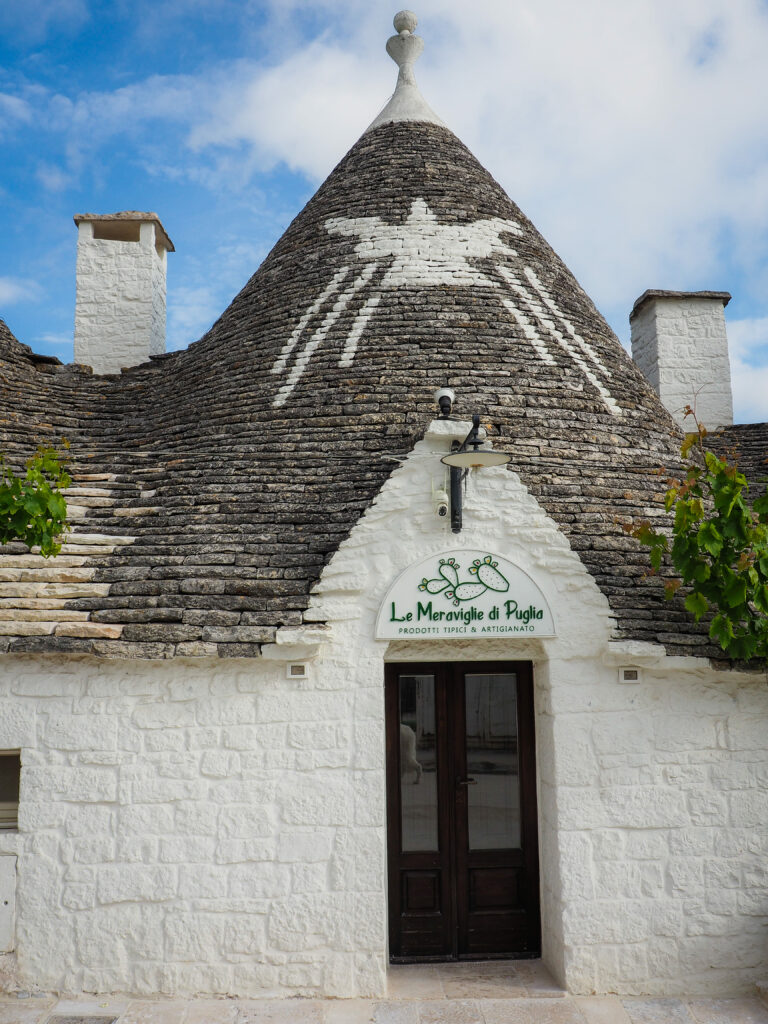
Sleeping in a trullo is one of the signature experiences of Alberobello. You can walk past dozens during the day, but nothing replaces the moment you push open the door of a trullo to “live” in it, even for one night. The inside is always bigger than you imagine. A round room forms the heart of the house, then several alcoves open off it like little outgrowths dug out over time. It is simple, almost minimalist, but the atmosphere is really particular.
In recent years, many trulli have been turned into accommodation or small hotels, with a very variable level of restoration. Some have stayed very authentic, with a stone floor and soft light. Others have been renovated in a more modern way while keeping the original conical structure. The advantage is that you can choose the experience that suits you: a “rustic and traditional” night, or a more comfortable one with air conditioning and a new bathroom.
Why a night in a trullo changes the visit
Sleeping in a trullo also gives you another perspective on Alberobello. The village changes atmosphere completely early in the morning and late in the evening, when most visitors leave. If you stay in the lanes of Aia Piccola, you can step out before 8 am and find yourself alone among the conical roofs. All you hear is the distant noise of cars climbing up from the road. In Monti, the atmosphere will be livelier. You can still enjoy the golden hour, when the façades turn gold and the small shops start to close.
On the budget side, keep in mind that sleeping in a trullo costs more than a standard room in Puglia. Prices rise quickly in high season, especially around July and August. But in low season or if you book early, you can find independent trulli or guesthouses at reasonable rates. It is typically the experience that “makes” the trip, and it is worth it even if you only stay one night.
Where to stay in Alberobello: Monti or Aia Piccola
If you want a calmer atmosphere, choose Aia Piccola: the lanes are lived in, less commercial, and the evening is really pleasant. If you prefer to be in the heart of the liveliest lanes and be able to go out for dinner without walking far, Monti is still a good option, but it is less authentic.
You can also choose to sleep in a “trullo hotel”. This is a group of trulli gathered around a single reception, a bit like a guesthouse spread over several buildings. It is often the best compromise: the charm of a trullo plus the comfort of a standard hotel.

Restaurants in Alberobello: my tips
Eating in Alberobello is a bit like visiting the trulli: you need to know where to go to avoid the tourist traps. This is especially true in the lanes of the Monti district, where restaurants follow one after another. There is good food, but also plenty of places with a “menu translated into ten languages”, where you mostly pay for the setting. So I really recommend moving slightly away from the busiest streets to find genuinely good tables.
What I noticed on the ground: the best places are often between Monti and Aia Piccola, or slightly on the edge of the centre. As soon as you leave the most touristy area, you find simpler, more local menus that are clearly better.
What should you definitely try?
Even though Alberobello is not a coastal town, the cooking of Puglia remains closely tied to fresh produce and local traditions.
Here are a few specialities you find everywhere (and that are worth it):
Orecchiette (small ear-shaped pasta), often served with fresh tomatoes, basil or cime di rapa (turnip tops).
Burrata (fresh cheese with a creamy centre), often much better than the burrata you may know at home.
Focaccia barese (the Bari-style focaccia), soft inside and crisp outside.
Panzerotti, the fried and generous version of the tomato turnover.
Grilled meats, especially in this part of Puglia.
Local white wines, notably those from Locorotondo.
Recommended restaurants in Alberobello
Here is a short, useful list, based on “reliable” feedback (consistent reviews, personal experience and coherent menus). No tourist traps, and no overly fancy restaurants that do not serve the region.
Trattoria Terra Madre
The restaurant that comes up most often for truly homemade local cooking. They work a lot with vegetable garden produce, and the antipasti are among the best rated in town. Simple atmosphere, real family cooking.
Evviva La Puglia!
Newer, but much appreciated for its short menu, fresh pasta and reasonable prices. It is a good lunch option for eating local without falling into the overly touristy restaurants of Monti.
L’Aratro
A classic of Alberobello, recognised for a long time. Traditional Puglia cooking, very good service and a nice showcase of local produce. Ideal if you want a slightly more relaxed dinner.
Street food and quick options
Alberobello is visited mostly on foot, so it is also practical to eat on the go.
La Focacceria Antico Forno
A real traditional oven that turns out focaccia and panzerotti all day long. Perfect if you want to eat between two lanes or in the sun on a low wall.
Martinucci Laboratory
Better known for its pastries across the region, but ideal for a coffee, a small local cake or a sweet break without leaving the old town.
My tips to avoid the false bargains
Avoid restaurants right by the big climb of the Monti district. They are the most touristy.
Look at the menus before you sit down. If there are 40 different dishes, it is a bad sign.
The best dining rooms are not always in a trullo. Sometimes you have to accept a simpler room to eat better.
Book for the evening in season. Alberobello is small and fills up very quickly.
A short walk away from the main climb is usually enough to eat better, and for less.
How to get to Alberobello
Alberobello is not by the sea, but the town is very well connected to the rest of Puglia. Most travellers arrive from Bari, Lecce or the villages of the Itria Valley. The journeys are simple once you know the right options.
Bari to Alberobello: how to get there
From Bari, it takes about an hour to reach Alberobello. You can drive along the inland road that crosses the olive groves. You can also take a regional train (the FSE network, short for Ferrovie del Sud Est) that reaches Alberobello in a little over an hour, sometimes with a short change depending on the timetable.
The bus works well too. It is often the most direct solution if you do not have a car.
Lecce to Alberobello
From Lecce, the journeys are a little longer. The car remains the most practical option (allow about 1 hour 30). By train, you have to use the local lines. It works, but you need to adapt your schedule because connections are not continuous.
If you are on a road trip, the drive from Lecce to Alberobello is really pretty, especially at the end of the day.
Coming from the coast (Polignano, Monopoli)
If you are already by the sea, you arrive quickly:
Polignano a Mare to Alberobello: about 30 minutes.
Monopoli to Alberobello: about 25 minutes.
Locorotondo or Cisternino to Alberobello: 15 to 20 minutes.
That is why many people combine beach plus Alberobello in the same day. I still find it more pleasant to do things separately.
Alberobello: what to do nearby
Alberobello sits in the middle of the Itria Valley, so you can easily branch out. Everything is 10 to 20 minutes away by car. This helps balance your day if you want to see something other than trulli. It also means you can base yourself in Alberobello for a few days.
Locorotondo
This is the village I preferred just after Alberobello. You arrive, climb a few streets and find yourself in a perfectly circular centre. It is very calm, and the lanes spiral round. It is small, very clean and bright.
You go round it quickly, but it is the kind of place where you stop for a coffee on a terrace just to watch people pass. If you have already walked a lot among the trulli, it is a nice break.
Cisternino
It is also ten minutes away, but the atmosphere is completely different. It is a rawer, more local village, less “perfect”. The lanes are tight, the façades bleached by the sun, and there is often a little activity on the small squares.
If you want to see a more authentic village in Puglia, less geared towards tourism than Locorotondo, this is a good option. It is also a good spot in the evening, with quite a few small places to eat.
Castellana Caves
If you want an outing that changes the Puglia scenery completely, this is it. The caves are huge, the visit is guided from start to finish, and you pass through several chambers with stalactites and quite wild rock formations.
It is not something you do “as an extra” by chance. You need to book a slot and allow time, but it complements a stay based in Alberobello well. In summer, it is also nice to be somewhere cool.
By the sea: Polignano a Mare and Monopoli
If you want to reach the coast from Alberobello, it takes about twenty minutes.
Polignano a Mare remains the “wow” destination, with its cliffs and Lama Monachile. It is very busy, but if you arrive early in the morning or at the end of the day, the atmosphere is really different.
Monopoli is gentler and more spread out, with a lovely little harbour and several beaches you can reach without walking too far.