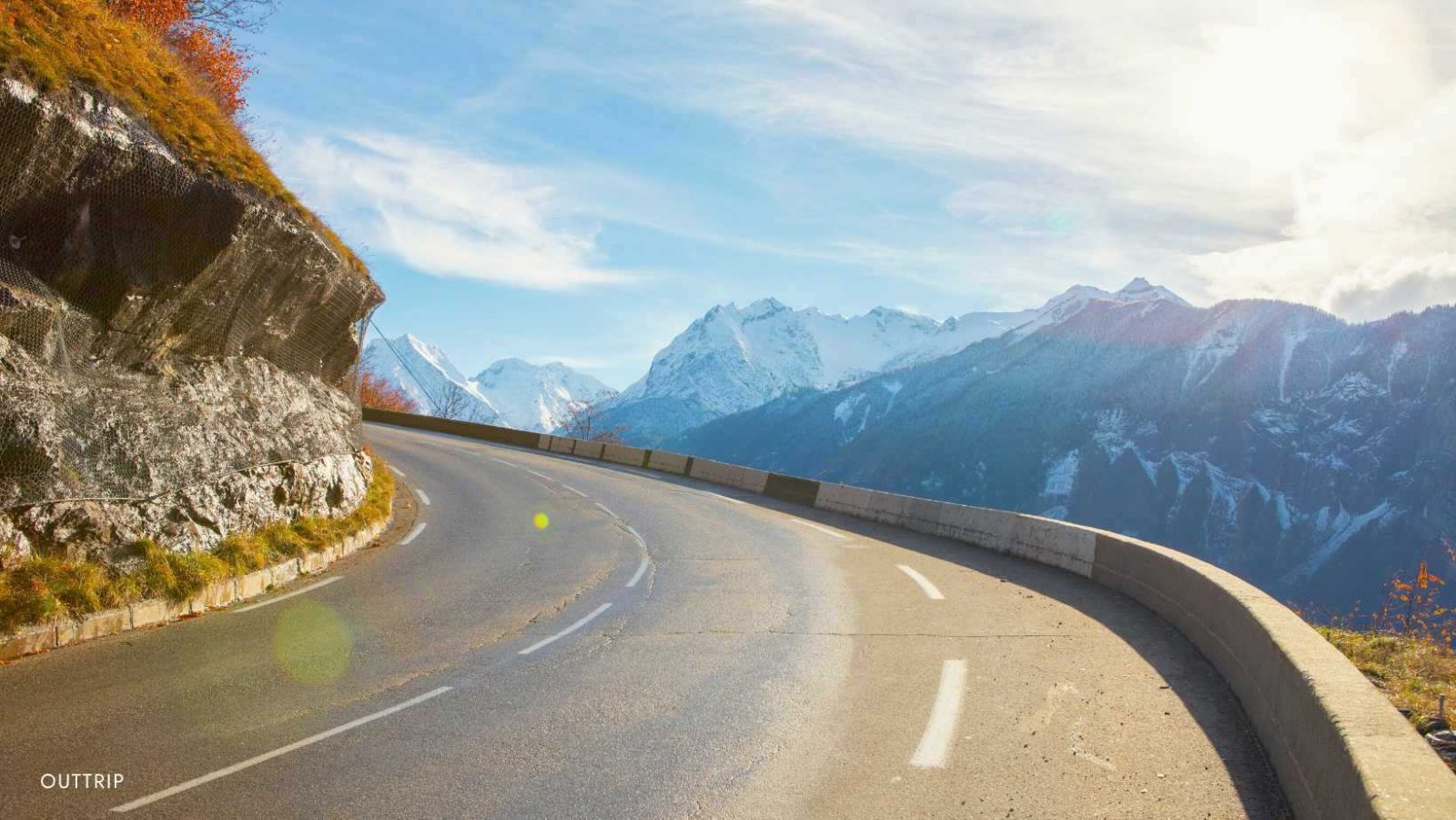
Alpe d’Huez cycling comes down to one climb: the 21 hairpin bends made famous by the Tour de France, from Bourg-d’Oisans (717 m) in the valley up to the ski resort (1,860 m). That’s 14.5 km and 1,121 m of ascent, at an average gradient of 7.9%.
If you still have energy left at the top, you can carry on up to the Col de Poutran and Lac Besson, at 2,074 m.
Below you’ll find the route, my tips for a successful ascent, the kit to take and the precautions to think about before you set off. (If you’re travelling from the UK, the climb starts in Bourg-d’Oisans, in the Oisans valley in the Isère, and the bends are also known as the 21 hairpins of Alpe d’Huez.)
- The numbered signs, counting down the bends, which show you the altitude at each hairpin.
- The name of one or more Tour de France stage winners on every bend.
- Flatter sections between the bends where you can get your breath back.
- The option of carrying on to Lac Besson, at 2,074 m.
- The first few kilometres are the steepest, with gradients of over 10%.
- Pack a windproof jacket for the descent.
- I only spotted one water point: at bend no. 7, by the Saint-Ferréol church in Huez.
- Set off in the morning: less traffic and less heat.
Alpe d’Huez cycling: why ride the 21 bends?
For the history. This climb is part of the Tour de France story, and every bend carries the name of one or more stage winners.
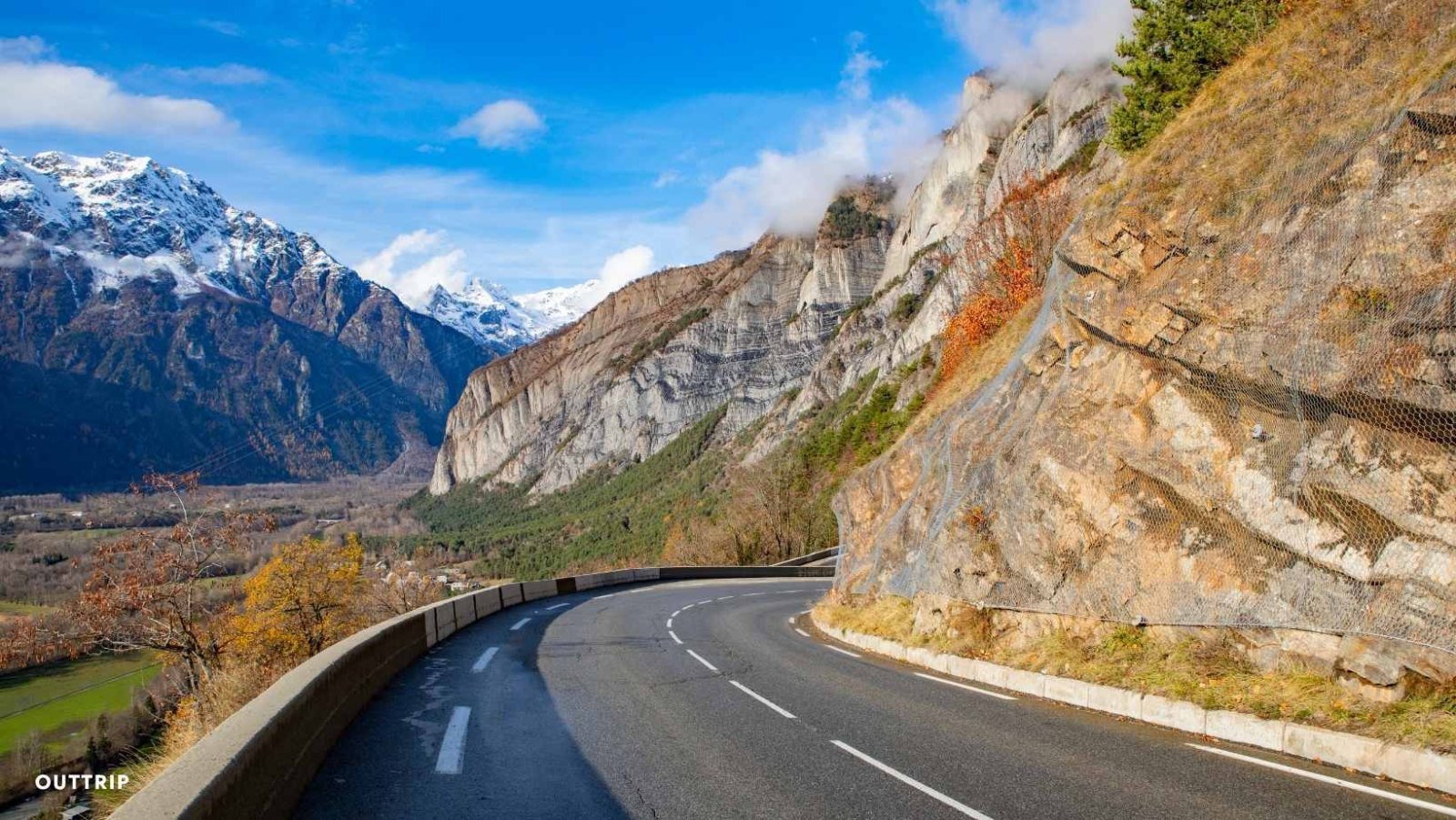
For the challenge. Climbing Alpe d’Huez means 1,121 m of ascent over 14.5 km, at an average of 7.9%: a real test for riders of every level, as long as you pace yourself well.
For the benchmark. Marco Pantani set the record in 1997: 37 min 35 s, at an average of 23.08 km/h. Enough to put your own time into perspective (whatever it turns out to be).
Getting to the start of the Alpe d’Huez climb
Bourg-d’Oisans
You start from Bourg-d’Oisans (717 m), or from Rochetaillée if you want a longer ride. To get a quick warm-up in, I suggest setting off 2 km before the foot of the climb, near the Bourg-d’Oisans sports hall (the gymnase).
From May to mid-November
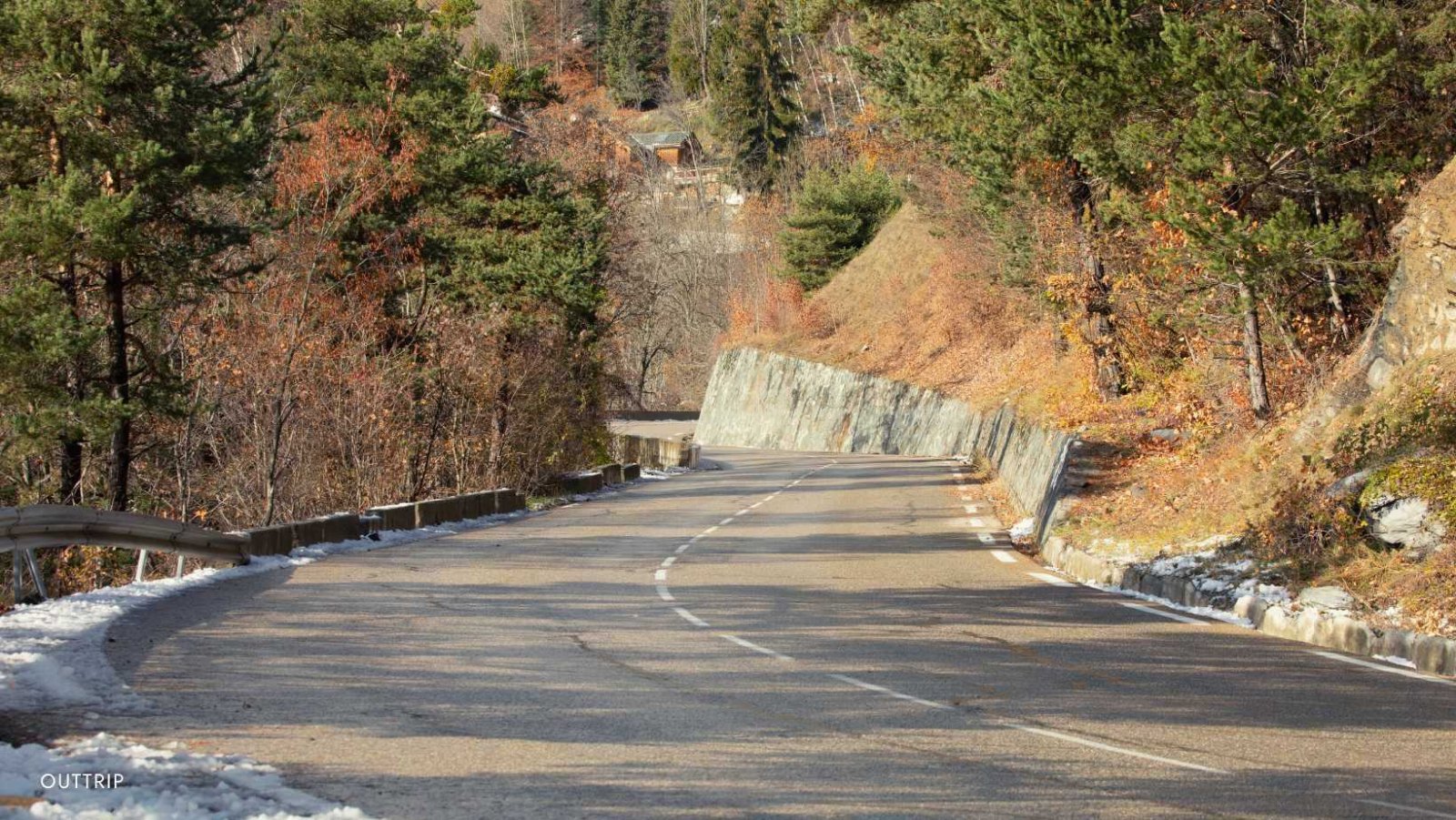
You can ride the climb from May to mid-November, depending on the weather and the snow. Go in the morning and you’ll avoid both the traffic and the heat.
Alpe d’Huez cycling route: the 21 bends step by step
Distance: 14.5 km from Bourg-d’Oisans
Elevation gain: 1,121 m
Altitude: from 717 m to 1,860 m
Average gradient: 7.9%
Max gradient: 14%
Bends: 21, numbered in descending order
Here’s the climb in six stages. My route starts 2 km before the foot of the climb so you can warm up, which makes it about 16 km in total.
Open the route map on Google My Maps to follow the route on your phone.
Warming up in the valley
After a few kilometres of warm-up along the Oisans valley, you reach the foot of the climb.
The first few kilometres
These are the steepest, with gradients above 10%. Save some breath for what comes next.
Getting going again after the bends
Some bends force you to push hard again as you come out of them: use the flatter sections to recover.
The numbered signs
They count the bends down and show you the altitude at each hairpin.
Huez and the water point
At bend no. 7, by the Saint-Ferréol church in Huez, there’s a water point.
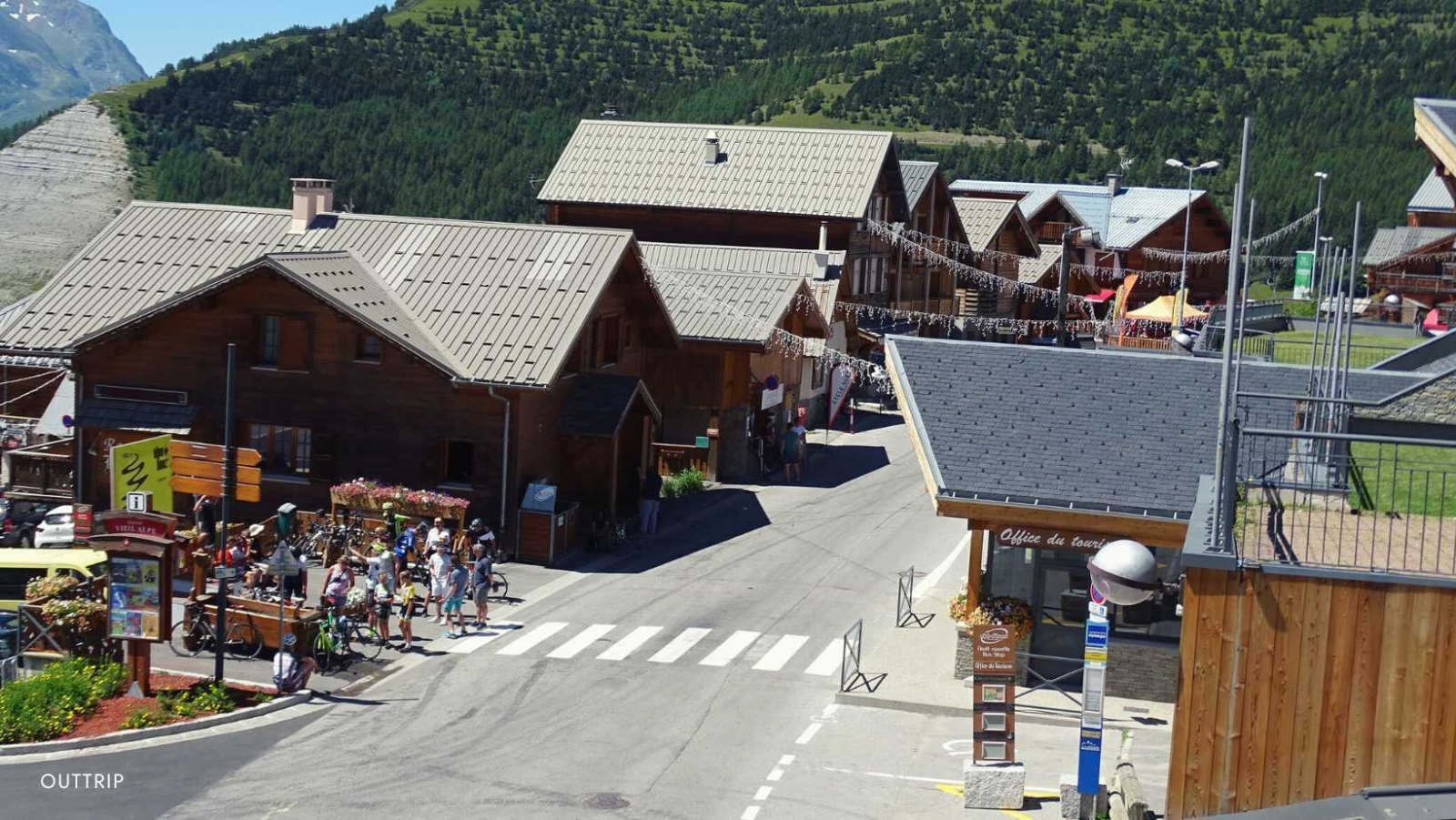
Arriving at Alpe d’Huez
You reach Alpe d’Huez at 1,860 m. From there you can carry on to the Col de Poutran and Lac Besson, at 2,074 m.
Set off early in the morning to avoid the traffic and the heat, and don’t forget your windproof for the way down.
More ideas around the Alpe d’Huez climb
Carry on up to the Col de Poutran and Lac Besson, at 2,074 m.
Use the Poutran gondola, which links Oz and Alpe d’Huez.
Take a photo at the top of the climb: you’ve earned it.
Back near Annecy, where I live, I’ve also written a guide to the bike ride around Lake Annecy, a very different day out on two wheels.
What to take for Alpe d’Huez cycling
For something different at Alpe d’Huez, there’s also a via ferrata in the Sarenne gorges.
Safety and respect for nature
For your safety
For nature
Frequently asked questions
How long is the Alpe d’Huez climb up the 21 bends?
14.5 km from Bourg-d’Oisans, with 1,121 m of elevation gain.
What is the average gradient of the Alpe d’Huez climb?
7.9%, with a maximum gradient of 14%.
What is the record for the Alpe d’Huez climb?
37 min 35 s, set by Marco Pantani in 1997, at an average of 23.08 km/h.
Where does the Alpe d’Huez cycling climb start?
From Bourg-d’Oisans (717 m), or from Rochetaillée for a longer ride. I suggest starting 2 km before the climb begins, so you can warm up.
Where can you find water on the 21 bends of Alpe d’Huez?
At bend no. 7, by the Saint-Ferréol church in Huez.
What altitude is the finish at Alpe d’Huez?
1,860 m, after starting at 717 m in Bourg-d’Oisans.
Can you carry on to Lac Besson after the 21 bends?
Yes, by continuing up to the Col de Poutran and Lac Besson, at 2,074 m.