Sommaire
I had dreamed of this trip to the Azores for a long time
These Azores holidays had been on my wish list for years. I pictured a scattering of islands in the middle of the Atlantic. People had often told me about their green, volcanic landscapes, and I imagined them as almost unreal.
After a summer that was far too busy, I needed to switch off. I wanted to walk, breathe and find the things that make me feel good. That is exactly what this week in the Azores gave me. It was a pause outside time, set to the rhythm of nature, the people I met and the trails.
Why the Azores? Because they bring together everything I love. There are volcanoes, crater lakes in improbable colours and hikes through landscapes that are still well preserved. Add that special island atmosphere, somewhere between mist, ocean and changing light. For a week, every day was a discovery. I found the hot springs of Furnas, the ridges of Sete Cidades and the volcanic forests of Terceira.
If you are dreaming of holidays to the Azores too, I hope this travel diary helps you picture the trip. Book an organised trip or explore the islands at your own pace: both work well here.
The Azores, an archipelago in the middle of nowhere
Where are the Azores?
The Azores are nine islands lost in the middle of the Atlantic, about 1,500 kilometres from Portugal. They belong to the country, but one look at the map shows how far they are from the mainland. These are volcanic lands, shaped by successive eruptions, with steep reliefs and calderas. The humid, oceanic climate keeps the vegetation lush.
What I like about this destination is that island side, a little isolated. You stay in Europe, yet you already feel as if you have crossed into somewhere else. That is why holidays in the Azores, Portugal, appeal to me. I love these places set apart, where you feel far from everyday life without travelling halfway round the globe.
Why choose the Azores for your holidays?
Azores holidays are not a week of lounging on a beach. They are a chance to explore very varied landscapes. Think volcanic lakes, natural hot springs, dense forests and villages set right by the ocean. I love walking, so it suits me perfectly. You can hike every day and find something different each time.
Discover the best hikes in the Azores.
I also find it interesting that the archipelago remains fairly unspoilt. You are far from mass tourism. The villages are small, local life revolves around farming and the sea, and tourism still fits in rather well. The destination keeps an authentic side, which is exactly what I look for in my holidays in the Azores.
Planning your Azores holidays
How do you get there?
Most travellers fly. Azores Airlines (SATA) operates direct flights from Lisbon or Porto. There are sometimes seasonal flights from Paris or other European cities. For me, this was of course the simplest and quickest option. Once there, you can take domestic flights with Air Açores to move from one island to another. With nine islands, island hopping lets you vary your stops without losing too much time.
Reaching the Azores by boat from Portugal is almost impossible, rare and restrictive. We are talking about several days at sea and heavy logistics. It might appeal to sailing enthusiasts or anyone after a maritime adventure. For a stay of one or two weeks, though, flying is clearly the best and only option.
Once you are there, getting around is easy by car or with organised transfers.
Read my article about our holidays on Reunion Island too.
Azores holidays: organised trip or independent travel?
You can of course go to the Azores on your own and organise everything yourself, or choose an organised trip. Both options work, and it depends mostly on your travel style.
On your own, you need to hire a car and book your accommodation (often guesthouses or small pensions). You build your programme as you go. This gives you great freedom: you can adapt each day to the weather or to what you feel like doing.
An all-inclusive or guided trip, on the other hand, removes many constraints. You do not have to handle transfers or bookings, or spend time searching for routes. In my case, I find a local guide precious. It is someone who knows the paths and the weather conditions. They can also share a real reading of the territory.
I understand that this format does not suit everyone. I do many of my own adventures independently. This time, I really liked the idea of letting myself be carried along, without spending hours organising everything. For others, a fully independent trip will be perfect. At heart, the archipelago suits both styles, so choose the one that matches how you like to travel.
My Azores holidays: day-by-day itinerary
Before leaving, I always like to look at the programme to get an idea of what awaits me. On this trip, the itinerary mixes volcanoes, lakes, forests, villages and even a journey between two islands. Needless to say, the week promised to be full.
Here is the day-by-day account, a sort of travel diary. It also shows you what an organised trip to the Azores can offer when you choose a formula built around walking and discovery. And it gives you ideas if you would rather do it solo.
The week at a glance
| Day | Island | Main stops |
|---|---|---|
| Day 1 | São Miguel | Furnas Lake and its fumaroles, Cozido, the thermal pool of Terra Nostra Park |
| Day 2 | São Miguel | Lagoa do Fogo hike (about 11 km), Caldeira Velha hot pools |
| Day 3 | São Miguel | Sete Cidades hike (about 11 km, 400 m of ascent), Lagoa das Empadadas |
| Day 4 | Terceira | 40-minute flight, Angra do Heroísmo, Monte Brasil |
| Day 5 | Terceira | Mistérios Negros hike, fumaroles near Algar do Carvão, Serra do Cume viewpoint |
| Day 6 | Terceira | Rocha do Chambre hike, Biscoitos natural pools, Materamanta winery |
Day 1. First steps on São Miguel
The first day is on the island of São Miguel. We start gently in the Furnas area. It sums up the volcanic activity of the Azores on its own. Here the ground steams, sometimes rumbles, and is even used for cooking.
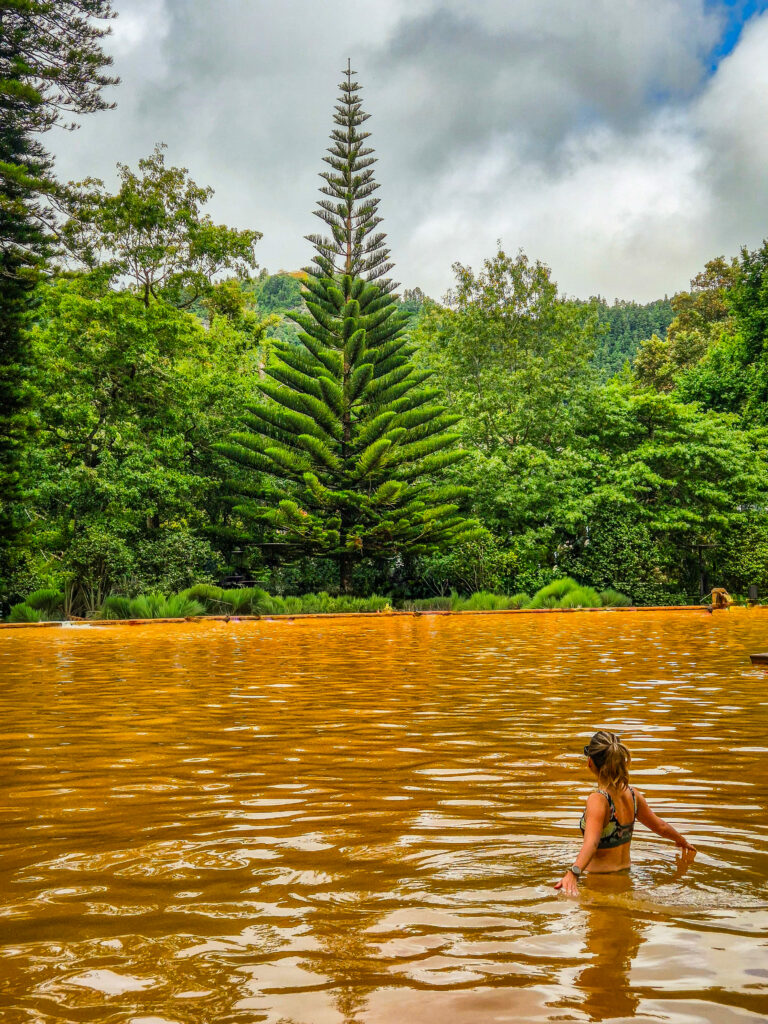
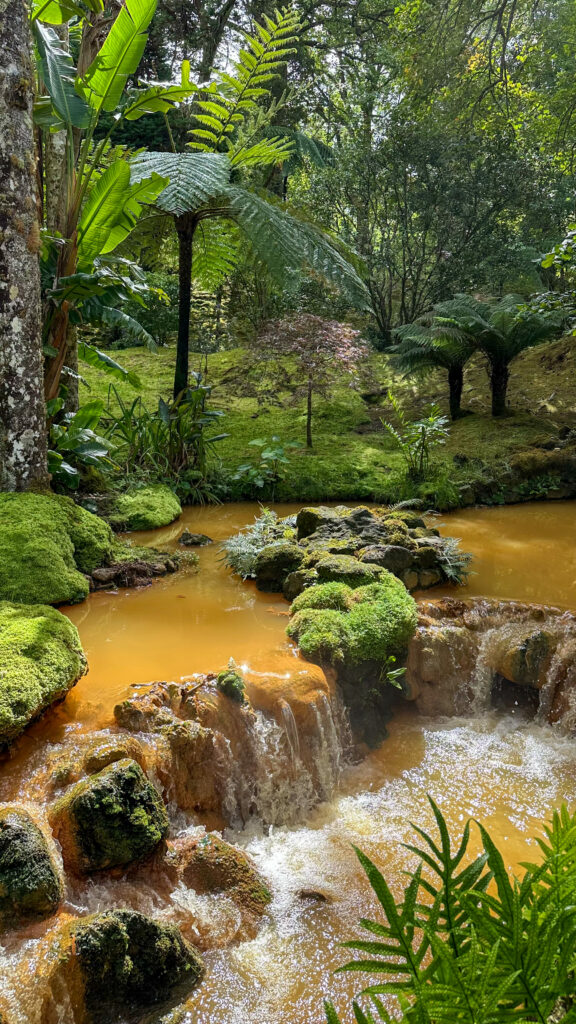
Around Furnas Lake, fumaroles rise from the ground in small clouds of steam. This is where locals prepare Cozido, a typical dish of the island. Meat and vegetables simmer for hours in the natural heat of the volcano. It feels a bit surreal, but it is delicious (and no, it does not smell too much of sulphur). In the afternoon, we head to Terra Nostra Park. It is a huge tropical garden full of ferns, palm trees and hot water pools. Its large rust-coloured thermal pool is fed by iron-rich volcanic springs. The water is close to 40 °C, perfect to relax after the walk.
For lunch, we stop at Restaurante Tonys, the emblematic address to taste Cozido. We end the day at a small local restaurant, Bocarberta, with a friendly atmosphere and home cooking.
Day 2. Lagoa do Fogo and natural hot springs
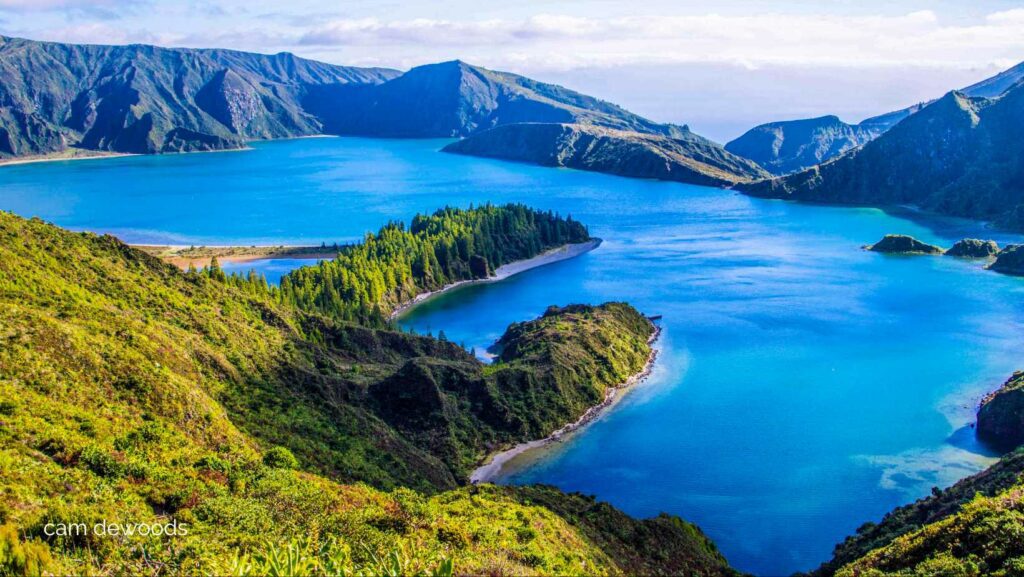
Day two takes us to one of the best hikes in the Azores on São Miguel. It is Lagoa do Fogo, the “lake of fire”. The route covers about 11 km and climbs to an old volcanic crater. From the top, the view stretches 360° over the island and the ocean. The weather was not perfect, with a few showers at the start. But that is part of the charm of the Azores (and the reason everything is so green). The clouds rise, drop again and reveal the landscape in small touches. When the sky finally clears, the view over the lake is simply incredible.
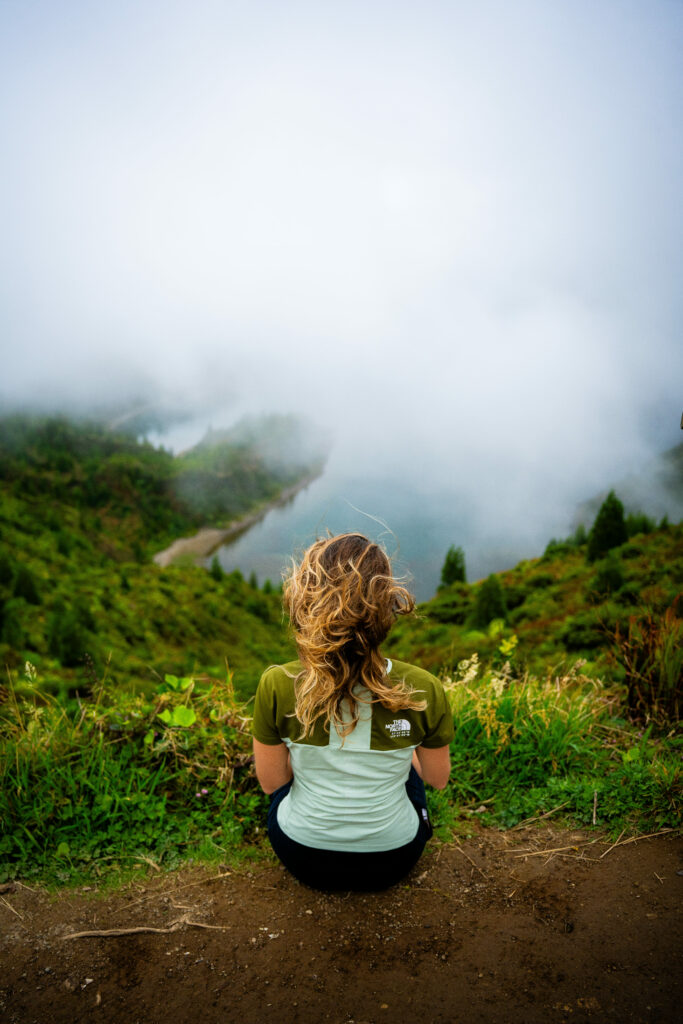
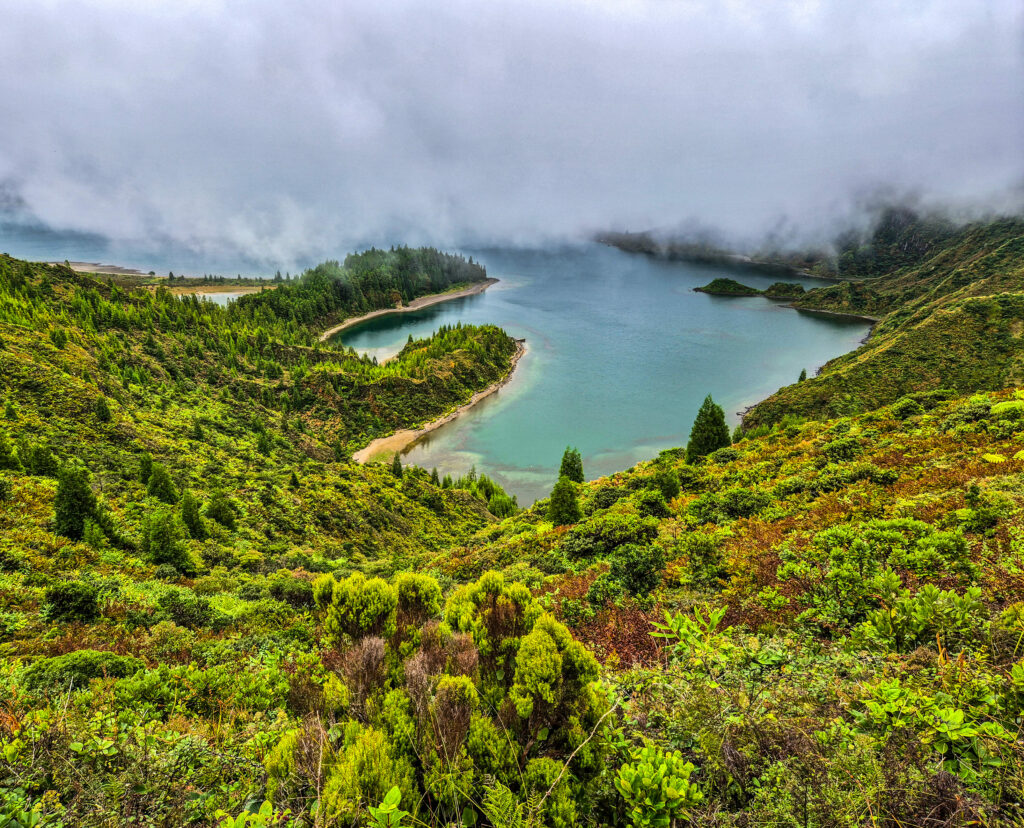
We take a short break at Praia do Areal de Santa Bárbara. It is a black sand beach typical of the Azores.
In the afternoon, we head to the Caldeira Velha hot springs, set in dense tropical forest. Several natural hot pools, heated by the volcano, follow one another under an iron-rich waterfall. The place feels unreal, somewhere between jungle and steam.
We end the day at the restaurant Cais da Sardinha, with a view of the sea.
Day 3. Sete Cidades and the volcanic lakes
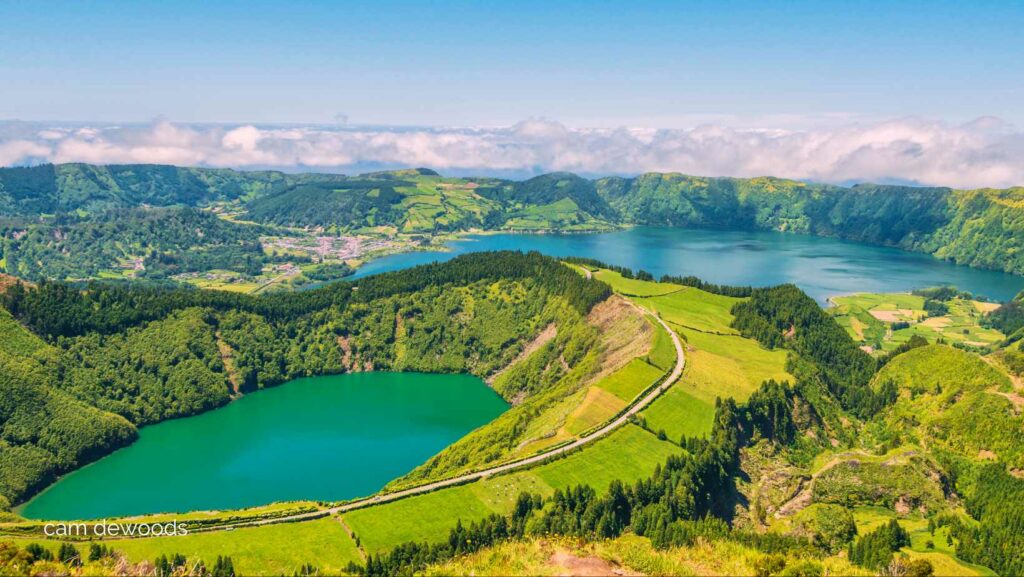
If I had to keep a single day on São Miguel, it would probably be this one. The Sete Cidades hike is a classic, but it fully lives up to its reputation. We start from the Lagoa do Canário car park. The first stop is the Miradouro da Grota do Inferno. It has a striking view over the caldera, the lakes and the distant ocean.
The path then follows the ridge, between meadows, ferns and pastures. It offers spectacular viewpoints over the different lakes: Lagoa Azul, huge and almost joined to the sea, and Lagoa Verde, smaller and tucked into the vegetation. Quieter ones follow, such as Santiago, Rasa or Empadadas. The hike is about 11 km with 400 m of ascent, accessible and grand from start to finish.
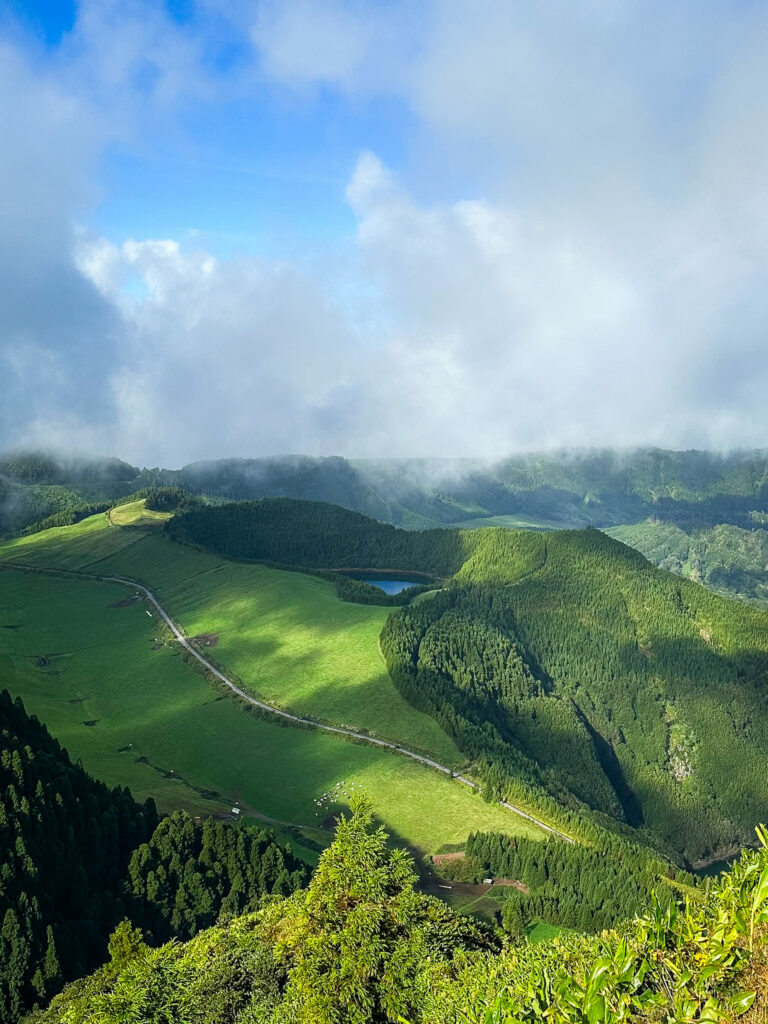
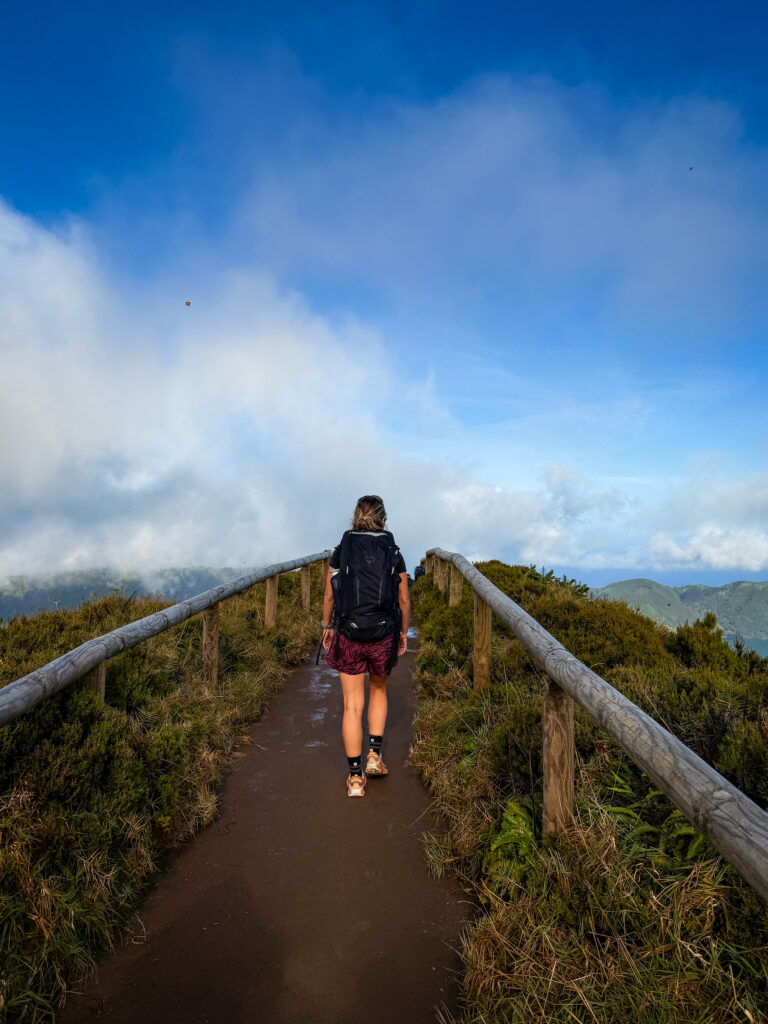
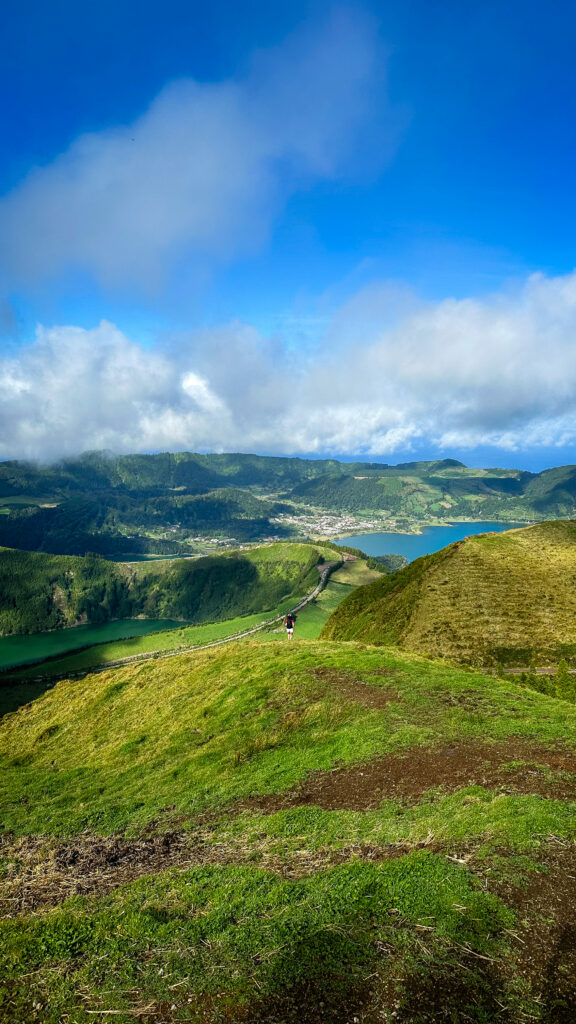
In the afternoon, we take a short walk to Lagoa das Empadadas. Dinner is at Tasca, a simple, lively place in the centre of Ponta Delgada, perfect to end the day.
Day 4. Heading to Terceira
This morning we leave São Miguel for Terceira, another island of the archipelago, more central and still very unspoilt. There is no ferry between the islands here. The flight is compulsory and short (barely 40 minutes), but allow some margin for transfers and boarding.
When we land, the scenery changes at once. Terceira is more rural and rawer, with fields bordered by black stone walls and hills covered in mist. The sky is a little grey and the light softer, which gives the Azores that particular charm.
In the afternoon, we take a quiet stroll around Angra do Heroísmo, the island’s capital, listed by UNESCO. Its cobbled lanes, pastel façades and calm atmosphere contrast with the lush vegetation of São Miguel. We then climb up to Monte Brasil, a former volcanic peninsula that overlooks the town. The view takes in the ocean, the rooftops of Angra and the pastures. Despite the clouds, the outlook is superb.
Lunch is at Quinta dos Açores, a modern farm restaurant known for its local produce. Dinner is at Tasca das Tias, a lively, friendly place in the heart of Angra.
It is a gentle day of transition, a little calmer, before heading off again to explore the volcanic reliefs of Terceira.
Day 5. Volcanoes, fumaroles and traditions on Terceira
Today it is all about the raw nature of Terceira. We head to the Mistérios Negros, one of the best-known hiking routes on the island. The path crosses a landscape born from an ancient eruption: frozen lava flows, thick moss, cryptomeria forests and small lakes hidden between black rocks. The atmosphere is almost mystical, silent, wrapped in damp and mist. At every bend, you feel as if you were somewhere else.
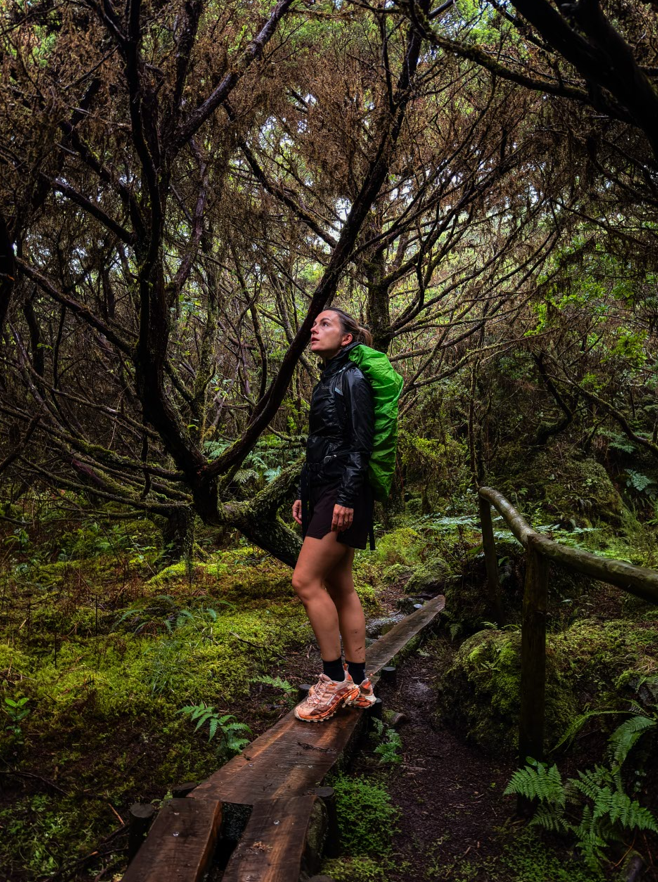

After the hike, we stop at the fumaroles near Algar do Carvão, where the earth still breathes. Then we drive to the Miradouro da Serra do Cume, one of the finest panoramas on the island. The view covers the whole Terceira plain, cut into hundreds of green plots separated by volcanic stone walls. In the wind, you understand why the Azores feel so intense: here, nature never really softens.
In the evening, we have dinner at the Quinta do Martelo, a place apart. It is a farm, an inn and one of the most renowned restaurants on the island. Everything is home cooked, following local traditions, in an old-fashioned setting. You eat in former living rooms (bedroom, kitchen, dining room) and feel as if you are going back in time. I loved it.
Day 6. Rocks, natural pools and local flavours
This is our last day on Terceira before the trip home. This morning, we hike near the Rocha do Chambre, in the centre of the island. The path winds through cryptomeria forests before climbing to the ridges. Up there, the view is 360° over the pastures, the volcanoes and the tiny villages. It is a lovely hike, not too long but really panoramic, a perfect summary of Terceira.
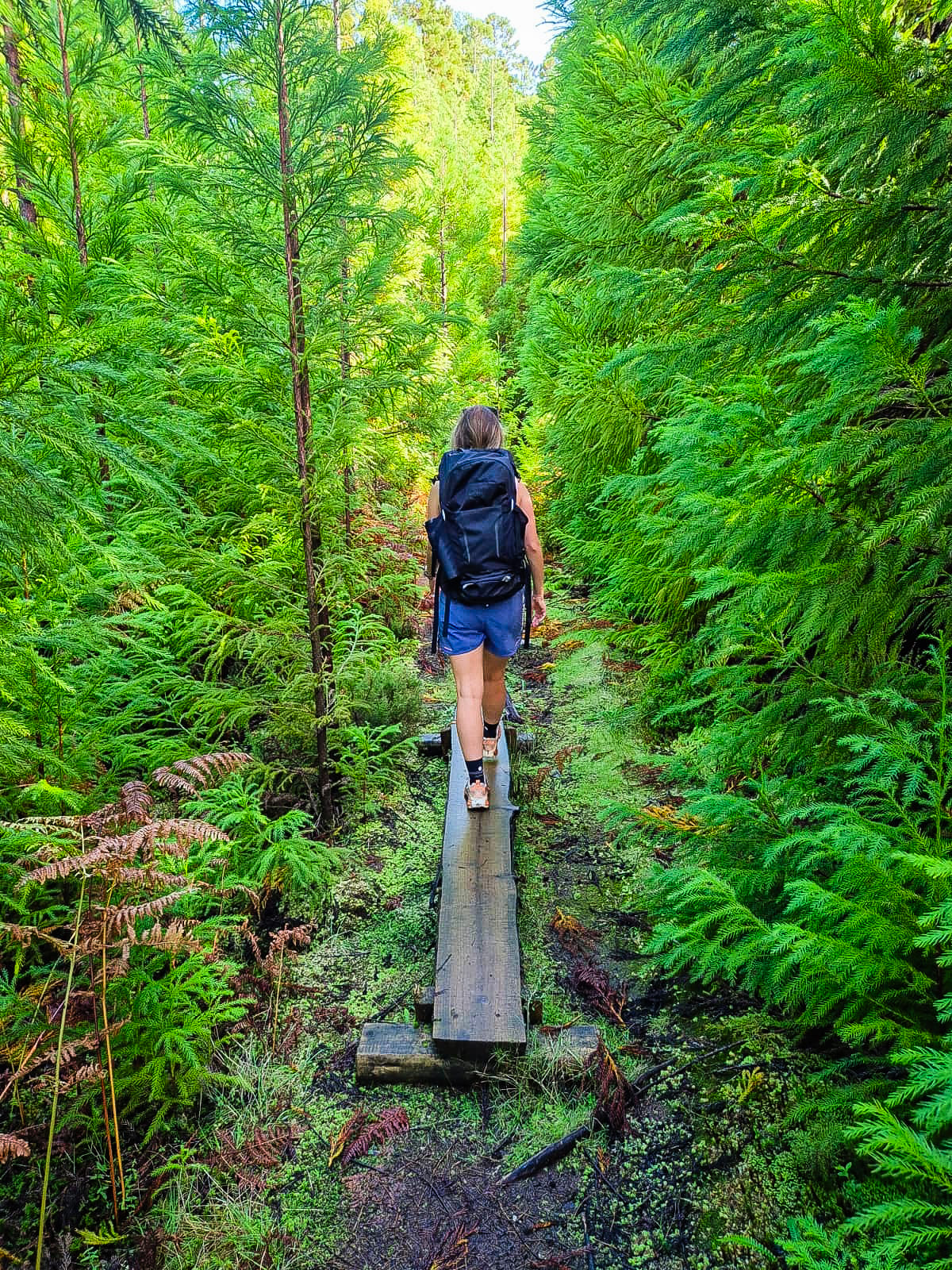
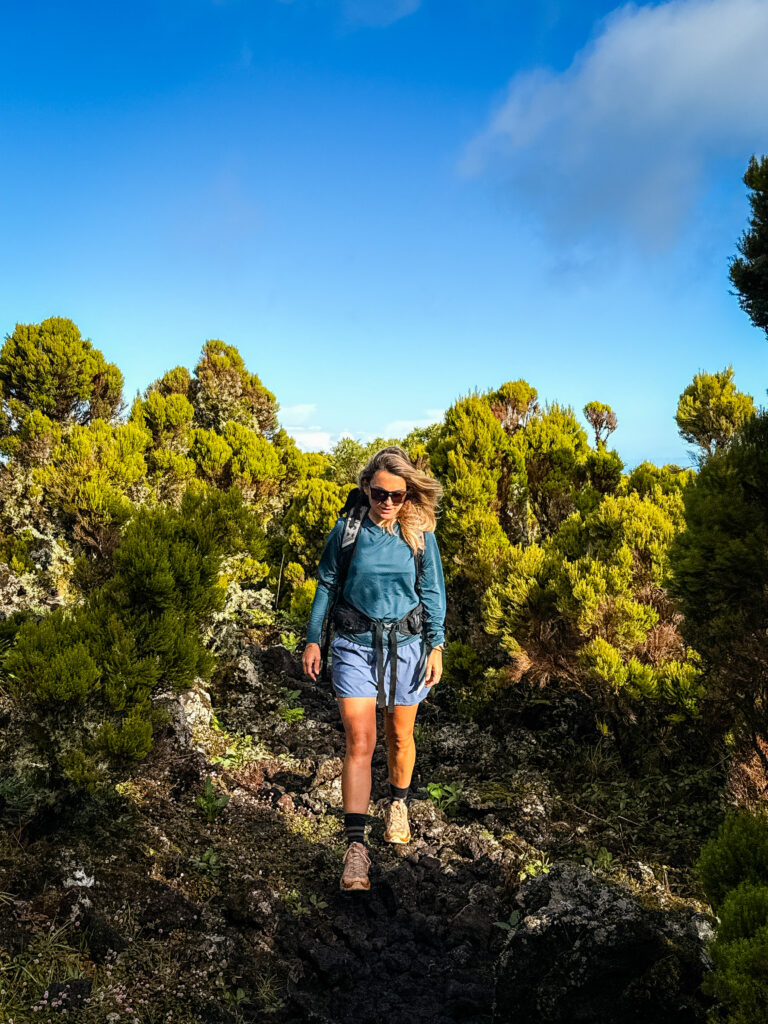
We have lunch at the restaurant Caneta, an institution on the island, known for its traditional cooking and simple, warm atmosphere. In the afternoon, we head to the north coast for a last moment by the water, in the Piscinas Naturais de Biscoitos. These natural pools are carved into the volcanic rock and offer a swim between the black of the lava and the blue of the Atlantic. The place is beautiful, wild and perfect to close the week.
Before heading back, we stop at the Materamanta winery for a small tasting of wines made on the island. There are local grape varieties, a volcanic terroir, and always that taste of authenticity you find everywhere here.
Azores holidays: your questions answered
How do you get to the Azores?
Most travellers fly. Azores Airlines (SATA) operates direct flights from Lisbon or Porto. There are sometimes seasonal flights from Paris or other European cities. Reaching the islands by boat from Portugal means several days at sea, so flying is the only practical option for a stay of one or two weeks.
How do you travel between the islands?
By plane. Air Açores runs domestic flights between the islands. On this trip, the flight from São Miguel to Terceira lasted barely 40 minutes. It is still worth keeping some margin for transfers and boarding.
Is it better to book an organised trip or travel independently?
Both work, and it depends on your travel style. On your own, you hire a car, book guesthouses and adapt each day to the weather. With an all-inclusive or guided trip, you skip the logistics and gain a local guide who knows the paths and the weather conditions.
How many days do you need for Azores holidays?
My itinerary lasts a week, with three days on São Miguel and three on Terceira. The archipelago has nine islands, so domestic flights let you vary your stops without losing too much time.
What are the best hikes in the Azores?
On this trip, I walked Lagoa do Fogo (about 11 km), Sete Cidades (about 11 km with 400 m of ascent), the Mistérios Negros and the Rocha do Chambre. You will find more routes in my guide to the best hikes in the Azores.
Where can you bathe in hot springs?
On São Miguel, the thermal pool of Terra Nostra Park in Furnas is fed by iron-rich volcanic springs, with water close to 40 °C. The Caldeira Velha hot springs are another option. They lie in dense forest, under a waterfall.
Are the Azores crowded with tourists?
On this trip, the islands felt far from mass tourism. The villages are small, local life revolves around farming and the sea, and tourism still fits in rather well.