When people talk about the Camino de Santiago, most of them think of Spain first. That makes sense: it’s where Santiago is. But before you ever cross the Pyrenees, there are hundreds of kilometres you can walk on the Camino routes in France, on well-waymarked paths steeped in history, and sometimes far less crowded.
I won’t lie to you, I had that same picture in my head at the start: one big path running straight west. And then I found out that France has several Camino routes. Four main ones, but a lot more if you count the variants. Some are very well known, like the route from Le Puy-en-Velay. Others are quieter, like the one that starts in Arles.
I’ve walked two of them so far: the Via Podiensis (the whole thing) and the Via Tolosana (over 3 weeks). Each time I found a different atmosphere. Different people, different landscapes, hard days and good surprises. What I can tell you is that no two routes feel the same. You don’t live them in the same way, and that’s exactly what makes them so fascinating.
Here, I’ll explain what you need to know about the Camino routes in France: where they start, what they cross, and how to choose the one that suits you. All of it without selling you a dream, just what I learned from walking them myself. I’ve made this a fairly dense article, and I sometimes repeat myself a little, so you can dip in and find the answers to whatever questions you have.
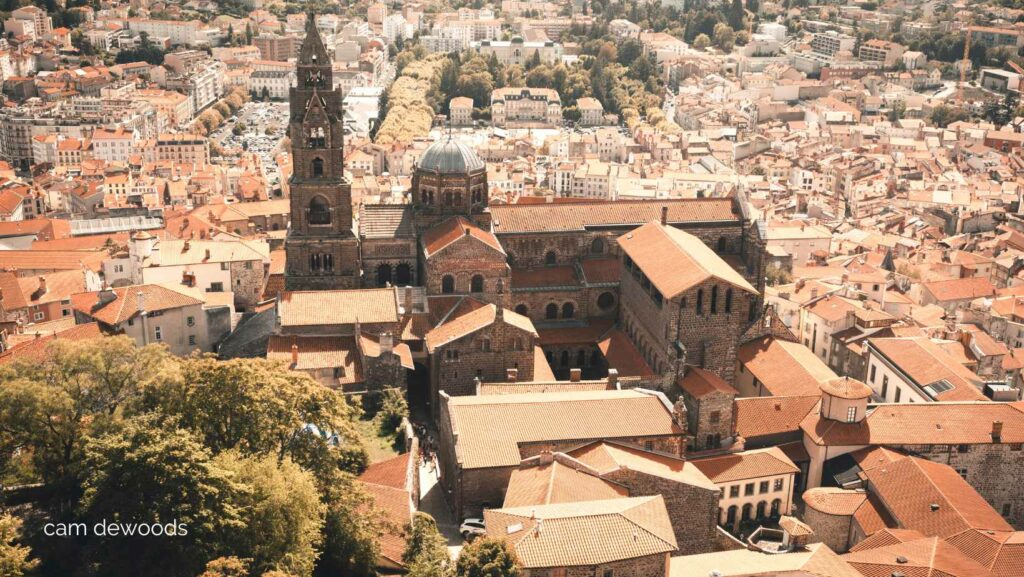
My experience on the Camino routes in France
For me, the Camino in France isn’t a straight line from point A to point B. It’s a series of pieces of life. Moments suspended in time. I was lucky enough to live them on two of the great historic routes: the Via Tolosana (or Arles route) and the Via Podiensis (the Le Puy-en-Velay route).
I walked the Arles route twice with my mum. Two completely different journeys, a few years apart, but always the same thread: a need to slow down, to find yourself again, to give yourself some time together away from everyday life. The first time, we set off from Arles and got as far as Lodève. The second time, we picked the thread up a bit further on, from Montpellier to Toulouse. These two stretches of the Via Tolosana showed me a quieter path, sometimes a little wild, often very human. You don’t meet the crowds of Le Puy there, and that’s exactly what I loved: walking in silence, stopping in villages I would never have seen otherwise, living simple days somewhere between gentle tiredness and chats over a hot meal at the end of the stage.
More recently, in 2023, I chose to set off solo on the Le Puy-en-Velay route, also known as the Via Podiensis. A different atmosphere. More organised, busier, shaped by the history and the stories of the thousands of walkers who came before me. But also more reassuring when you’re travelling on your own. I found there what so many people look for on the Camino de Santiago in France, and what I’d loved during my experiences on the Camino in Spain: a spirit of mutual help, laughter in the dormitories, inner reflection set to the steady rhythm of walking.
What I like about these routes is precisely their diversity. No Camino route in France looks like another. Some are more spiritual, others more physical. But all of them force you out of your little routine, to trust, to accept that you can’t control everything. And I think that’s what I’m still coming here to look for, even today.
➡️ I’ve also walked the Camino del Norte and the Camino Primitivo. You’ll find my whole adventure in my book, Le Camino seule, enfin presque.
How many Camino routes are there in France?
People often talk about the Camino in the singular, as if there were only one. In reality, it’s a whole network, a sort of web of paths, villages and stories criss-crossing France. And that’s what makes this pilgrimage so interesting: you can set off from several places, depending on what you feel like, your level, or simply where you live.
Historically, there are four great French routes, also called the Jacobean routes. They’ve been recognised since the Middle Ages, and each has its own atmosphere, terrain and encounters. They run across France, from Paris to Arles and from Vézelay to Le Puy-en-Velay, before joining the Spanish routes towards Santiago de Compostela. Thousands of people take them every year, sometimes out of faith, sometimes out of a need to find themselves, or just to walk.
What’s amazing is that this network is still very much alive today. These aren’t forgotten or purely symbolic paths: they’re waymarked, maintained routes, walked every year by people from all over the world. The villages they pass through have often kept a tradition of welcome. You still find old presbyteries that put up pilgrims, volunteer-run reception points, scallop shells carved into the walls… It’s alive, concrete, human.
And what I like about this diversity is that everyone can really make their own Camino. There’s no single right way to do it. Some people set off for two weeks, others for three months. And all these people mix together through chance encounters. You can start with one section and come back the following year to continue where you stopped. You can go solo, with a friend, with your mum. Anything is possible, and that’s part of the Camino too.
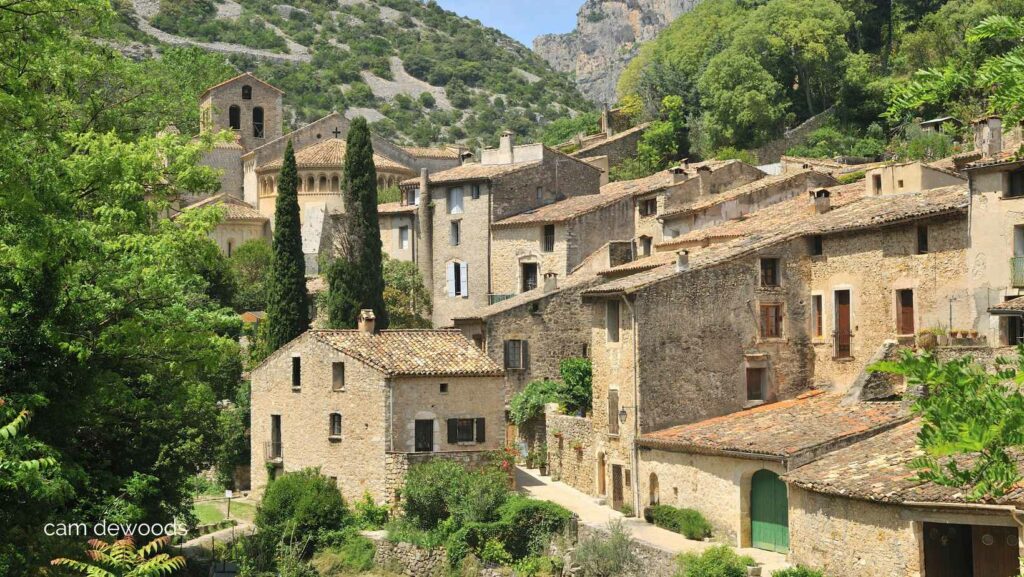
Why does France have so many Camino routes?
You only need to look at a map to understand: France sits at the crossroads of Western Europe, right between the countries of the north and Santiago de Compostela in Spain. Historically, every pilgrim coming from Italy, Switzerland, Germany, Belgium or England had to pass through here. It’s as if France were a big launch pad towards Compostela.
But there’s something else too. The pilgrimage wasn’t only a spiritual journey, it was also a route through holy places, relics and abbeys. And in medieval times, France was full of sanctuaries to stop at: Tours for Saint Martin, Le Puy, Vézelay, Arles… The result: the routes took shape naturally, between the great religious centres and the main thoroughfares. It wasn’t a line someone decided on a map, it’s a network that formed over the centuries, under the footsteps of thousands of walkers.
Even today, these routes are alive. They aren’t just relics of the past. They’re waymarked, maintained and, above all, still walked. Each has kept its own character: some are very busy, others much quieter. And that’s what makes the Camino in France so rich: you can truly choose the atmosphere you’re looking for.
Where does the Camino start in France?
Another question I get asked a lot: “So where exactly does the Camino start in France?” And the answer is that there isn’t one single start, but several historic starting points, each with its own route.
Here are the four traditional starting points, the famous French Jacobean routes:
- The Via Turonensis starts in Paris, more precisely at the Tour Saint-Jacques. It’s the northern route, passing through Chartres, Tours, Poitiers, Bordeaux… A long, fairly flat route, perfect if you live in the northern half of France.
- The Via Lemovicensis starts in Vézelay, in Burgundy. It’s a wilder, quieter route that crosses the Limousin, forests and very green landscapes. It’s often the one taken by walkers looking for solitude or a more inward kind of walk.
- The Via Podiensis, from Le Puy-en-Velay, is the star. It’s the best known, the best waymarked and the busiest. It’s where I walked solo, and frankly, it’s a great option if you want a well-supported first experience. There are hostels almost every evening, people to meet, a real “Camino” atmosphere.
- The Via Tolosana, finally, starts in Arles. That’s the one I walked twice with my mum. It’s more southern, wilder, less populated. You meet fewer people, but the landscapes are stunning and the villages you pass through are full of charm. It reaches Spain via the Somport pass, a magnificent crossing and a lesser-known one than Roncesvalles.
So you can choose your starting point according to where you live, your level, and whether you want solitude or company. And if you want to do it like the pilgrims of old, you can also set off from your own front door. That’s what some people call “the real Camino”: the one that begins the moment you close your door behind you.
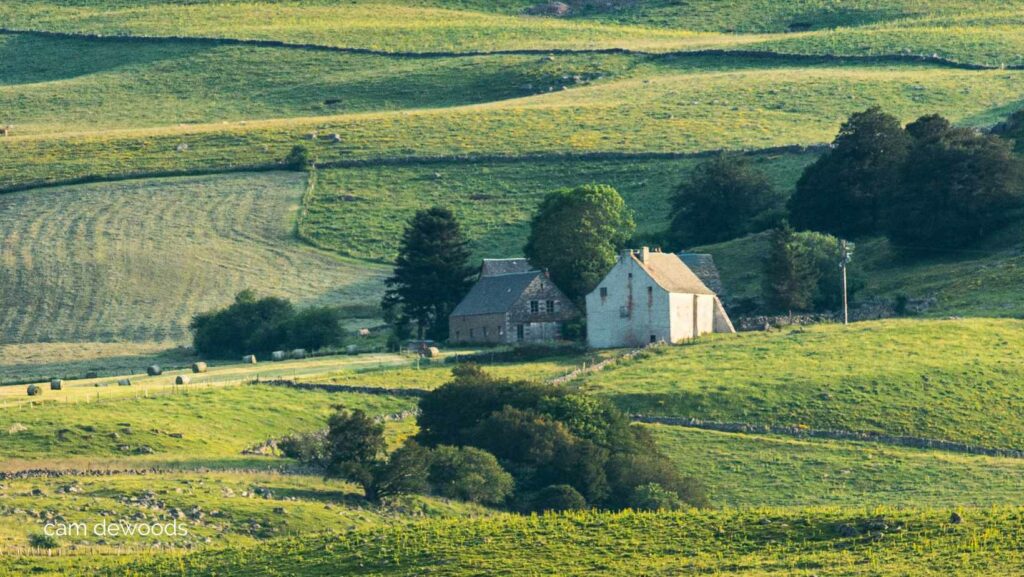
Which French Camino route should you choose?
Choosing the right Camino route in France is a bit like choosing a hiking boot: it all depends on where you’re starting from, how much experience you have, what you’re looking for… and sometimes just on your gut feeling at the time.
Personally, I’ve tried two very different atmospheres. The Via Podiensis, from Le Puy-en-Velay, is perfect for a first experience. It’s well waymarked, well equipped with places to stay, and you meet people every day. There’s a real “Camino” atmosphere, with pilgrims of all ages and nationalities, easy conversations, and a little routine that settles in. If you like feeling carried along by a group dynamic, or if you’re setting off alone but want to meet people, go for it. Frankly, it’s really reassuring at the start.
➡️ The advantage of the busier routes is that you can let yourself be carried along and not book ahead, get to know yourself gradually and, above all, leave yourself the freedom to shape your stages “your way”. I talk about this quite a bit in my article on where to sleep on the Camino de Santiago.
The Via Tolosana is another adventure altogether. Less busy, rawer, more “silent”. It’s the one I chose with my mum, twice, because we wanted a calmer route, away from the crowds, with a real feeling of isolation in places. And we weren’t disappointed. It’s also more demanding physically on some sections, so perhaps avoid it if you’re a complete beginner or want an “easy” route. But that’s also what makes it so rich.
Other routes, like the Via Lemovicensis or the Via Turonensis, are quieter and less well known, but also less waymarked and with fewer places to stay. They often attract experienced walkers, or people who want a more solitary walk.
So how do you choose your Camino route in France? Ask yourself a few simple questions:
- Do you want to walk alone or meet people easily?
- Do you need infrastructure (hostels, shops) or are you self-sufficient?
- How long are you going for?
- Are you aiming for a first experience, or are you already used to long distances?
- Do you prefer wide wild spaces or small villages full of life?
➡️ Safety also comes up often among the criteria, especially if you’re a woman. You’ll find more advice on approaching your Camino carefully in this article: is the Camino de Santiago safe?
And above all, don’t forget one thing: you can always walk the Camino in sections. It isn’t all or nothing. You can start with a week on the Via Podiensis, then try the Tolosana the following year. It’s not a race, or a challenge at any price. It’s a path. And the path is built step by step.
➡️ Remember that the Camino isn’t just a destination to reach, but a journey to experience fully, with everything it can offer you along the way. I talk about it a lot in my article Why do people walk the Camino de Santiago?
What is the most beautiful Camino route in France? My personal opinion
So, what is the most beautiful Camino route in France? Honestly, it’s the question I’m asked most often when I talk about my different experiences. And it’s probably the hardest to answer. Because there isn’t one single answer. And above all because, let’s be transparent, I haven’t walked all the French routes yet. As you’ve gathered above, I know the Via Tolosana (Arles route) and the Via Podiensis (Le Puy-en-Velay route) well, but I haven’t tried the Vézelay or Tours routes yet. So my opinion is partial, but sincere.
In terms of the beauty of the landscapes, the Via Podiensis is a real gem. The first days through the volcanic landscapes of the Auvergne, the Aubrac plateaus, medieval villages like Conques, the green valleys of the Lot… It’s varied, often spectacular, and above all very accessible. You regularly get breathtaking views, little hamlets perched on hillsides, fields as far as the eye can see. In short: if you want your eyes full, you won’t be disappointed.
But for me, the Arles route has a particular charm. Maybe because you meet fewer people. Maybe also because I walked it with my mum, which inevitably creates a more intimate memory. There’s something wilder, sometimes rawer, about it. You cross very different landscapes from one day to the next: garrigue scrubland, the Canal du Midi, deep forests, small mountains, golden fields… And the atmosphere is quieter, almost meditative at times. It pushes you to look for something else in your walking.
In short, for me there isn’t one most beautiful Camino route in France, only the one that resonates best with what you’re looking for at that precise moment. If you want a rich, gentle and well-waymarked first approach: the Le Puy route is perfect. If you want solitude, variety and a slightly rawer adventure: the Arles route is really worth the detour.
And maybe one day I’ll feel like trying Vézelay or Tours, to complete the picture. But in the meantime, those two routes have already left a deep mark on my story.
The French route to Santiago de Compostela: a closer look at the Via Podiensis
Among the many French routes leading to Santiago de Compostela, the Via Podiensis, better known as the Le Puy-en-Velay route, is probably the most emblematic. It’s also the one sometimes called the French route to Santiago, because historically it’s the most walked (not to be confused with the Camino Francés, which picks up at Saint-Jean-Pied-de-Port and crosses the Pyrenees into Spain). For many people, it’s the “classic” with a capital C.
I chose to walk it alone, and it was a very different experience from the one I’d had on the Arles route. First because the atmosphere is completely different: there are more people, much more infrastructure, and a real community spirit that builds quickly. The encounters are many, sometimes intense, and that’s a real plus if you’re looking for a friendly, even downright festive atmosphere on some stages.
➡️ You’ll find more information on the average daily budget in my article: Camino de Santiago cost.
But what struck me above all, as I said earlier, was the beauty of the landscapes. From the moment you leave Le Puy-en-Velay, you take in so much. The Aubrac is probably one of the most incredible areas to cross on foot, especially if you’re lucky enough to pass through in spring. You walk through open landscapes swept by the wind, almost lunar at times. Then you move on to the Lot valleys, stone villages, little chapels at the side of the path… It’s varied, gentle, never monotonous.
This route is also very well waymarked (it’s the GR65), with plenty of places to stay, which makes it particularly suitable if you’re setting off for the first time. There’s a real culture of welcome, especially in the gîtes and pilgrim hostels, and you quickly feel supported, even on the tired days.
➡️ I go into more detail in my dedicated article on the Via Podiensis, where I come back to my stages, my impressions and my practical advice for getting ready.
In short, if you’re looking for a well-supported route, rich in heritage and emotion, the Via Podiensis remains a safe bet. And even if it’s a bit busier, it doesn’t lose its soul, especially when you take the time to step off the “classic” stages or walk outside peak season.
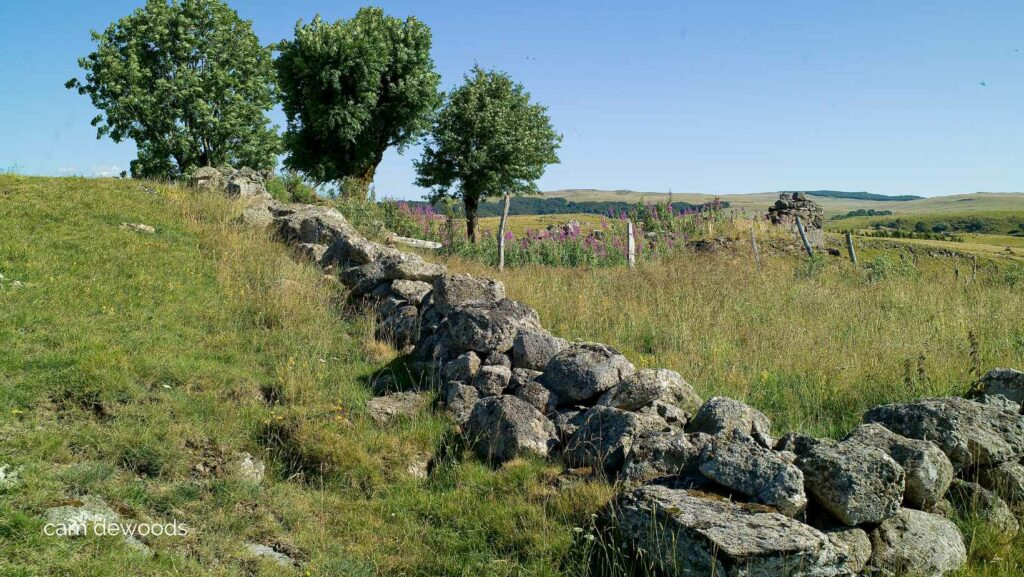
The Arles route (Via Tolosana): a wilder, more authentic path
If you’re looking for a quieter route, more Mediterranean in its atmosphere, which takes you through varied and sometimes little-known landscapes, then the Via Tolosana, or Arles route, is a great pick! It’s the route I walked twice with my mum: first from Arles to Lodève, then from Montpellier to Toulouse. Two very different sections, but each time the same feeling of freedom, of kindly solitude and of reconnection.
The Arles route is the most southerly of the four great French routes. It starts in Arles, passes through Montpellier, Saint-Guilhem-le-Désert, Castres, Toulouse, Auch and Pau, as far as the Somport pass, where it joins the Camino Aragonés in Spain. It’s also sometimes called the Via Tolosana, in reference to Toulouse, one of its major stops.
What I loved on this route is its rawer character, less marked out by the crowds, but not hard to follow for all that. The waymarking is pretty good overall (GR®653), and even if there are sometimes fewer places to stay than on the Le Puy route, you’ll find plenty of places to sleep if you plan a little. It’s a route I recommend if you want to walk off the beaten track while staying on a secure, waymarked itinerary.
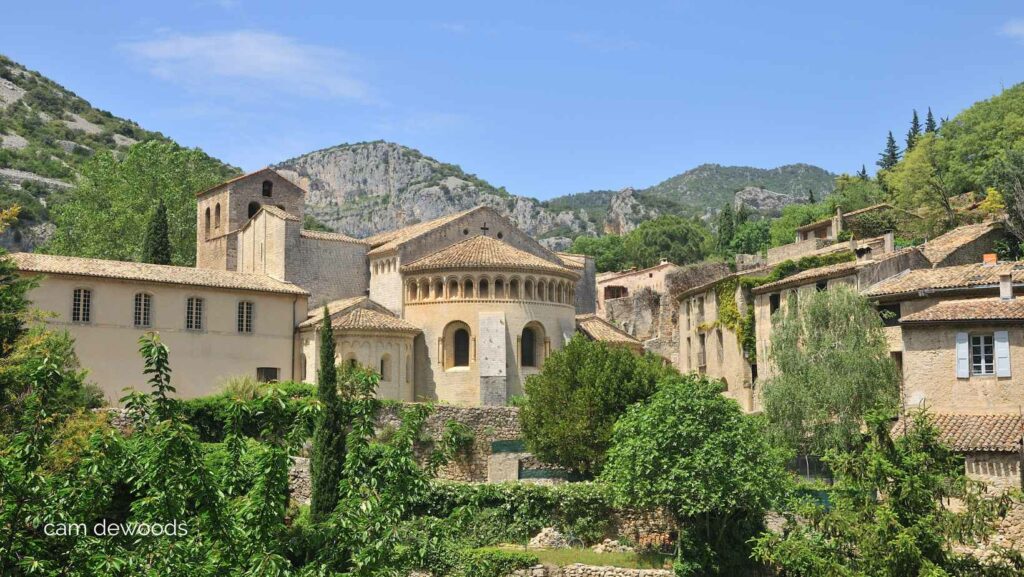
As for landscapes, you go from Mediterranean garrigue to cooler forests, passing historic villages, canals, high plateaus and almost deserted areas where you meet more sheep than pilgrims. Special mention for Saint-Guilhem-le-Désert, which I had the joy of rediscovering after several years: a real gem in a postcard setting.
➡️ If you want to know more about this route, I wrote a full article on the Arles route with the stages, my practical advice and all the useful information. In short, the Arles route is the choice of a more introspective path, more varied geographically and often less touristy, which lets you immerse yourself fully in the experience of the Camino. It’s a route I found very strong emotionally, perhaps precisely because it leaves more room for silence, for the unexpected… and for yourself.
🧭 Quick guide: choosing your Camino route in France
| Route | Starting point | Distance to Santiago | Atmosphere and crowds | Ideal if… |
|---|---|---|---|---|
| Via Podiensis (Le Puy route) | Le Puy-en-Velay | About 1,500 km (930 miles) | Very busy, friendly | You want a reassuring first experience, well waymarked, with plenty of places to stay |
| Via Tolosana (Arles route) | Arles | About 1,590 km (990 miles) | Wilder, fewer people | You’re after a more introspective path, with the south, variety and authenticity |
| Via Turonensis (Tours route) | Paris | About 1,700 km (1,060 miles) | Long, quieter in the north | You’re setting off from far away or want a real long-haul journey |
| Via Lemovicensis (Vézelay route) | Vézelay | About 1,700 km (1,060 miles) | Calm, rural landscapes | You prefer solitude and wide open spaces, and already have some walking experience |