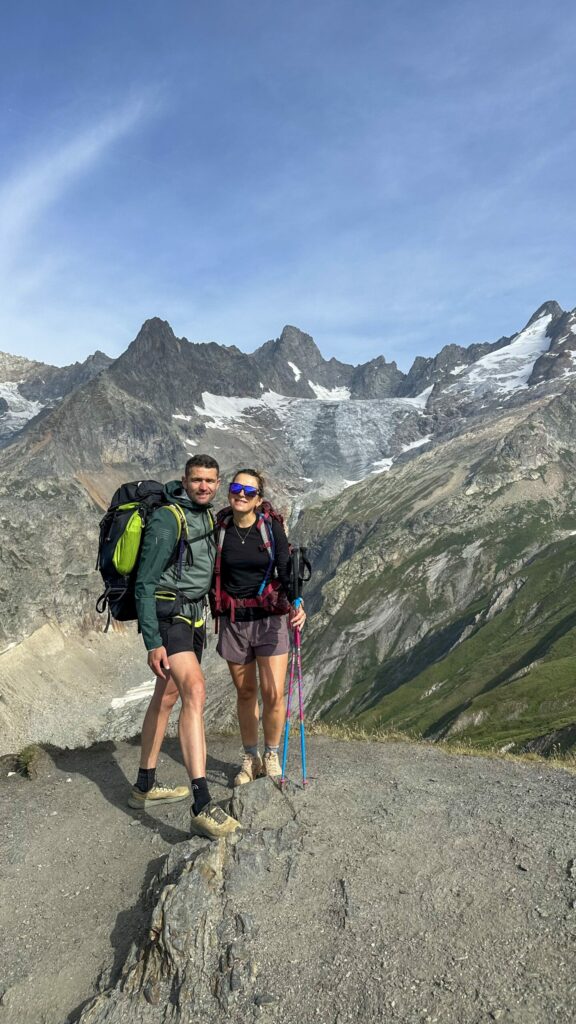
It’s THE question people asked us as soon as we announced we were heading off to walk around the Mont Blanc massif: how many days should you plan for the Tour du Mont Blanc? Around me there were plenty of trail runners from another planet who had done it in 4 days (the madmen), but most people told me they had done it in 7. We did the Tour du Mont Blanc in 8 days, with Cyril and his dad, partly for logistical reasons (booking the refuges) and partly because we lengthened some stages by taking variants (we ended up with 12,000 m of ascent, about 39,400 ft).
So of course the right schedule depends on you, on your legs, on what you want to experience up there, and ultimately on how you plan to sleep, because booking Tour du Mont Blanc refuges (the mountain huts) can sometimes force you to add a day or, the other way round, to squeeze stages together. Some people finish in 5 days, others take 10 to wander, and a few runners do it in 3. In this article I walk you through each option with a real stage breakdown, the practical details that go with it (booking, bag transfers, food) and our own experience, so you can pick the pace that suits you.
For the big picture, see my complete guide to the Tour du Mont Blanc.
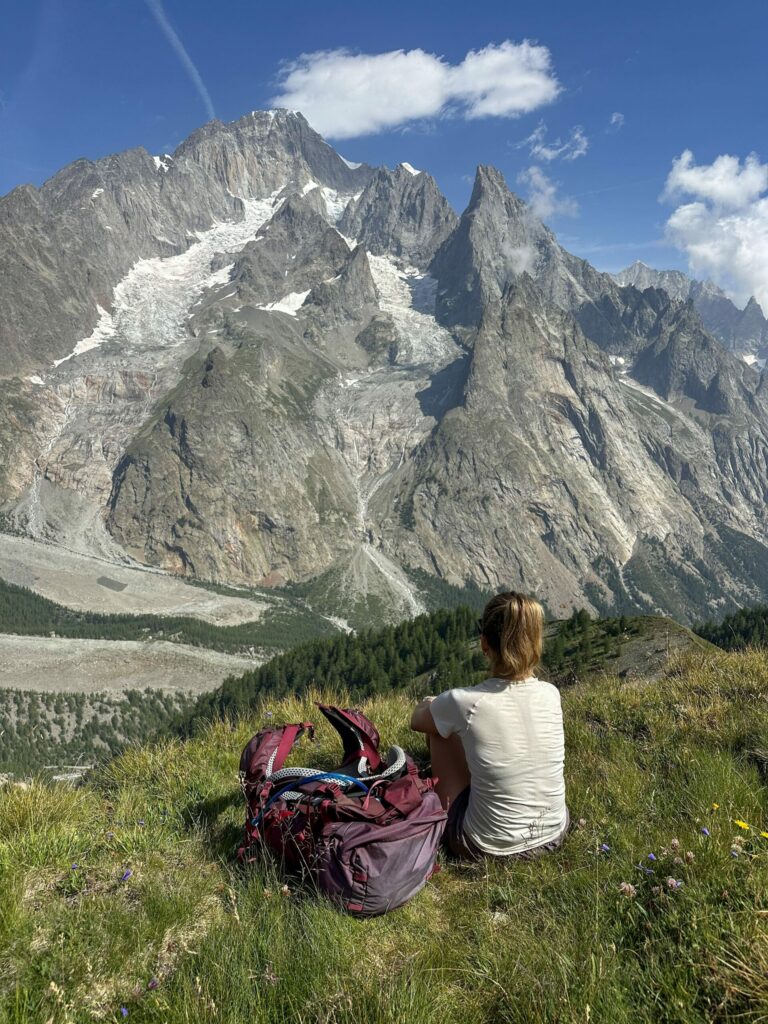
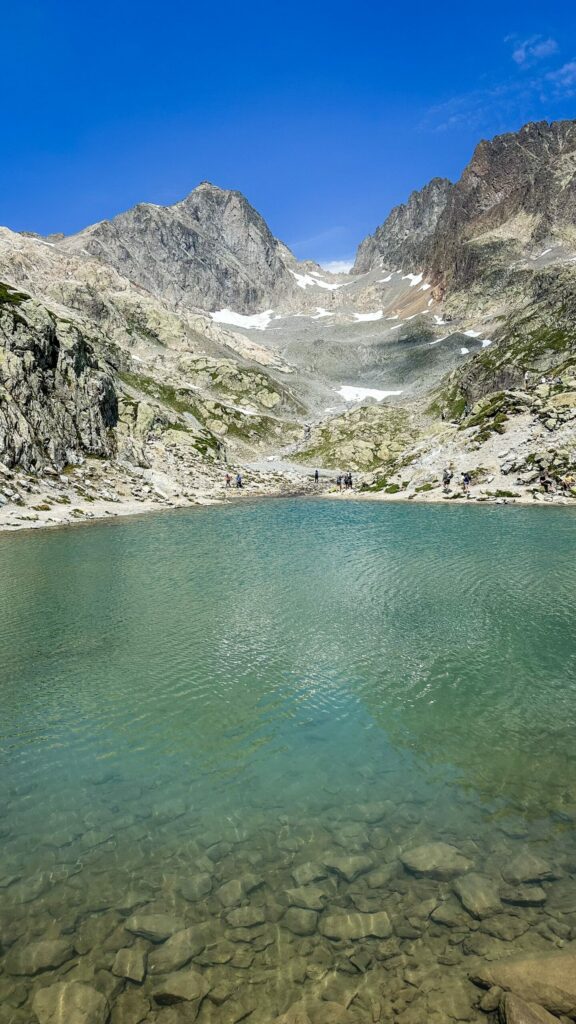
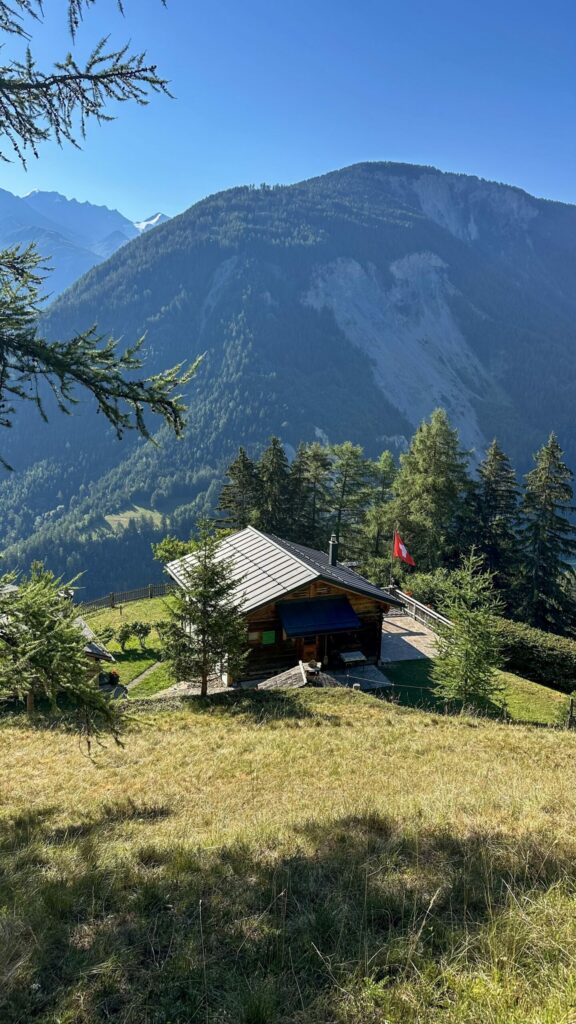
What is the Tour du Mont Blanc exactly?
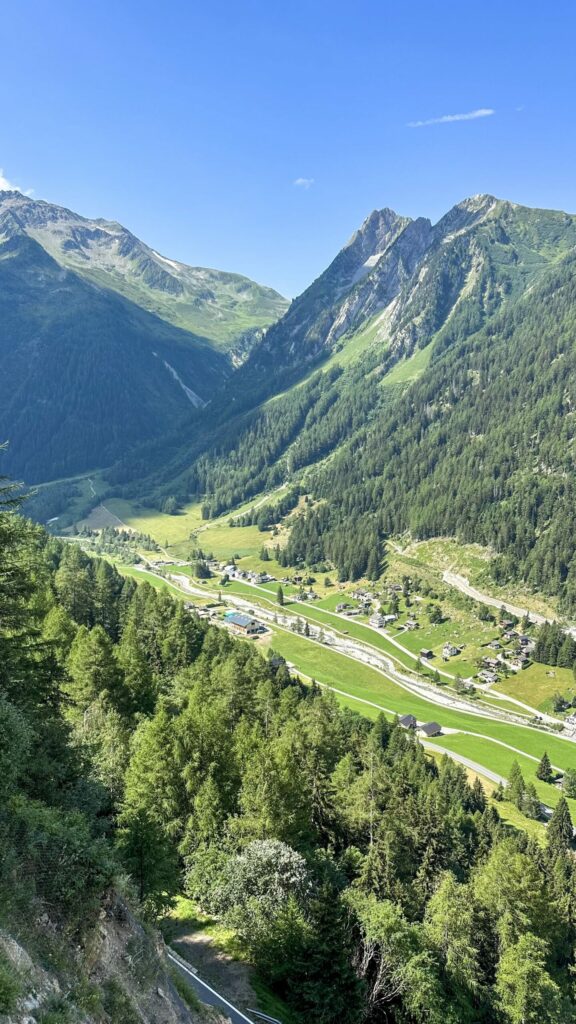
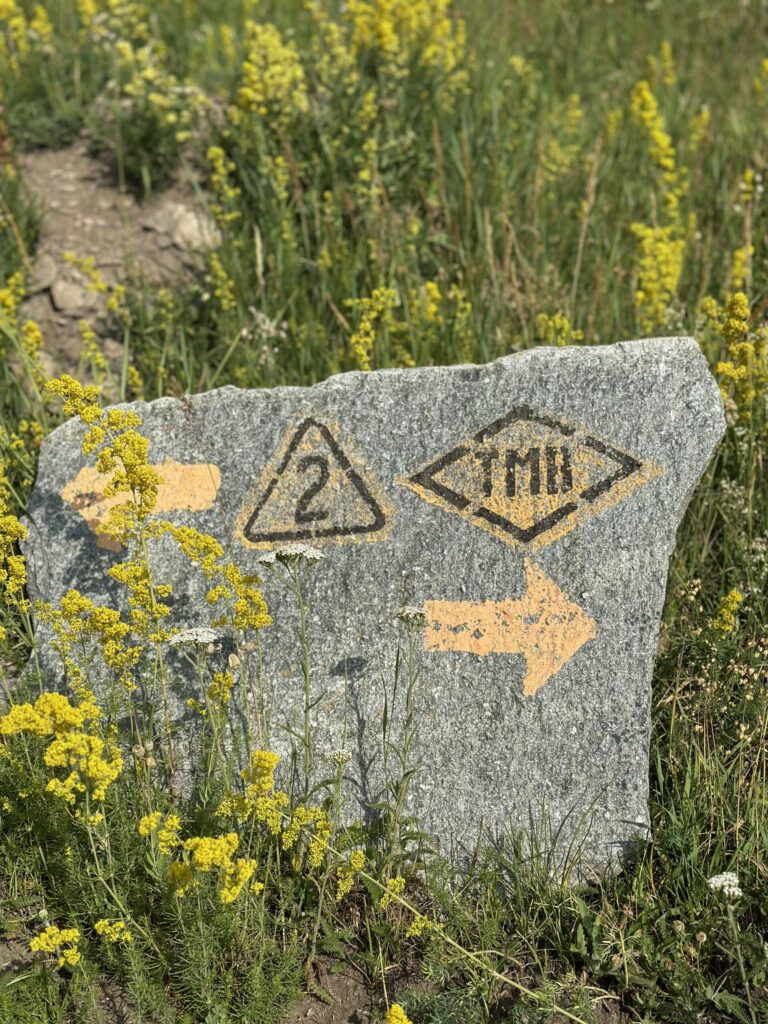
Before we talk about duration, let’s set the scene quickly. The Tour du Mont Blanc, or TMB for those in the know, is a long-distance trail that circles the whole Mont Blanc massif. It’s about 170 km (105 miles) with roughly 10,000 metres of ascent (about 32,800 ft), and as much descent, so your knees will remember it, spread across three countries: France, Italy and Switzerland. The TMB also has variants, which is worth keeping in mind when you plan your stages, since you can go beyond 170 km and 10,000 m of ascent depending on the variants you take. Depending on your level and your mountain experience, you don’t necessarily need a guide, and I talk about it here: hiking the Tour du Mont Blanc without a guide.
We walked it clockwise, starting from Chamonix. Most people go the other way round (anticlockwise), and honestly there is no “right” direction: clockwise gave us slightly steeper climbs but views we saw head-on, which I loved. The classic start is at Les Houches or Chamonix, but since it’s a loop you can technically start wherever you like.
One thing to know right away, because it will shape your choice of duration: whatever format you pick, if you want to sleep in refuges, they need to be booked well in advance. For a July-August departure, aim for 3 to 6 months ahead, sometimes more. Summer reservations generally open between October and February depending on the refuge, and the most popular ones (Bonatti, Croix du Bonhomme, Lac Blanc) are full within a few weeks. Most can be booked through the central website montourdumontblanc.com, but some private accommodation has to be booked directly. In short: you need to have your organisation and your number of days in mind to lock in beds, and it can also affect your plans. The same goes for bivouacking: in some areas you have to reserve pitches, and the spots go fast too.
How many days does the Tour du Mont Blanc take?
If you want a simple range: the vast majority of hikers take between 7 and 10 days to complete the full Tour du Mont Blanc on foot, sleeping in refuges. That’s the “comfort” pace that leaves you time to walk, enjoy and recover.
But that range can drop to 5 days if you’re well trained, or even 3 or 4 days if you run. And it can go up to 11 or 12 days if you really want to take your time, add variants or split the big stages in two.
To help you place yourself at a glance, here is what an average day looks like depending on the format you choose:
| Duration | Km / day (miles) | Ascent / day | Walking time | Who is it for? |
|---|---|---|---|---|
| 3 days | ~54 km (~34 miles) | ~3,300 m | 12 h and more | Experienced trail runners only |
| 4 days | ~40 km (~25 miles) | ~2,500 m | 9-10 h | Very well-trained trail runners |
| 5 days | ~32-34 km (~20-21 miles) | ~2,000 m | 8-9 h | Fit, experienced hikers |
| 7 days | ~24 km (~15 miles) | ~1,430 m | 7-8 h | Hikers in good shape |
| 8 days | ~20-25 km (~12-16 miles) | ~1,400 m | 7-8 h | A good balance of challenge and enjoyment |
| 10 days | ~17 km (~11 miles) | ~1,000 m | 5-6 h | First-time trekkers, families, contemplative walkers |
Beyond the numbers, three main things will decide the right number of days for you:
- Your fitness. It’s the number one factor. Stringing together 25 to 30 km (15 to 19 miles) a day with 1,500 to 2,000 m of ascent, day after day, can’t be improvised, especially with a heavy pack on your back. If you don’t hike regularly through the year, don’t overestimate yourself, and depending on your fitness, avoid planning 6 days or fewer.
- What you’re coming for. Do you want to perform and push your limits? You’ll head out for just a few days. Do you want to enjoy the scenery, sit on a refuge terrace with a beer at 2,500 m, chat with other hikers? Take more days.
- Your budget and your time. Every extra day is an extra night in a refuge (count 55-80 € for half board in France and Italy, up to 100 CHF in Switzerland). The TMB isn’t cheap, so of course that can be a limiting factor too.
Now let’s go into the detail of each option, with a real stage breakdown and the practical information that goes with it.
Tour du Mont Blanc in 3 days: for trail runners only
Let’s be clear straight away: doing the Tour du Mont Blanc in 3 days is no longer hiking. We’re talking 50 to 60 km (31 to 37 miles) a day, with 3,000 m or more of ascent, over days of 12 hours or longer. It’s pure long-distance trail running, for very well-trained athletes, often on a UTMB recce.
A typical breakdown looks like this:
| Day | Stage | Distance | Ascent (approx.) |
|---|---|---|---|
| Day 1 | Chamonix → Les Chapieux | ~50-60 km | ~3,300 m |
| Day 2 | Les Chapieux → La Fouly | ~50-60 km | ~3,300 m |
| Day 3 | La Fouly → Chamonix | ~50-60 km | ~3,300 m |
How it works in practice. At this pace you only stop in the evening, so yes, you still have to book your accommodation at the two stopping points (Les Chapieux and La Fouly), which are easy-to-reach valley bottoms. As for your pack, it’s the realm of ultralight: a 15-20 L trail running pack, a waterproof jacket, a packable down jacket, a minimal change of clothes, your hydration bladder and energy food (bars, gels), since you won’t have time to sit down for a meal. Luggage transfer is pointless here: you run light by definition. Aim for a pack of around 3-4 kg, no more. And one non-negotiable safety point: tell someone your itinerary for the day and set off early, because if you hit a low or the weather turns, you are committed, far from everything.
If this format appeals to you, it’s probably because you already have the UTMB in mind. Cyril, my partner, has run it, and I can tell you this kind of pace takes months of specific preparation. For a first TMB, forget it: you’d miss everything that makes this tour so beautiful, head down, watching your watch.
Tour du Mont Blanc in 4 days: the accessible trail format
The Tour du Mont Blanc in 4 days still follows a trail running logic, but a notch down: around 40 km (25 miles) and 2,000 to 2,500 m of ascent a day, which means days of 9 to 10 hours. It’s still mountain running rather than walking, but it’s the most approachable format for a trail runner who wants to complete the loop.
One possible breakdown, often used for UTMB recces:
| Day | Stage | Distance | Ascent (approx.) |
|---|---|---|---|
| Day 1 | Les Houches → Refuge des Mottets | ~25 km | ~1,500 m |
| Day 2 | Les Mottets → Refuge Elena | ~40 km | ~2,400 m |
| Day 3 | Refuge Elena → Trient | ~40 km | ~2,200 m |
| Day 4 | Trient → Les Houches | ~40 km | ~2,500 m |
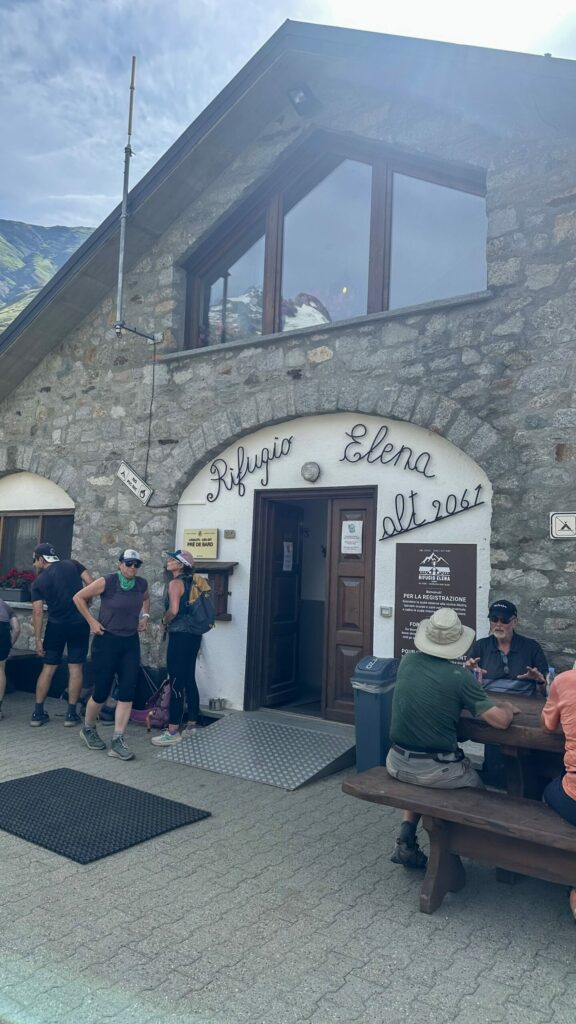
How it works in practice. The first stage is deliberately shorter, to ease you in, even if it means starting later when you arrive in Chamonix the same day. The three that follow build up in intensity. Book your nights at the four stopping points: Les Mottets, Elena and Trient are on the route and easy to fit in. Be careful, Refuge Elena is small and fills up fast, so book it first. Again, you travel light (15-25 L pack), you count on half board so you don’t have to carry dinner, and you resupply in the valleys you pass through. This format is for seriously experienced athletes who are used to long days with a lot of ascent.
Tour du Mont Blanc in 5 days: the shortest format, with a catch
Let’s be honest from the start: completing the whole ~170 km of the TMB in 5 actual days of walking isn’t realistic, even for someone very fit. What most guidebooks and agencies sell as “5 days” is in fact 4 and a half days of sustained walking (between 19 and 38 km, or 12 to 24 miles, depending on the stage), topped up with a bus or train section on the last day, to close the loop without stringing together a day of more than 45 km (28 miles). It’s a common practice on short formats, nothing shameful, but it’s better to know it before you commit with your eyes closed.
Here is a realistic breakdown of the TMB in 5 days:
| Day | Stage | Distance | Ascent / descent |
|---|---|---|---|
| Day 1 | Les Houches → Les Contamines | 24 km | +1,400 m / -900 m |
| Day 2 | Les Contamines → Courmayeur | 38 km | +2,000 m / -1,800 m |
| Day 3 | Courmayeur → Refuge Elena | 19 km | +1,459 m / -597 m |
| Day 4 | Refuge Elena → Champex | 28 km | +1,219 m / -1,644 m |
| Day 5 | Champex → Col de la Forclaz (on foot), then bus to Chamonix | ~18 km on foot | +900 m / -700 m |
That adds up to about 127 km (79 miles) on foot over the first 4 and a half days, and a real postal bus at the Col de la Forclaz that takes you to Châtelard station and then Chamonix. Nothing invented: it’s a connection that really runs and that quite a few hikers in a hurry use for this kind of format.
How it works in practice. Book Refuge Elena first, it’s small and fills up fast. Don’t forget your sleeping bag liner, which is compulsory everywhere. And check the bus times at La Forclaz before you leave, as the service isn’t that frequent.
What you gain: you experience most of the tour, the three countries and the landmark passes, in a short week. What you lose: the time to catch your breath, and a true loop done entirely on foot. If you want to cover every metre on foot with no transport at all (you and I are on the same page!), the 7-day format is the one you need, not this one.
Tour du Mont Blanc in 7 days: the classic
The Tour du Mont Blanc in 7 days is by far the most searched-for and most widely offered breakdown. Doing the TMB in 7 days works out at around 24 km (15 miles) and 1,400 m of ascent a day, over days of 7-8 hours. It’s a steady pace, but a sustainable one for a hiker in good shape who has done a bit of preparation.
Here is the classic 7-day breakdown (anticlockwise, starting from Les Houches):
| Day | Stage | Distance | Ascent / descent | Passes and highlights |
|---|---|---|---|---|
| Day 1 | Les Houches → Refuge de la Balme | 25 km | +1,483 m / -820 m | Col de Voza |
| Day 2 | Refuge de la Balme → Les Mottets | 16 km | +1,069 m / -874 m | Col du Bonhomme, Croix du Bonhomme |
| Day 3 | Les Mottets → Courmayeur | 24 km | +1,155 m / -1,815 m | Col de la Seigne (entering Italy), Lac Combal |
| Day 4 | Courmayeur → Refuge Elena | 19 km | +1,459 m / -597 m | Balcony path of the Italian Val Ferret |
| Day 5 | Refuge Elena → Champex | 28 km | +1,219 m / -1,644 m | Grand Col Ferret (entering Switzerland) |
| Day 6 | Champex → Tré-le-Champ | 26 km | +1,560 m / -1,701 m | Col de la Forclaz, Col de Balme (back in France) |
| Day 7 | Tré-le-Champ → Les Houches | 27 km | +1,893 m / -2,434 m | Aiguillette d’Argentière, Col du Brévent |
How it works in practice. It’s the best-documented and the easiest format to organise. If you carry everything yourself, the recommended pack weight is 8-9 kg maximum, relying on half board (no evening meal to carry) and on the fact that your laundry dries in the evening at your accommodation. Two stages stand out for their tough descents (Day 3 and Day 7): walking poles are strongly recommended for your knees. Book as soon as the calendars open: the 7-day format is the most in demand, so beds go first.
Worth noting: luggage transfer works well on most stages, with one important caveat. Some high-altitude refuges can’t be reached by car (Croix du Bonhomme, Elisabetta, Bertone, Bonatti), so if your route goes through them, the carrier can’t drop your bag there. On the classic 7-day plan above, the stages mostly end in the valley, so luggage transfer remains feasible.
It’s the format I’d recommend to someone active, used to walking, who wants to do the full tour without spending two weeks on it.
Tour du Mont Blanc in 8 days: our choice (and why)
We went for 8 days and it was perfect that way! Here is our itinerary stage by stage (we walked clockwise from Chamonix, hence slightly different stage names from the classic breakdown):
| Day | From → To | Distance | Ascent / descent |
|---|---|---|---|
| Day 1 | Chamonix → Les Écuries de Charamillon | 20 km | +2,000 m / -1,160 m |
| Day 2 | Charamillon → Bon Abri | 21 km | +1,250 m / -1,620 m |
| Day 3 | Bon Abri → La Fouly | 20 km | +870 m / -600 m |
| Day 4 | La Fouly → Refuge Bertone | 25 km | +1,570 m / -1,280 m |
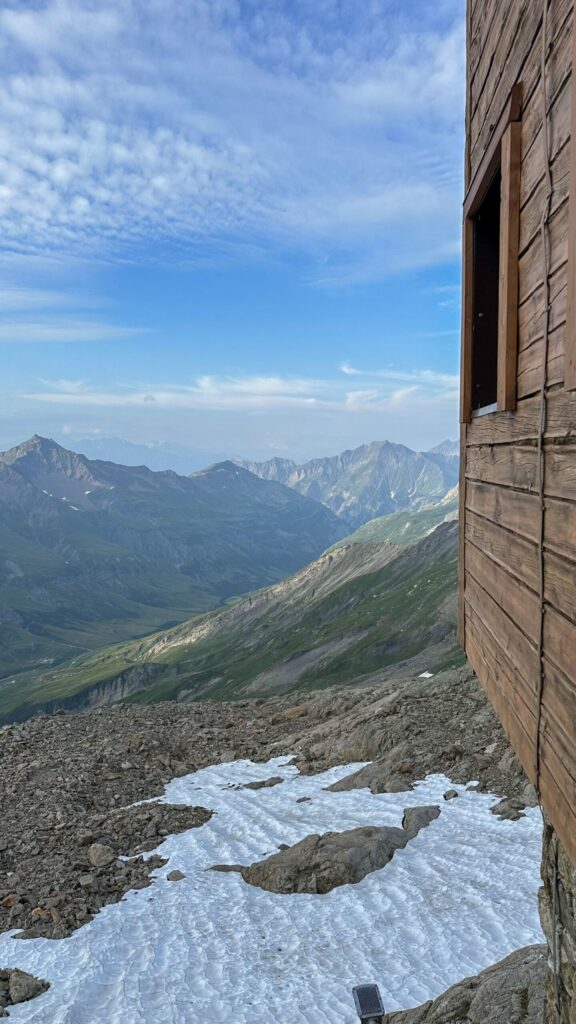
| Day 5 | Bertone → Refuge Robert Blanc | 29.5 km | +2,500 m / -1,700 m |
| Day 6 | Robert Blanc → Refuge des Prés | 20 km | +1,095 m / -1,900 m |
| Day 7 | Les Prés → Refuge du Fioux | 24 km | +1,350 m / -1,760 m |
| Day 8 | Fioux → Chamonix (loop completed) | 21 km | +1,360 m / -1,870 m |
| Total | 180.5 km (about 112 miles) | +11,995 m / -11,890 m |
(Our totals are slightly above the “official” TMB figures, ~170 km and 10,000 m of ascent, because our route took a few longer variants. That’s normal: every real itinerary differs a little from the theoretical route.)
If you want to see this route on a map and download our GPX file, I made a map of the Tour du Mont Blanc with all our stages.
Why 8 days rather than 7? First for refuge booking reasons, but it ended up letting us take variants and discover some superb spots like Lac Blanc (variant) or the Col du Tricot and Miage (variant).
How we handled it. We carried our own packs (around 9 kg), on half board everywhere so we didn’t have to carry dinner, with a sleeping bag liner each and just the bare essentials in terms of clothes, since everything dries in the evening at the refuge. Several of our stages ended at high-altitude refuges that can’t be reached by car (Bertone, Robert Blanc), so luggage transfer couldn’t have followed us everywhere anyway: something to check carefully if you plan to hand your bag over to a carrier. We had booked all our accommodation several months ahead, and thankfully so, because everything quickly showed as full.
A small heartbreak along the way: our dog Rhéa couldn’t come. The classic TMB route goes through the Aiguilles Rouges nature reserve, where dogs are strictly forbidden, even on a lead. There are variants to bypass it with a dog, but they lengthen and complicate the itinerary quite a bit, and there was no question of putting Rhéa at the slightest risk. So she stayed home, nice and cosy, and believe me, the reunion when we got back was worth all the passes in the world.
Tour du Mont Blanc in 10 days: taking your time
If you want to take your time, have more relaxed days, or simply because you’re not used to hiking (and that’s completely understandable, nerves included), there is the Tour du Mont Blanc in 10 days. It’s the most accessible format, the one where you split the big stages in two and walk 15 to 18 km (9 to 11 miles) a day, over 5-6 hours. When you look up the stages of the Tour du Mont Blanc in 10 days, you often come across breakdowns that add intermediate nights and include a few shuttle transfers on the least interesting sections.
Here is a classic 10-day breakdown:
| Day | Stage | Distance | Ascent / descent | Highlights |
|---|---|---|---|---|
| Day 1 | Les Houches → Les Contamines | 17 km | +640 m / -1,275 m | Bionnassay valley, Col du Tricot |
| Day 2 | Les Contamines → Les Chapieux | 15 km | +1,200 m / -930 m | Col du Bonhomme, Croix du Bonhomme |
| Day 3 | Les Chapieux → Refuge Elisabetta | 14 km | +730 m / -315 m | Col de la Seigne (entering Italy) |
| Day 4 | Refuge Elisabetta → Courmayeur / Elena | 15 km | +550 m / -980 m | Col de Chécrouit, southern balcony |
| Day 5 | Refuge Elena → La Fouly | 13 km | +725 m / -930 m | Grand Col Ferret (entering Switzerland) |
| Day 6 | La Fouly → Champex | 15.5 km | +600 m / -500 m | Swiss Val Ferret, villages of the Valais |
| Day 7 | Champex → La Forclaz (or Trient) | 14-15 km | +760 m / -700 m | Col de Bovine (or Fenêtre d’Arpette) |
| Day 8 | La Forclaz → Argentière / Le Tour | 15.5 km | +1,000 m / -750 m | Col de Balme (back in France) |
| Day 9 | Argentière → Chamonix | 21 km | +900 m / -1,300 m | Lac Blanc, balcony of the Aiguilles Rouges |
| Day 10 | Chamonix → Les Houches | 12 km | +515 m / -1,540 m | Col du Brévent |
How it works in practice. It’s the most comfortable format to organise. As for booking, the same rule applies as everywhere: high-altitude refuges like Elisabetta need to be booked early. And since the days are short, you have time to really enjoy the stage villages in the evening.
It’s the ideal pace if:
- it’s your first long-distance trek and you don’t want to be put off by Day 2;
- you’re travelling as a family or with people of different levels;
- you really want to enjoy the villages, have a proper lunch somewhere, and nap by a stream without feeling guilty.
Over 10 days (and beyond, some people go up to 11 or 12), you turn the TMB into a more relaxed journey. There’s no shame in that, quite the opposite. The mountains aren’t a competition!
So, how many days should you choose?
To sum up and help you decide, here is how I’d place you:
- You run in the mountains and you’re aiming for performance → 3 or 4 days.
- You’re an experienced, well-trained hiker and you have a week → 5 to 7 days.
- You want the right balance between challenge and enjoyment, and can take one more day off → 7 to 8 days (my advice).
- It’s your first big trek, you’re going in a group or you want to take it easy → 10 days or more.
The advice I wish someone had given us before leaving: don’t overestimate your legs and don’t underestimate the ascent. On paper, 25 km (15 miles) seems reasonable. With 2,000 m of climbing and a pack on your back, it’s another story.
And if I had to insist on one practical point before you set off, it would be this one: your feet. Whatever duration you choose, they’re what will make or break your tour. I cover this in detail in my article on how to choose hiking boots, written after my Caminos, but the advice applies just the same to the TMB: break your boots in properly, take two pairs of merino socks, and above all, try everything out before you leave.
How many days for the Tour du Mont Blanc? The FAQ
We did it in 8 days, we loved it, and I only want to go back. If you’re preparing your own Tour du Mont Blanc, I hope this account helps you find your pace. And if you have any questions, you know where to find me, on Instagram or in the comments. Have a great trip, we might cross paths up there.
On foot, plan 6 to 7 days at the very least if you are very well trained. Some people run it in 3 days, but that is reserved for experienced trail runners. Itineraries sold as 5 days include a bus section to close the loop.
Yes, and it’s actually the most classic format. The Tour du Mont Blanc in 7 days fits perfectly into a week of leave, with stages of 24 km (15 miles) a day on average.
You need to be in good physical shape and used to walking for several hours with plenty of ascent, but you don’t need to be an athlete. Choosing an 8 or 10 day breakdown makes the tour accessible to most profiles.
Yes, several services (Taxi Mont Blanc, La Malle Postale, Mountain Dropoffs) carry your bag from refuge to refuge, for around 30 to 50 € per bag and per stage. Be careful: some high-altitude refuges can’t be reached by car (Croix du Bonhomme, Elisabetta, Bertone, Bonatti), so they can’t be served. Check your route before you book. From 2027, luggage transfer is expected to be limited to trek bags (no more suitcases). The details aren’t final yet, so check with the carrier when you book.
As early as possible: 3 to 6 months ahead for the summer. Reservations open between October and February depending on the refuge, and the most popular ones (Bonatti, Croix du Bonhomme, Lac Blanc) go within a few weeks. Most can be booked on montourdumontblanc.com. Remember your sleeping bag liner, which is compulsory in every refuge.